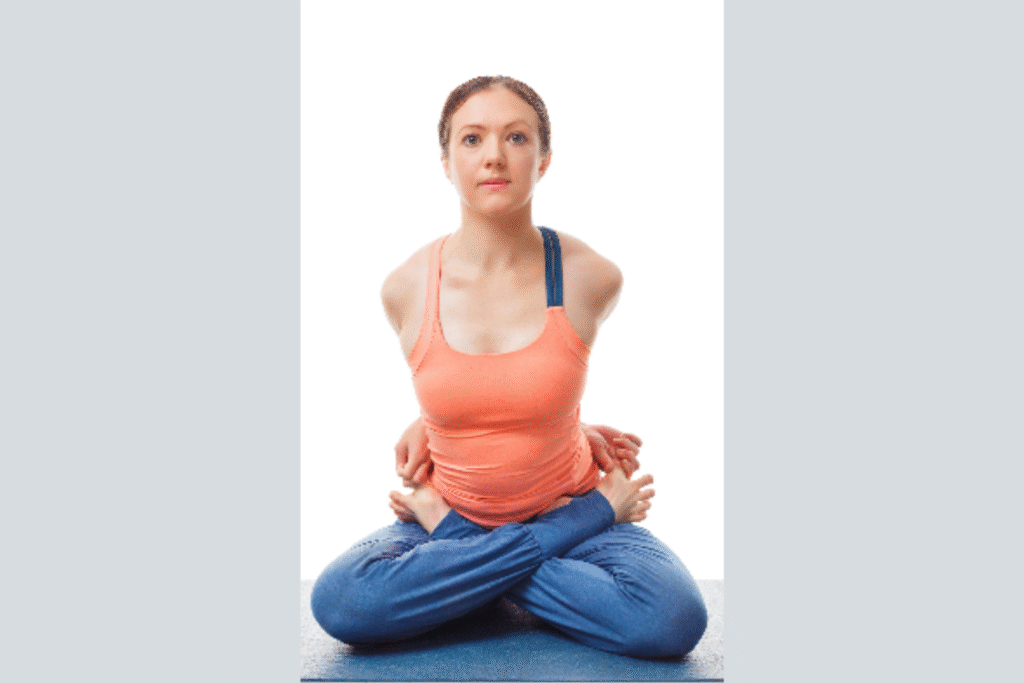
Baddha Padmasana—literally “bound lotus”—is an advanced seated bind taken from Padmasana (Lotus Pose). It’s classically taught in the Ashtanga Yoga finishing sequence, where you bind the toes from behind in Lotus, then (optionally) fold into Yoga Mudra before returning to Padmasana and Utpluthih. Because it layers an intense hip position with a deep shoulder bind, it’s considered a posture for experienced practitioners who can already sit comfortably in Lotus without knee or ankle discomfort.
How to do Baddha Padmasana (Step by step)
Only attempt the bind if Lotus is already pain-free. If Lotus isn’t accessible, work the preparatory poses and the modifications below first.
Set up Padmasana safely
Sit in Dandasana. Place the first foot high in the opposite hip crease, rotating from the hip (not the knee) and keeping the foot active (flexed) to avoid “sickling.” Place the second foot likewise. Sit tall with knees drifting toward the floor. (Swap which leg is on top on your second round.)
Create the bind
From Lotus, take the left arm behind your back and catch the left big toe near the opposite hip; then take the right arm behind to catch the right big toe. If the toes are out of reach, hold a strap, or simply hold the opposite forearm/elbow behind you. Keep the chest broad and shoulder blades gently drawn together and down.
Breathe & drishti
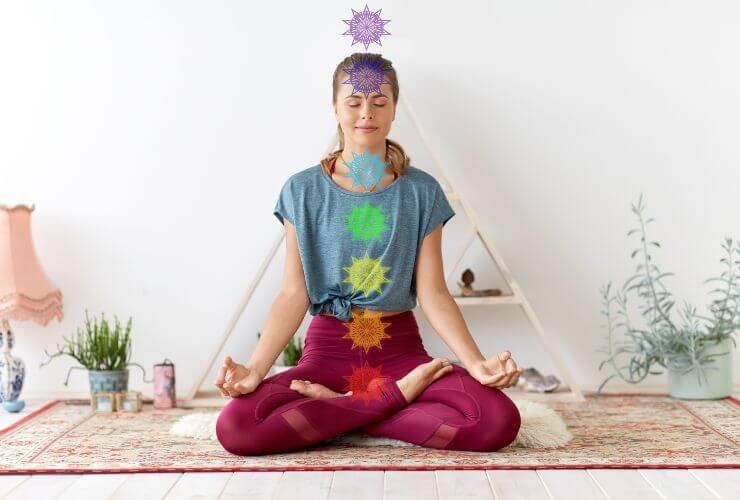
Soften the face. Breathe steadily for 5–10 breaths (Ashtanga count) or up to one minute if meditating. Gaze can be at the bhrumadhya (third eye).
Optional: Yoga Mudra (forward fold)
Maintaining the bind, hinge from the hips, and fold forward to bring the forehead or chin toward the floor without letting the knees lift or the sit bones roll off the ground. Use a block under the head if needed. Then inhale back up.
Exit with care
Unbind, release Lotus slowly (straighten one leg at a time), and rest in Dandasana before changing the cross of the legs.
Benefits (what practitioners commonly experience)
- Deep hip external-rotation work from Lotus plus chest/shoulder opening from the bind; many feel improved upright sitting posture and easier breathing as the chest broadens.
- Proprioception & focus: the closed chain of feet-to-hands often encourages steadiness for breath practices and seated meditation—hence its role in the Ashtanga closing sequence. Traditional sources also describe energetic “sealing” of prana in the bind.
Note: Some lists attribute organ-specific or medical effects to Lotus/Bound Lotus; modern evidence is limited. When in doubt, treat those as traditional benefits rather than clinical outcomes.
Anatomy (what’s going on)
- Hips & knees: In Lotus, the hips are in flexion, abduction, and strong external rotation; the knees are flexed (with very little safe rotation). Trying to “get Lotus” from the knees instead of the hips is a common path to injury; Lotus demands ~115° of hip external rotation just to sit upright.
- Ankles/feet: Keeping the ankles active (dorsiflexed/flexed) helps protect the knees by aligning the shin and controlling torque.
- Shoulders & scapulae: The bind asks for shoulder extension + internal rotation with the scapulae retracting/depressing. Limited internal rotation or stiff posterior cuff (infraspinatus/teres minor) can block the bind; pecs/lats are the large internal rotators working here. Avoid collapsing when folding—scapular control tends to degrade under gravity in bound forward folds.
Preparatory poses
For hips (Lotus basics):
- Baddha Konasana (Bound Angle), Agnistambhasana (Fire Log/Double Pigeon), Pigeon variations, legs-up-the-wall → Baddha Konasana at wall, Supta Padangusthasana series to balance hamstrings and calves. These specifically build external rotation while keeping the knees safe.
For shoulders (bind mechanics):
- Gomukhasana arms, Reverse Prayer, interlaced fingers behind back, and gentle binding drills (with a strap) develop internal rotation + extension required to reach the toes behind you.
For sequencing confidence (Ashtanga):
- Practice Baddha Padmasana within or after your finishing sequence once Lotus is steady.
Contraindications & when to modify
- Knee, ankle, or hip issues (current or recent): Avoid Lotus and its binds until cleared; they’re strongly associated with meniscal and other knee stresses when hip mobility is insufficient. Work on preparatory mobility and strength first.
- Shoulder injury or pain with internal rotation/extension: Skip the bind; try Padmasana without binding, or hold opposite elbows/strap behind the back.
- Sciatica or nerve irritation: Deep external rotation + forward fold (Yoga Mudra) can aggravate symptoms—practice only if symptom-free and under guidance.
- Pregnancy: Many prenatal practitioners avoid deep Lotus and especially bound forward folds, favoring propped, spacious seats; always follow your provider’s and prenatal teacher’s guidance.
- General red flags: Sharp knee pain, pins-and-needles, or joint compression feelings → come out immediately and regress the shape. (Even experienced practitioners can be at risk if they force Lotus.)
Smart modifications & props
- Skip the bind: Sit in Padmasana (or Half-Lotus/Sukhasana) with your hands on your knees or in a mudra.
- Short bind: Catch one toe only, or hold a strap connecting your hand to your foot behind you.
- Chest-opening only: Sit tall, clasp elbows or wrists behind the back instead of grabbing toes.
Senior teachers/sources explicitly recommend all of these stepping-stones.
Teaching & safety cues (quick checklist)
- Enter Lotus from the hips, not the knees; active feet.
- In the bind, think “sternum up, shoulder blades in & down”; let the bind follow the lift, not force it.
- In Yoga Mudra, hinge, don’t collapse; use a block under the head.
- Never push a knee down or yank a foot to force Lotus—if it doesn’t come, work the prep.
Bottom line:
Baddha Padmasana is beautiful but uncompromising. Build the hip rotation and shoulder mobility first, respect your knees, and let the bind emerge organically from good Lotus and good breath.