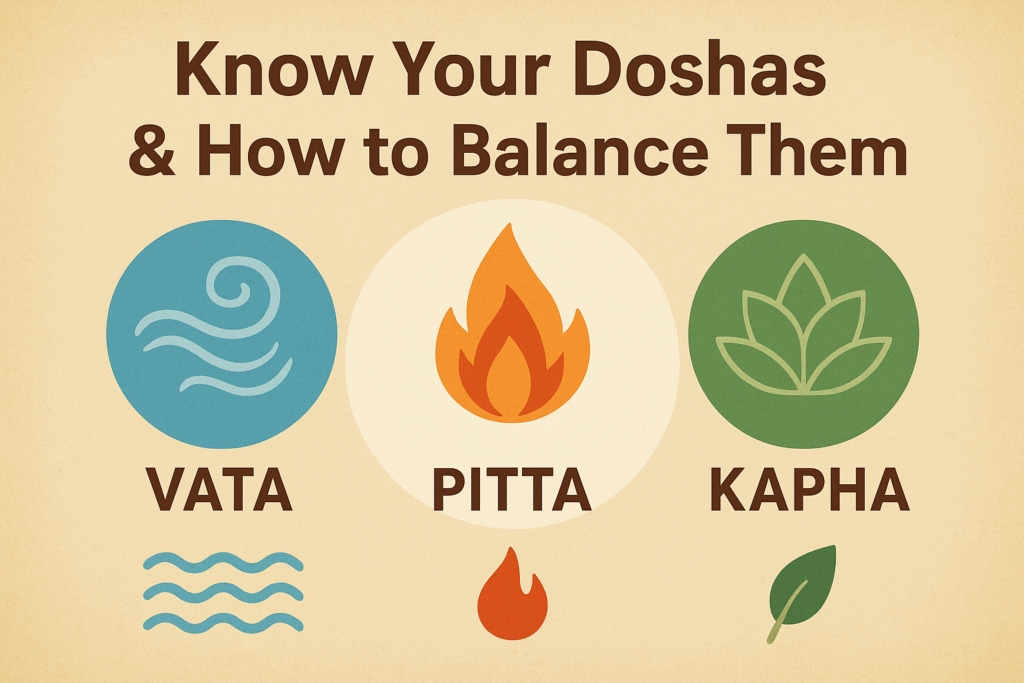
Have you ever felt “off” though you seem to be doing all the right things—eating clean, exercising, meditating—but still feel anxious, overheated, or sluggish? According to Ayurveda, that’s your dosha out of balance. In this post, you’ll learn what Vata, Pitta and Kapha doshas are, how to identify your dominant constitution, and practical steps to balance your dosha naturally in daily life and through yoga — especially helpful for students or aspiring teachers at Nada Yoga School in Rishikesh.
What Are Doshas? (Vata, Pitta, Kapha Explained)
Ayurveda—India’s ancient holistic science—teaches that three vital energies, or doshas, govern our physical, mental, and emotional health.
- Vata = air + ether (space + air)
- Pitta = fire + water
- Kapha = earth + water
Everyone has all three doshas to varying degrees, but each person typically has one or two dominant doshas (also called prakriti).
| Dosha | Qualities / Elements | Governs |
|---|---|---|
| Vata | light, cold, dry, mobile | movement, breathing, circulation, creativity |
| Pitta | hot, sharp, oily, acidic | digestion, metabolism, transformation |
| Kapha | heavy, slow, cool, moist | structure, lubrication, stability, immunity |
When these doshas are in balance, your body and mind function smoothly. When imbalanced, you may experience physical discomfort, emotional turbulence, or chronic conditions.
How to Recognize Your Dominant Dosha
Here are key traits to help you sense which dosha is most active in you. Often, you’ll see hints of dual-doshic patterns (e.g. Vata–Pitta) as well.
Vata Traits
- Slender build, light frame
- Dry skin, brittle nails, cold hands/feet
- Irregular appetite, tendency to skip meals
- Restless mind, quick ideas, anxiety
- Sleep is light and easily disturbed
- Prone to bloating, gas, constipation when imbalanced
Pitta Traits
- Medium, athletic build
- Strong digestion, sharp appetite
- Warm body temperature, sweating easily
- Intense focus, irritability, strong will
- Skin might flush or react easily
- Prone to acid reflux, inflammation, rashes
Kapha Traits
- Solid, heavier build
- Thick, moist skin; strong stamina
- Calm, grounded temperament, slower speech
- Good sleep, strong memory
- Slower digestion, tendency to gain weight
- Prone to congestion, sluggishness, and depression when imbalanced
Tip: Try an online dosha quiz or consult an Ayurvedic practitioner (prakriti analysis) for clarity.
Balancing Your Dosha: Principles and Practices
To bring you back to harmony, Ayurveda uses diet, lifestyle, yoga, herbs, and daily routines (dinacharya). Below are practical strategies for balancing Vata, Pitta and Kapha.
1. Daily Routine (Dinacharya) & Rhythm
Consistency is key to stabilize the doshas.
- Wake before sunrise; sleep before 10 pm
- Eat meals at consistent times
- Use seasonal adjustments (lighter food in summer, heavier in winter)
- Include daily self-care (oil massage, gentle yogic practices)
2. Diet & Food Choices
Diet is central to balancing each dosha.
For Vata (to calm and ground)
- Favor warm, cooked, moist, nourishing foods
- Use healthy oils, ghee, soups, root veggies
- Gentle spices: ginger, cinnamon, cumin
- Avoid raw foods, cold drinks, dry snacks
For Pitta (to cool and soothe)
- Emphasize cooling foods: cucumber, coconut water, leafy greens
- Use sweet, bitter, astringent tastes
- Avoid spicy, sour, fermented, oily, hot food
- Herbs like coriander, mint, fennel are helpful
For Kapha (to energize and detox)
- Focus on light, warm, dry, stimulating foods
- Spices: ginger, pepper, turmeric
- Minimize heavy, oily, sweet food
- Do intermittent fasting or detox days (occasionally)
3. Movement, Yoga & Breathwork
Customized yoga and pranayama help regulate your dosha.
- Vata: grounding, slow asanas and gentle pranayama
- Pitta: cooling postures, restorative yoga, alternate nostril breathing
- Kapha: dynamic flow, energizing sequences, kapalabhati breath
Also include daily walking, light aerobic or moderate exercise as per dosha.
4. Self-Massage (Abhyanga) & Oil Therapy
Daily warm oil massage nourishes tissues and calms doshic imbalance.
- Vata: sesame or almond oil warmed
- Pitta: coconut or sunflower oil cooled
- Kapha: mustard or light oils
Massage helps release toxins (ama), calm nerves, and balance srotas (channels).
5. Mind & Emotional Practices
- Meditation, mantra, chanting help calm the mind—especially for Vata and Pitta types.
- Keep stress in check with routines and self-awareness
- Use cooling visualization for Pitta, warming grounding for Vata
Seasonal & Situational Adjustments
Dosha balance shifts with seasons, life stages, climate, and stress. For instance:
- Winter / late autumn: Vata tends to aggravate — emphasize warmth, oil, grounding routines
- Summer / hot seasons: Pitta escalation — focus on cooling foods, shade, lighter routines
- Spring / monsoon: Kapha surges — favor activity, lighter diet, detox practices
Pay attention to how your body responds and adjust accordingly.
FAQ: People Also Ask
Q: What are the three doshas in Ayurveda?
A: The three doshas are Vata, Pitta, and Kapha, each composed of a pair of the five elements (air/ether, fire/water, earth/water). They govern bodily and mental functions.
Q: How do I know my dosha?
A: You can start by observing your physical traits, digestion, sleep pattern, emotions. Many online quizzes help. For a deeper reading, consult an Ayurvedic practitioner who can assess your prakriti.
Q: Can dosha balance change over time?
A: Yes. Dosha dominance can shift due to age, seasons, stress, lifestyle, diet, and environment. That’s why ongoing balance practices are essential.
Q: What is the best way to balance Vata, Pitta, and Kapha?
A: There is no one-size-fits-all. But the core principles are: maintain a steady routine, eat according to your dosha, practice yoga/pranayama suited to your constitution, nourish your body with oils and warmth or cooling as needed, and manage stress through meditation and awareness.
Q: Can yoga teacher training help me understand doshas deeper?
A: Absolutely. A holistic Yoga Teacher Training (200-h or 300-h) in Rishikesh often includes modules on yoga philosophy, Ayurveda, pranayama, and subtle energy—equipping you to teach practices tailored to doshic balance.
Final Thoughts & Call to Action
Balancing your Vata, Pitta and Kapha is not a one-time fix—it’s a living, breathing alignment of daily lifestyle, diet, movement, and self-awareness. When you learn to listen to your body and mind, you’ll begin to feel more grounded, vibrant, and stable.
If you’re curious to explore this in depth, consider joining our Yoga Teacher Training in Rishikesh at Nada Yoga School, where we weave together yoga, Ayurveda, and conscious living. You can also request a complimentary consultation call to see which program fits your dosha and growth path.