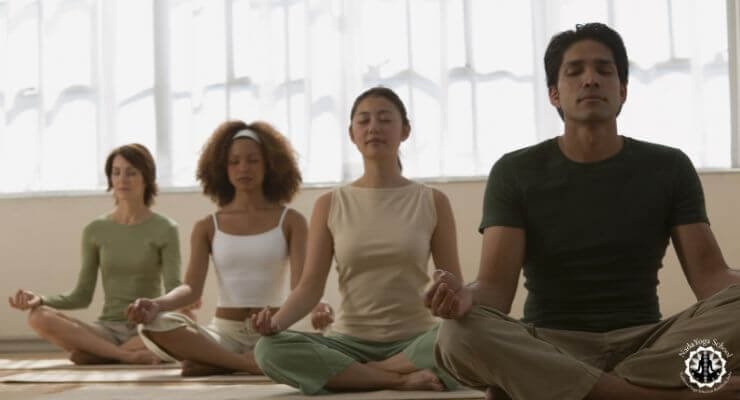
In a world overflowing with noise, movement, and endless mental chatter, silence has become a rare luxury. Yet within yogic philosophy, silence—Mauna—is not simply the absence of sound. It is a profound inner practice that leads to self-knowledge, mental clarity, and direct experience of truth.
For practitioners of yoga and especially Nada Yoga, silence is not emptiness; it is a doorway. It is the space where the inner sound, Nada, becomes audible.
This blog explores why silence is considered the ultimate teacher, the deeper meaning of Mauna, and how you can cultivate this powerful practice in daily life.
What Is Mauna? The Yogic Meaning of Silence
The Sanskrit word “mauna” translates to “silence,” but within the yogic tradition, it goes far beyond simply not speaking.
Mauna: Conservation of Energy
When we stop speaking, we conserve:
- mental energy
- emotional energy
- pranic (life-force) energy
Speech is one of the biggest ways we lose energy unconsciously.
Mauna: Turning Awareness Inward
Silence naturally redirects attention from the external world to your inner world—your breath, heartbeat, thoughts, and subtle sensations.
Mauna: A Practice of Mindfulness
True silence means calming the mind’s noise, not just restraining the tongue.
This is why yogis consider Mauna a form of meditation.
Why Silence Is the Ultimate Teacher
Silence has always been revered in yogic schools, monasteries, and Himalayan ashrams. Here’s why it is considered one of the highest forms of spiritual learning:
1. Silence Removes Illusion (Maya)
Maya is sustained by distraction, by the mind running outward.
Silence slowly dissolves this outward pull.
In silence:
- Thoughts stand naked.
- Patterns become visible.
- Illusions lose power.
Silence makes us see reality as it is, not how we imagine it to be.
2. Silence Allows You to Hear the Inner Sound (Nada)
Nada Yoga teaches that the entire universe is vibration, and the subtlest of these vibrations is the inner sound, Anahata Nada.
You can hear this only when:
- External noise reduces
- Mental noise quiets
- Attention turns inward
This is why Mauna is essential for deeper Nada Yoga practice.
3. Silence Strengthens Emotional Stability
When speech stops, emotional reactions soften.
Instead of speaking impulsively, silence gives space to:
- feel
- understand
- respond consciously
It is one of the best tools for emotional mastery.
4. Silence Improves Intuition and Inner Guidance
Repeated silence strengthens the faculty of inner knowing.
In silence, your intuition becomes sharper because:
- Clarity emerges
- Subtle messages of the body are heard
- The heart’s wisdom becomes accessible
Many yogis say silence is like tuning a radio; only when the static is gone can the real signal be received.
5. Silence Deepens Your Connection With the Self
Ultimately, silence reveals the Self beyond the mind.
It is said in yogic texts:
“In the silence between two thoughts, the Self is revealed.”
Mauna creates more of these gaps, moments of pure awareness where your true nature—peace—is experienced.
Types of Mauna in Yoga
Not all silence is the same. Yogic tradition identifies several types of Mauna:
1. Vaikhari Mauna – Silence of Speech
The simplest form: physically not speaking.
2. Upamsu Mauna – Silence of Whispering
Even mental murmuring is reduced.
3. Madhyama Mauna – Silence of Thoughts
Thoughts slow down; inner commentary fades.
4. Para Mauna – Silence of Being
The highest state of Mauna.
No inner or outer noise.
Only pure awareness remains.
This level arises naturally through deep practice—not through force.
How to Practice Mauna in Daily Life
You don’t need an ashram or a retreat to begin. Here are simple ways to practice silence:
1. Begin With 10 Minutes of Morning Silence
No phone.
No talking.
Just sit with your breath.
This resets your entire day.
2. Create “Silent Spaces” Throughout the Day
Choose small windows where you don’t speak:
- during meals
- in the car
- before sleep
Even 5 minutes of intentional silence is powerful.
3. Practice Digital Silence
Silence is not only about speech.
Minimize:
- unnecessary texting
- social media noise
- news overconsumption
Digital silence = mental silence.
4. Include Mantra or Breath Meditation
After a short period of silence, practice:
- So-Ham meditation
- AUM chanting
- breath awareness
Silence makes these practices far deeper.
5. Join a Silent Meditation or Nada Yoga Retreat
Retreats in Rishikesh, like those at Nada Yoga School, provide the perfect environment for deeper silence through:
- guided inner sound meditation
- pranayama
- mantra chanting
- Himalayan teachings on Mauna
The Role of Silence in Yoga Teacher Training
For aspiring yoga teachers, silence is a vital skill.
It helps you:
- hold space for students
- teach with calmness and clarity
- become more intuitive
- connect with subtle energies
Every YTT student benefits from at least a short practice of Mauna.
Silence Is Not Emptiness: It Is the Beginning of Insight
Yogic wisdom teaches that silence is not an absence; it is a presence—a presence of awareness, clarity, and truth.
When you enter silence:
- Your thoughts reveal their patterns
- Your emotions reveal their roots
- Your consciousness reveals its depth
Silence is the teacher that speaks without words.
It is the guide you carry everywhere.
Conclusion
Mauna is not a withdrawal from life; it is a return to your true nature. In silence, you meet yourself fully. You discover the inner sound. You dissolve illusions. And you awaken deeper wisdom.
In a world of constant noise, silence becomes a spiritual revolution.