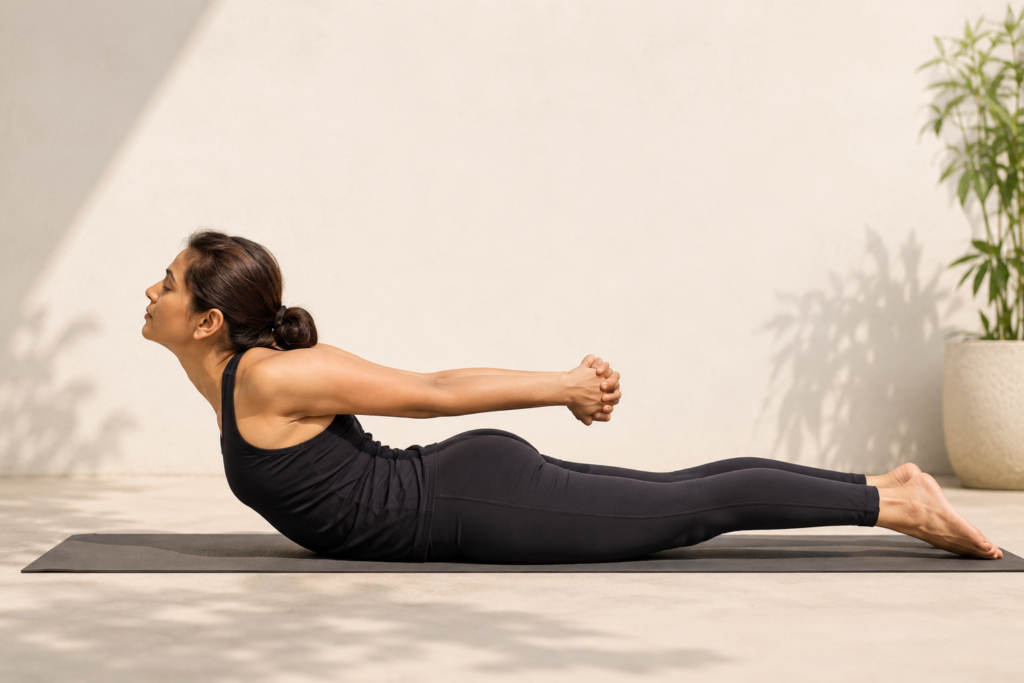
Sarpasana (सर्पासन), literally “Snake Pose,” is a prone backbend in which you interlace the fingers behind the pelvis and lift the chest without using the hands for support. It appears in the Bihar School of Yoga’s manual Asana Pranayama Mudra Bandha (APMB) and is grouped among the classic backward-bending asanas. Traditionally, it’s said to share most benefits with Bhujangasana (Cobra) but emphasizes upper-back strength and postural opening (rounded shoulders) even more.
You’ll also see “Sarpasana” used historically as a name in older sources that discuss cobra-like backbends, reflecting the long association between snakes/serpents and these poses.
How to Do Sarpasana (Step by Step)
- Set up
Lie prone with the legs straight and together, tops of feet down. Interlock the fingers and place the hands on top of the buttocks; rest the chin on the floor. (Starting position.) - Create your base
Gently press the tops of the feet and pubic bone down to anchor the pelvis. Reach long through the toes and crown. - Lift the chest
Using back muscles rather than the arms, lift the chest as far as is comfortable. As you rise, reach the interlaced hands back and lift them away from the body, drawing the shoulder blades toward each other. Keep the legs grounded. - Organize the shoulders & neck
Squeeze the shoulder blades together and down to broaden the chest; keep the back of the neck long, gaze forward. (Avoid crunching the back of the neck.) - Breathe & hold
Hold the final position briefly and comfortably. Classic APMB cues suggest inhaling before the lift, retaining during the lift/hold, and exhaling to lower; many modern teachers prefer easy breathing throughout—choose what’s safest for you. Lower slowly and rest prone. Practice up to 3–5 rounds.
Beginner help: If clasping the hands is hard, hold a strap behind you, or keep the hands on the sacrum rather than lifting the arms high. A small bolster under the lower ribs can make breathing easier in the shape.
Benefits (what practitioners commonly experience)
- Strong upper-back and postural work. Sarpasana is described as having a particularly profound strengthening effect on the back muscles and as a corrective for rounded shoulders.
- Front-body opening & chest expansion, encouraging freer breathing and countering slumped sitting.
- Similar systemic benefits to Cobra (traditionally noted): spinal suppleness; abdominal organ stimulation. Treat these as traditional claims, not medical treatment.
Anatomy: What’s Working
- Spinal extensors (erector spinae, multifidi) raise the sternum from the floor while the abdominals provide light tone to keep the curve even. Legs press long to stabilize the pelvis. (General cobra/backbend mechanics apply.)
- Scapular retraction & posterior shoulder: interlaced-hands action cues rhomboids and mid-traps to draw the shoulder blades together; posterior deltoids and the long head of triceps assist as the arms reach back. Chest openers done with hands clasped behind the back are commonly used to relieve neck/shoulder tension for this reason.
- Front-body lengthening: pectorals, abdominals, and hip flexors lengthen as the chest lifts, making Sarpasana a chest opener as well as a back-strengthener.
Preparatory (and Follow-Up) Poses
Before:
- Sphinx (Saral/Salamba Bhujangasana) or Baby Cobra to pattern gentle extension.
- Downward-Facing Dog and Cobra for shoulder/upper-back mobility.
- Locust (Salabhasana) / Ardha Shalabhasana for posterior-chain strength.
After:
- Neutralize with Child’s Pose or a mild forward fold; you can also proceed to stronger backbends (e.g., Dhanurasana) if the low back feels clear.
Contraindications & When to Modify
Avoid or seek individualized guidance if you have:
- Peptic ulcer, hernia, intestinal tuberculosis, hyperthyroidism (traditional cautions listed for Sarpasana).
- Heart conditions/high blood pressure (traditional caution).
- Pregnancy, recent abdominal surgery, or current back/shoulder injury—regress to Sphinx or skip.
Red flags while practicing: sharp/nervey low-back pain, neck pinching, breathlessness, or dizziness—come out immediately, rest prone, and retest with less depth or more support.
Tips & Common Mistakes
- Don’t lead with the chin. Let the sternum move forward/up and keep the back of the neck long.
- Arms are for reach, not leverage. The back lifts you; the hands simply reach back to cue scapular organization.
- Keep legs grounded. In Sarpasana the legs stay down—save leg-lifting for Locust variations.
- Go smaller but cleaner. A lower, well-distributed curve is safer than chasing height that compresses the lumbar spine. (General backbend principle.)
Practice within your range. In Snake Pose, a steady lift from the back body with a quiet, open chest does far more for strength and posture than forcing height with the arms.
If you wish to learn how to teach yoga and want to understand asanas deeply through correct alignments and postures, you can apply for 200 hour yoga teacher training in Rishikesh at Nada Yoga School.