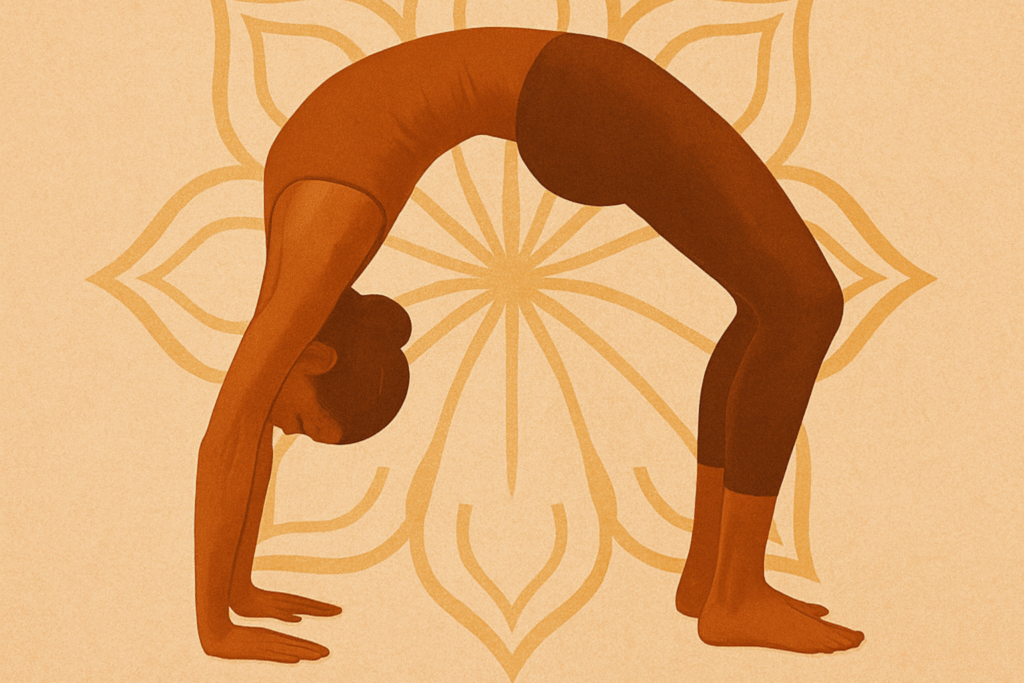
Chakrasana, also known as the Wheel Pose or Upward Bow Pose, is a powerful backbend that symbolizes openness, strength, and the awakening of inner energy. In Sanskrit, “chakra” means “wheel,” and “asana” means “pose.” True to its name, the pose forms a graceful wheel-like arch with the body, symbolizing the continuous flow of energy and consciousness.
At Nada Yoga School in Rishikesh, we often emphasize the importance of Chakrasana not just as a physical posture but as a transformative tool for balancing body, mind, and energy.
What Is Chakrasana?
Chakrasana is a heart-opening yoga pose that strengthens the spine, shoulders, and legs while improving flexibility and vitality. It’s often practiced in Hatha Yoga and Ashtanga Yoga, as well as during Yoga Teacher Training Courses (TTCs) in Rishikesh.
In this pose, the body forms a semi-circle resembling a wheel, symbolizing movement, flow, and transformation — key aspects of yogic philosophy.
Sanskrit Name: Chakrasana (चक्रासन)
English Name: Wheel Pose / Upward Bow Pose
Yoga Style: Hatha Yoga / Ashtanga Yoga
Level: Intermediate to Advanced
How to Practice Chakrasana (Step-by-Step Guide)
Before practicing Chakrasana, warm up your spine, wrists, and shoulders with preparatory poses like Bridge Pose (Setu Bandhasana), Cobra Pose (Bhujangasana), and Cat-Cow Stretch (Marjariasana–Bitilasana).
Step-by-Step Instructions
- Lie Down on Your Back
- Place your feet hip-width apart, close to your sitting bones.
- Keep your knees bent and feet flat on the mat.
- Position Your Hands
- Bend your elbows and place your palms beside your ears, fingers pointing toward your shoulders.
- Inhale and Lift
- Press your palms and feet firmly into the mat.
- On inhalation, lift your hips and chest upward, straightening your arms and legs as much as possible.
- Form the Wheel
- Allow your head to relax gently between your arms.
- Keep breathing deeply and hold for 5–10 seconds (or as comfortable).
- Exhale and Release
- Slowly bend your elbows and knees to bring your back down to the mat gently.
- Rest in Shavasana (Corpse Pose) or Supta Baddha Konasana afterward.
Precautions and Contraindications
Like all advanced yoga poses, Chakrasana requires mindfulness and awareness. Practicing under the guidance of a certified yoga teacher is always recommended.
Avoid Chakrasana if you have:
- Recent or chronic back, neck, or shoulder injuries
- High or low blood pressure
- Severe headaches or migraines
- Wrist pain or carpal tunnel syndrome
- Heart-related issues
Pregnant women and those recovering from surgeries should also avoid this pose unless approved by their doctor.
Benefits of Chakrasana
Chakrasana offers both physical and energetic benefits, helping practitioners awaken their full potential.
Physical Benefits
- Strengthens the spine, legs, arms, shoulders, and wrists
- Improves the flexibility and mobility of the back
- Stimulates the thyroid and pituitary glands
- Enhances blood circulation and energizes the nervous system
- Opens the chest, improving lung capacity and respiration
Mental and Emotional Benefits
- Boosts confidence and emotional balance
- Releases tension and stress stored in the spine
- Helps combat fatigue and mild depression
- Invokes a sense of openness, joy, and freedom
Energetic Benefits
- Activates the Anahata (Heart Chakra), promoting love and compassion
- Balances the Manipura (Solar Plexus Chakra), enhancing inner strength
- Stimulates the Sahasrara (Crown Chakra), connecting you to higher consciousness
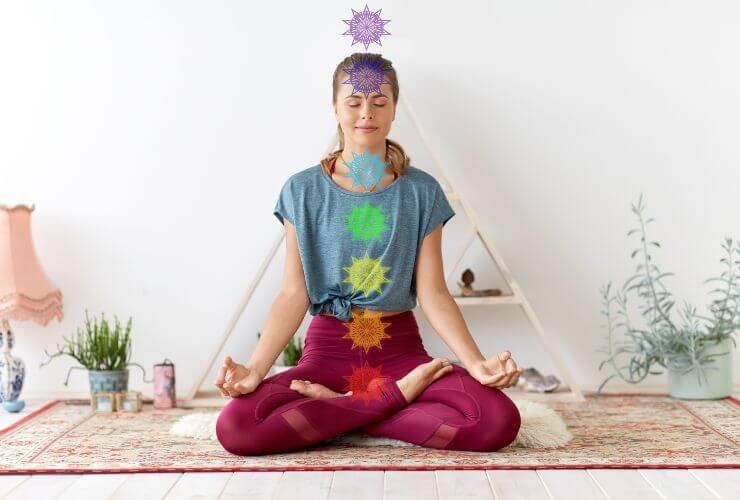
Chakrasana and the Chakra System
Chakrasana beautifully aligns with the concept of chakra awakening in yogic philosophy.
The pose directly influences three main energy centers:
- Anahata Chakra (Heart Chakra) – Opens the heart to love, empathy, and forgiveness.
- Manipura Chakra (Solar Plexus Chakra) – Ignites inner power and will.
- Sahasrara Chakra (Crown Chakra) – Encourages spiritual awakening and consciousness expansion.
When performed with awareness, Chakrasana becomes more than a physical exercise — it becomes a gateway to higher energy and inner transformation.
Common Mistakes to Avoid in Chakrasana
Practicing this pose incorrectly can lead to strain or injury. Here are some common mistakes to avoid:
- Skipping the warm-up: Always prepare your spine and shoulders before attempting.
- Incorrect hand or foot placement: Keep hands parallel and feet firmly grounded.
- Overarching the lower back: Engage your core and thighs to support the spine.
- Holding your breath: Maintain steady, deep breathing.
- Rushing out of the pose: Always release slowly and mindfully.
Modifications and Variations
If you’re new to Chakrasana or still building strength and flexibility, try these variations:
For Beginners
- Bridge Pose (Setu Bandhasana): A gentle backbend to strengthen the spine and prepare for Chakrasana.
- Wheel Pose with Support: Practice with yoga blocks under your hands or shoulders for assistance.
Advanced Variations
- One-Legged Chakrasana: Lift one leg up while holding the pose to deepen balance and control.
- Forearm Wheel Pose: A challenging version that demands greater arm and back strength.
Tips for Safe and Effective Practice
- Practice under the supervision of a certified yoga instructor.
- Focus on proper alignment rather than depth.
- Avoid overexerting the lower back. Engage your core muscles.
- After Chakrasana, practice forward-bending poses like Paschimottanasana (Seated Forward Bend) or Child’s Pose (Balasana) to counterbalance the backbend.
Spiritual Significance of Chakrasana
In yoga philosophy, the spine represents the pathway of energy (Sushumna Nadi) that connects all chakras. Chakrasana helps activate this energy flow, making it a powerful asana for spiritual awakening.
When you bend backward and open your heart toward the sky, you symbolically surrender to the universe, expanding consciousness and embracing both strength and vulnerability.
Practicing Chakrasana at Nada Yoga School, Rishikesh
At Nada Yoga School, one of the most reputed yoga schools in Rishikesh, Chakrasana is taught as part of our 200-hour, 300-hour, and 500-hour Yoga Teacher Training Courses.
Our experienced teachers guide students through proper alignment, preparatory asanas, breathing techniques, and energy awareness, ensuring that each student practices safely while deepening their understanding of yogic science.
Whether you are a beginner or an advanced practitioner, learning Chakrasana at the foothills of the Himalayas offers a truly transformative experience that blends asana, pranayama, and spiritual awakening.
Conclusion
Chakrasana is not just a yoga pose; it is a celebration of vitality, energy, and consciousness. It opens the heart, strengthens the body, and aligns the spirit with higher dimensions of awareness.
Practicing Chakrasana regularly with mindfulness can help you:
- Cultivate physical strength and flexibility
- Enhance your emotional resilience
- Awaken your inner energy and spiritual light
At Nada Yoga School in Rishikesh, we honor the deeper essence of yoga, where movement becomes meditation, and asanas become pathways to self-realization.