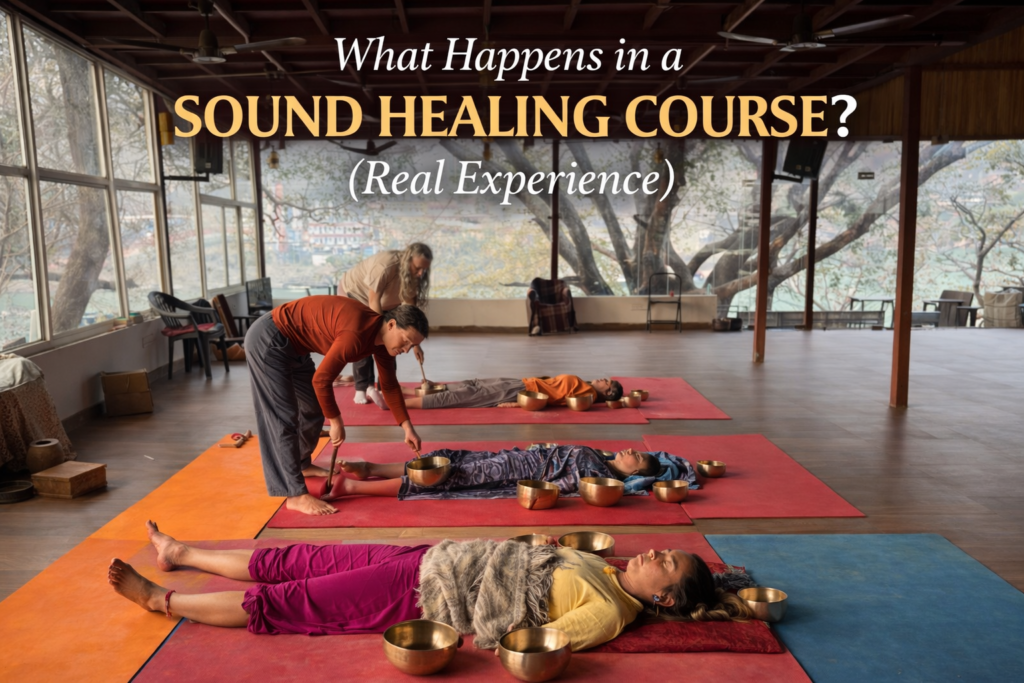
If you are considering joining a sound healing course, one of the most common questions that comes up is: what actually happens inside the training?
From the outside, it may look like a peaceful combination of meditation and music. But in reality, a structured sound healing course in Rishikesh is a deeply immersive experience that combines theory, practical training, discipline, and personal transformation.
Whether you are exploring this path out of curiosity, passion, or as a potential career, understanding the real experience inside a sound healing teacher training course in Rishikesh can help you make an informed decision.
This blog provides a clear, experience-based overview of what you can expect—from daily routines to learning outcomes and personal shifts.
What Is a Sound Healing Course in Rishikesh Really Like?
A professional sound healing course is designed to take you from being a beginner to someone who can confidently practice sound healing techniques.
Unlike short workshops, a sound healing certification course is structured around three key pillars:
- Theoretical understanding of sound and vibration
- Practical training with instruments
- Personal experience and inner awareness
Rishikesh, often referred to as the yoga capital of the world, provides an environment that supports both learning and transformation. The natural surroundings, traditional teachings, and focused lifestyle contribute significantly to the depth of the experience.
Daily Routine in a Sound Healing Teacher Training Course
One of the most defining aspects of a sound healing teacher training course in Rishikesh is the daily structure. The routine is intentionally designed to balance discipline with reflection.
Morning: Meditation and Sound Awareness
The day typically begins early with guided meditation and breathwork.
This session may include:
- Pranayama (breathing techniques)
- Silent sitting or guided awareness
- Listening exercises based on Nada Yoga principles
The purpose of this practice is to sharpen your sensitivity to sound. Before learning how to use sound for others, you must first learn how to truly listen.
Over time, this daily practice improves focus, emotional balance, and awareness.
Mid-Morning: Theory and Foundations of Sound Healing
After the morning session, students attend theory classes that provide the intellectual foundation of sound healing.
Topics usually covered include:
- The science of sound and vibration
- How sound affects the brain and nervous system
- Concepts of resonance and frequency
- The relationship between sound and the human body
In a well-designed sound healing course in Rishikesh, the teaching approach integrates both modern understanding and traditional yogic knowledge.
This balance is essential for building credibility as a practitioner.
Afternoon: Practical Training with Instruments
The afternoon sessions focus on hands-on learning, which is one of the most valuable parts of the course.
Students are introduced to various instruments such as:
- Tibetan singing bowls
- Crystal singing bowls
- Gongs
- Tuning forks
During this time, you will learn:
- Proper techniques for playing each instrument
- How to create different tones and vibrations
- How to structure a sound healing session
- How to work with individuals and groups
Practice sessions are often interactive, allowing students to both give and receive sound healing. This experiential learning builds confidence and helps you understand the practical application of the techniques.
Evening: Sound Baths and Integration
Evenings are usually dedicated to sound baths and integration practices.
These sessions provide an opportunity to:
- Experience deep relaxation
- Observe the effects of sound on the body and mind
- Reflect on the day’s learning
Sound baths are not just passive experiences. They are an essential part of training because they allow you to understand how different frequencies and instruments affect participants.
This firsthand experience becomes a foundation for your future practice.
What You Learn in a Sound Healing Certification Course
A comprehensive sound healing teacher training in Rishikesh goes far beyond simply playing instruments.
It equips you with the knowledge and skills required to practice professionally.
Understanding Sound as Therapy
You will learn how sound interacts with the human body at multiple levels.
This includes:
- The effect of vibration on the nervous system
- The role of sound in reducing stress and anxiety
- How sound can support emotional release
This understanding is crucial for conducting safe and effective sessions.
Structuring a Sound Healing Session
One of the most important skills you develop is the ability to design and conduct a complete session.
This involves:
- Preparing the space
- Setting intentions
- Choosing appropriate instruments
- Guiding participants through the experience
By the end of the course, you should be able to confidently lead a session from start to finish.
Working with Energy and Chakras
Many sound healing courses include teachings on the chakra system and energy flow.
You will learn:
- The basics of the seven chakras
- How sound interacts with different energy centers
- Techniques for balancing and harmonizing energy
This aspect of the training adds depth to your practice and allows you to work more intuitively.
Client Interaction and Professional Practice
A key component of a good sound healing certification course is preparing you for real-world practice.
This includes:
- Understanding client needs
- Maintaining professional boundaries
- Creating a safe and supportive environment
Some courses also introduce basic guidance on setting up your practice, which is valuable for those looking to turn this into a career.
The Real Experience: Personal Transformation
One of the most unique aspects of a sound healing course is the personal transformation that students experience.
While the course is designed to teach skills, it also has a profound impact on your inner state.
Physical and Mental Benefits
Many students report:
- Improved sleep quality
- Reduced stress levels
- Greater mental clarity
Emotional Awareness
Sound has a powerful effect on emotions.
During the course, you may experience:
- Emotional release
- Increased self-awareness
- A deeper connection with your inner state
Growth Beyond Technique
The combination of disciplined routine, immersive learning, and self-reflection often leads to long-lasting personal growth.
This is one of the reasons why many people describe the experience as transformative rather than just educational.
What Makes Learning in Rishikesh Different?
Rishikesh offers a unique environment that enhances the learning experience.
Authentic Setting
The city is deeply rooted in yogic traditions, which creates a strong foundation for practices like sound healing.
Focused Lifestyle
The structured routine and peaceful surroundings help minimize distractions, allowing you to fully immerse yourself in the course.
Global Community
Students from different parts of the world come to Rishikesh to study, creating opportunities for cultural exchange and networking.
Connection with Nature
Being close to the Ganges and the Himalayan foothills adds a natural element to the learning process, which many students find grounding and inspiring.
Challenges You May Face During the Course
It is important to approach a sound healing course with realistic expectations.
Adjusting to Discipline
The daily schedule can be demanding, especially if you are not used to early mornings or structured routines.
Learning New Skills
Playing instruments and understanding sound requires practice and patience.
You may not feel confident immediately, and that is part of the process.
Emotional Release
As you engage deeply with sound, emotional experiences may arise. This can be challenging but is often a sign of deeper healing.
What Happens After You Complete the Course?
After completing a sound healing teacher training course in Rishikesh, you have several options.
Begin Practicing
You can start offering sessions to:
- Friends and family
- Small groups
- Initial clients
Build a Professional Path
With consistent practice, you can:
- Work with yoga studios
- Collaborate with wellness centers
- Conduct workshops and retreats
Continue Learning
Many practitioners choose to deepen their knowledge through advanced training or by integrating sound healing with other modalities like yoga or meditation.
Is a Sound Healing Course Worth It?
A sound healing course is worth it if you are genuinely interested in learning and applying the practice.
It is not just about relaxation or passive participation. It requires:
- Commitment
- Consistency
- Willingness to grow
For those who approach it seriously, the course can provide both personal transformation and professional opportunities.
Final Thoughts
A sound healing course offers far more than what is visible on the surface.
It is a structured, immersive experience that combines:
- Knowledge
- Practice
- Self-discovery
By the end of a well-designed sound healing teacher training in Rishikesh, you do not just learn techniques. You develop a deeper understanding of sound, awareness, and how to use both in a meaningful way.
Begin Your Journey with Nada Yoga School
If you are ready to explore this path, joining a sound healing course in Rishikesh can be the first step.
At Nada Yoga School, the training is designed to provide:
- Authentic teachings rooted in tradition
- Hands-on practical experience
- Guidance for real-world application
Whether your goal is personal growth or building a career, the right course can help you move forward with clarity and confidence.