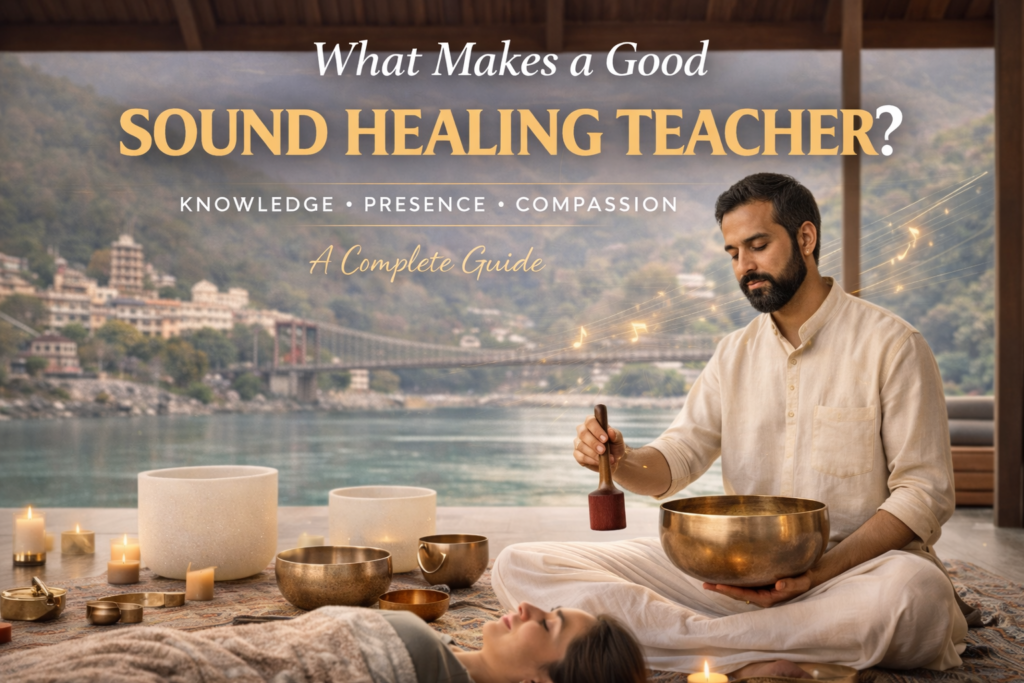
As sound healing continues to grow within the global wellness space, more people are stepping into this field—not just as practitioners, but as teachers.
But a common question arises for both students and aspiring instructors:
What actually makes a good sound healing teacher?
Is it the ability to play instruments? Knowledge of chakras? Years of experience?
The truth is, a great teacher goes far beyond technique. If you are considering enrolling in a sound healing teacher training course in Rishikesh or eventually teaching yourself, understanding these qualities will help you choose the right path—and the right mentor.
Why the Role of a Sound Healing Teacher Matters
In any healing modality, the teacher plays a critical role. But in sound healing, this becomes even more important.
Sound is subtle. It affects not just the body, but the nervous system, emotions, and mental state. A teacher is not just transferring knowledge—they are guiding experience.
A well-trained teacher ensures:
- Safe and effective learning
- Proper use of instruments
- Ethical and responsible practice
- Confidence in students
This is why choosing the right sound healing certification course in Rishikesh is essential. The teacher you learn from shapes your entire foundation.
Deep Understanding of Sound, Not Just Instruments
One of the biggest misconceptions is that sound healing is about playing instruments beautifully.
In reality, a good teacher understands how sound works.
What This Includes
- How vibration affects the body
- The role of frequency and resonance
- The connection between sound and the nervous system
- The difference between therapeutic sound and performance
A teacher who only focuses on technique may teach you how to play.
A good teacher teaches you why and when to play.
This depth of understanding is what separates a casual instructor from a professional sound healing teacher.
Strong Foundation in Both Science and Tradition
Sound healing sits at the intersection of ancient wisdom and modern understanding.
A good teacher respects both.
Traditional Knowledge
- Nada Yoga principles
- Chakra system
- Use of sound in meditation and spiritual practices
Scientific Perspective
- Brainwave states
- Stress response and relaxation
- Effects of vibration on the body
A well-structured sound healing teacher training course in Rishikesh integrates both aspects, giving students a balanced and credible education.
Ability to Create a Safe and Grounded Space
Teaching sound healing is not just about delivering information. It is about holding space.
A good teacher creates an environment where students feel:
- Comfortable
- Supported
- Safe to explore and learn
This is especially important because sound healing can sometimes bring up emotional responses.
A responsible teacher knows how to:
- Guide students through these experiences
- Maintain boundaries
- Ensure a stable learning environment
Clear Communication and Teaching Skills
Being a skilled practitioner does not automatically make someone a good teacher.
A good sound healing teacher can:
- Explain concepts clearly
- Break down complex ideas into simple steps
- Demonstrate techniques effectively
- Adapt teaching to different learning styles
In a professional sound healing course in Rishikesh, teaching is structured, not random. Students are guided step by step, ensuring they actually understand what they are learning.
Emphasis on Practical Training
Sound healing cannot be learned through theory alone.
A good teacher ensures that students get:
- Hands-on experience with instruments
- Opportunities to practice on others
- Feedback and correction
This is where many courses fall short.
Without proper practice, students may leave with knowledge but no confidence. A strong sound healing certification course focuses equally on doing, not just learning.
Personal Experience and Authentic Practice
A teacher who actively practices sound healing brings a different level of depth.
They are not just repeating information—they are sharing lived experience.
This includes:
- Real client interactions
- Practical challenges and solutions
- Insights that cannot be found in books
When learning from such a teacher, students gain a more realistic understanding of what it takes to become a practitioner.
Ethical Approach to Sound Healing
As the field grows, maintaining integrity becomes increasingly important.
A good sound healing teacher emphasizes:
- Honesty in practice
- Respect for clients
- Clear boundaries
- Avoiding exaggerated claims
Sound healing is powerful, but it is not a replacement for medical treatment. Responsible teachers make this distinction clear.
This builds trust and long-term credibility for both the teacher and the student.
Ability to Guide Students Beyond the Course
A strong teacher does not stop at teaching techniques.
They help students move forward.
This May Include
- Guidance on starting a practice
- Advice on working with clients
- Support after course completion
In a high-quality sound healing teacher training in Rishikesh, mentorship is often part of the experience.
This ongoing support makes a significant difference in how confident and successful students become.
Adaptability and Awareness
Every student is different.
A good teacher recognizes this and adapts their approach accordingly.
They understand:
- Different learning speeds
- Different comfort levels
- Different intentions (personal vs professional)
Rather than following a rigid method, they adjust their teaching to meet the needs of the group.
Passion for Teaching, Not Just Healing
There is a difference between someone who enjoys healing and someone who enjoys teaching.
A good teacher genuinely cares about:
- Student growth
- Student understanding
- Student confidence
They are patient, attentive, and invested in the learning process.
This passion is often what makes the learning experience memorable and impactful.
Continuous Learning and Growth
Sound healing is an evolving field.
A good teacher does not stop learning after becoming certified.
They continue to:
- Explore new techniques
- Deepen their understanding
- Refine their teaching methods
This commitment to growth ensures that students receive up-to-date and relevant knowledge.
Why Choosing the Right Teacher in Rishikesh Matters
Rishikesh attracts students from all over the world for sound healing training.
But not all courses offer the same quality.
Choosing a program led by experienced teachers ensures:
- Authentic learning
- Proper structure
- Real skill development
A well-designed sound healing course in Rishikesh provides not just knowledge, but a strong foundation for future practice.
How to Identify a Good Sound Healing Teacher
If you are evaluating a course or teacher, consider the following:
Look for:
- Structured curriculum
- Balance of theory and practice
- Experienced instructors
- Student testimonials
- Post-course support
Be cautious of:
- Courses that focus only on instruments
- Lack of practical training
- Over-promising results
- No clear teaching structure
Making the right choice at the beginning can save you time, money, and confusion later.
Can You Become a Good Sound Healing Teacher?
Yes, but it requires more than just completing a course.
To grow into a good teacher, you need:
- Consistent practice
- Real experience with people
- Willingness to keep learning
- Patience and dedication
Starting with a strong sound healing teacher training course in Rishikesh gives you the foundation. What you build on top of it depends on your commitment.
Final Thoughts
A good sound healing teacher is not defined by how many instruments they own or how long they have been practicing.
They are defined by:
- Depth of understanding
- Ability to guide others
- Integrity in practice
- Commitment to student growth
If you are serious about entering this field, learning from the right teacher is one of the most important decisions you will make.
Learn from Experienced Teachers at Nada Yoga School
At Nada Yoga School, our sound healing teacher training course in Rishikesh is designed to develop not just practitioners, but confident and responsible teachers.
You will learn:
- Traditional and modern approaches
- Practical, hands-on techniques
- How to guide real sessions
- How to build your path in sound healing
With experienced guidance and a structured approach, you gain both skill and clarity.