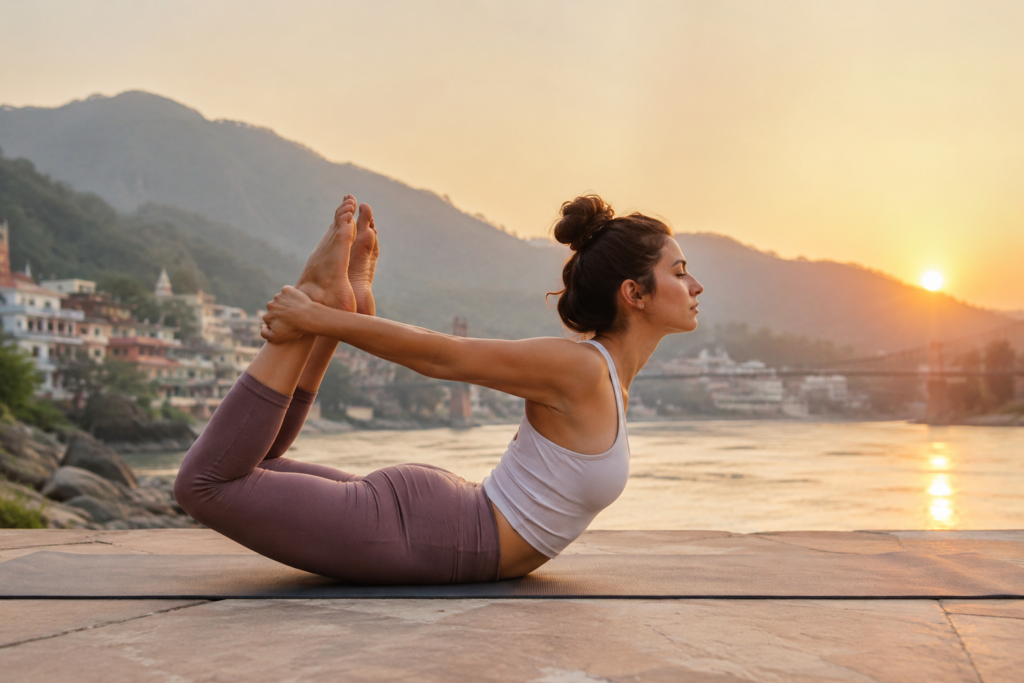
Dhanurasana, commonly known as Bow Pose, is one of the most iconic backbending postures in classical Hatha Yoga. Named after the Sanskrit word Dhanur (bow), the posture resembles a fully drawn archer’s bow, where the arms become the string and the body forms the curved bow.
This dynamic posture strengthens the entire posterior chain, improves spinal flexibility, stimulates digestion, opens the heart, and energizes the nervous system. Beyond its physical advantages, Dhanurasana symbolizes determination, focus, and the harmonious balance between strength and surrender.
Whether you’re beginning your yoga journey or deepening your practice through a 200 Hour Yoga Teacher Training in Rishikesh, mastering Dhanurasana develops both physical resilience and inner awareness.
What is Dhanurasana?
Dhanurasana is a prone backbend that combines the benefits of Bhujangasana (Cobra Pose) and Shalabhasana (Locust Pose). By lifting both the chest and thighs simultaneously, the posture creates an intense extension through the spine while stretching the entire front body.
The pose appears in traditional Hatha Yoga texts and remains an essential posture in modern yoga practice due to its comprehensive therapeutic benefits.
Sanskrit Meaning
- Dhanur = Bow
- Asana = Posture
The posture symbolizes drawing one’s inner strength toward a higher purpose, much like an archer drawing a bow before releasing an arrow with complete focus.
Physical Benefits of Dhanurasana
Practiced consistently with proper alignment, Dhanurasana offers numerous physical benefits.
1. Improves Spinal Flexibility
Bow Pose creates an even extension throughout the cervical, thoracic, and lumbar spine, improving mobility while reducing stiffness caused by prolonged sitting.
A flexible spine is considered a hallmark of vitality in yogic philosophy.
2. Strengthens the Back Muscles
The posture activates:
- Erector spinae
- Gluteal muscles
- Hamstrings
- Posterior shoulders
- Upper back
These muscles support healthy posture and reduce chronic back discomfort.
3. Opens the Chest and Shoulders
Modern lifestyles often create rounded shoulders and tight pectoral muscles.
Dhanurasana stretches:
- Chest
- Front shoulders
- Hip flexors
- Abdominal muscles
This encourages deeper breathing and improved posture.
4. Stimulates Digestive Organs
The abdominal compression gently massages:
- Stomach
- Liver
- Pancreas
- Intestines
This stimulation may help improve digestion, relieve constipation, and encourage healthy metabolism.
5. Improves Respiratory Capacity
By expanding the rib cage, Dhanurasana increases lung capacity and encourages fuller diaphragmatic breathing.
Many practitioners notice improved breathing efficiency after regular practice.
6. Enhances Energy Levels
Bow Pose activates the entire posterior chain while stimulating the nervous system, making it an excellent posture for combating fatigue and lethargy.
7. Supports Healthy Posture
Because it strengthens the muscles responsible for spinal extension, Dhanurasana helps counteract poor posture developed from desk work and excessive screen time.
Mental Benefits of Dhanurasana
Yoga works on both body and mind.
Regular practice of Dhanurasana can help:
- Increase confidence
- Improve concentration
- Reduce mental sluggishness
- Release emotional tension stored in the chest
- Enhance emotional resilience
- Develop courage and determination
The expansive nature of the posture often creates a feeling of openness and emotional upliftment.
Spiritual Significance of Dhanurasana
In yogic symbolism, the bow represents readiness, discipline, and focused intention.
Just as an arrow reaches its destination through steady aim, spiritual progress requires unwavering attention and disciplined practice.
Dhanurasana teaches practitioners to balance:
- Strength with softness
- Effort with surrender
- Stability with openness
The posture also activates the flow of Prana through the spine, preparing the practitioner for deeper pranayama and meditation practices.
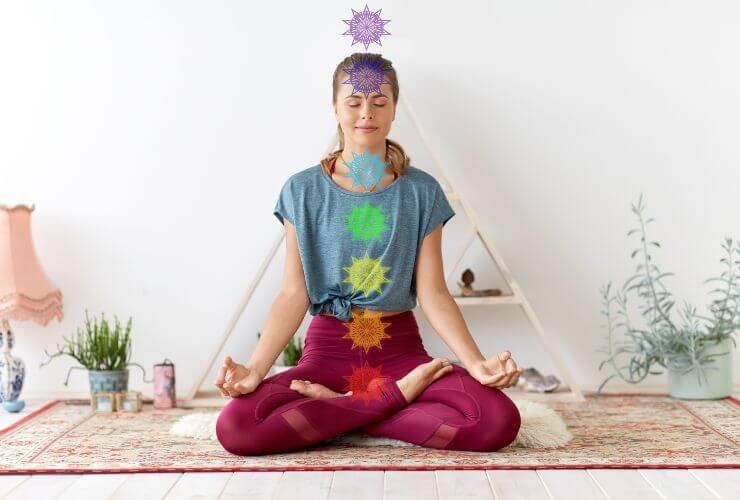
Chakras Activated in Dhanurasana
Anahata Chakra (Heart Chakra)
Opening the chest stimulates compassion, love, forgiveness, and emotional expansion.
Manipura Chakra (Solar Plexus Chakra)
The abdominal stimulation activates personal power, confidence, motivation, and inner fire.
Vishuddha Chakra (Throat Chakra)
As the chest expands and the neck lengthens, energetic flow toward the throat chakra may improve communication and self-expression.
How to Practice Dhanurasana Step by Step
Step 1
Lie comfortably on your stomach.
Step 2
Bend both knees and bring your heels toward the buttocks.
Step 3
Reach back and hold the outside of your ankles.
Step 4
Inhale deeply.
Step 5
Kick your feet into your hands while simultaneously lifting your chest and thighs off the floor.
Avoid pulling only with the arms.
The lift should originate from the legs.
Step 6
Keep your gaze forward while breathing steadily.
Remain for 15–30 seconds.
Step 7
Exhale slowly and gently release the pose.
Rest in Makarasana or Child’s Pose before repeating.
Common Mistakes in Dhanurasana
Many beginners struggle because of improper technique.
Avoid these common errors:
Pulling with the Arms
Instead of pulling your feet, press the feet back into the hands.
Compressing the Lower Back
Lengthen the spine before lifting.
Distribute the backbend evenly.
Knees Too Wide Apart
Keep the knees approximately hip-width apart.
Holding the Breath
Maintain slow, controlled breathing throughout the posture.
Forcing the Lift
Never sacrifice alignment for height.
Quality always matters more than depth.
Beginner Modifications
If full Dhanurasana feels inaccessible:
- Practice Half Bow Pose (Ardha Dhanurasana)
- Use a yoga strap around the ankles
- Lift only the chest initially
- Focus on shoulder mobility before increasing the backbend
Consistency produces better results than forcing flexibility.
Advanced Variations
Experienced practitioners may explore:
Parsva Dhanurasana (Side Bow Pose)
Rolling gently from side to side massages the abdominal organs.
Rocking Bow Pose
Using the breath to rock forward and backward creates a dynamic abdominal massage.
One-Legged Bow Pose
An advanced balance and flexibility variation.
Contraindications
Avoid or modify Dhanurasana if you have:
- Pregnancy
- Recent abdominal surgery
- Hernia
- Severe lower back injury
- Uncontrolled high blood pressure
- Migraine during active episodes
- Serious neck injuries
Always consult a qualified yoga teacher or healthcare professional if uncertain.
Preparatory Poses
Prepare the body with:
- Cat-Cow Stretch
- Bhujangasana (Cobra Pose)
- Shalabhasana (Locust Pose)
- Setu Bandhasana (Bridge Pose)
- Low Lunge
Counter Poses
After Dhanurasana, practice:
- Balasana (Child’s Pose)
- Makarasana (Crocodile Pose)
- Paschimottanasana (Seated Forward Bend)
These neutralize the spine and release tension.
Dhanurasana in Hatha Yoga Teacher Training
In traditional Hatha Yoga education, Dhanurasana is far more than a flexibility exercise.
Students learn:
- Proper anatomical alignment
- Safe adjustments
- Therapeutic applications
- Energetic effects
- Breath coordination
- Contraindications
- Sequencing principles
Developing a strong understanding of foundational postures like Dhanurasana is essential for anyone pursuing a yoga teaching career.
Frequently Asked Questions
Is Dhanurasana suitable for beginners?
Yes. Beginners should practice gradually, using props or simplified variations until sufficient flexibility and strength develop.
How long should I hold Bow Pose?
Most practitioners begin with 15–20 seconds and gradually increase to 45 seconds with steady breathing.
Does Dhanurasana reduce belly fat?
No yoga pose directly burns fat from one area. However, Dhanurasana stimulates digestion, strengthens the core, and supports an active lifestyle that contributes to overall fat loss.
Which muscles are strengthened?
The posture primarily strengthens the back muscles, glutes, hamstrings, shoulders, and posterior chain while stretching the chest, abdomen, quadriceps, and hip flexors.
Can Dhanurasana improve posture?
Yes. By strengthening spinal extensors and opening the chest, Bow Pose helps correct rounded shoulders and poor postural habits.
Deepen Your Yoga Practice
Learning postures like Dhanurasana is only the beginning of a lifelong yogic journey.
If you wish to understand yoga beyond physical exercise—including alignment, anatomy, pranayama, meditation, philosophy, mantra chanting, and the subtle science of Nada Yoga—our 200 Hour Yoga Teacher Training in Rishikesh offers an immersive experience rooted in authentic yogic tradition.
Students interested in the transformative power of vibration can also explore our Sound Healing Teacher Training Course, where ancient yogic wisdom meets the science of sound..