
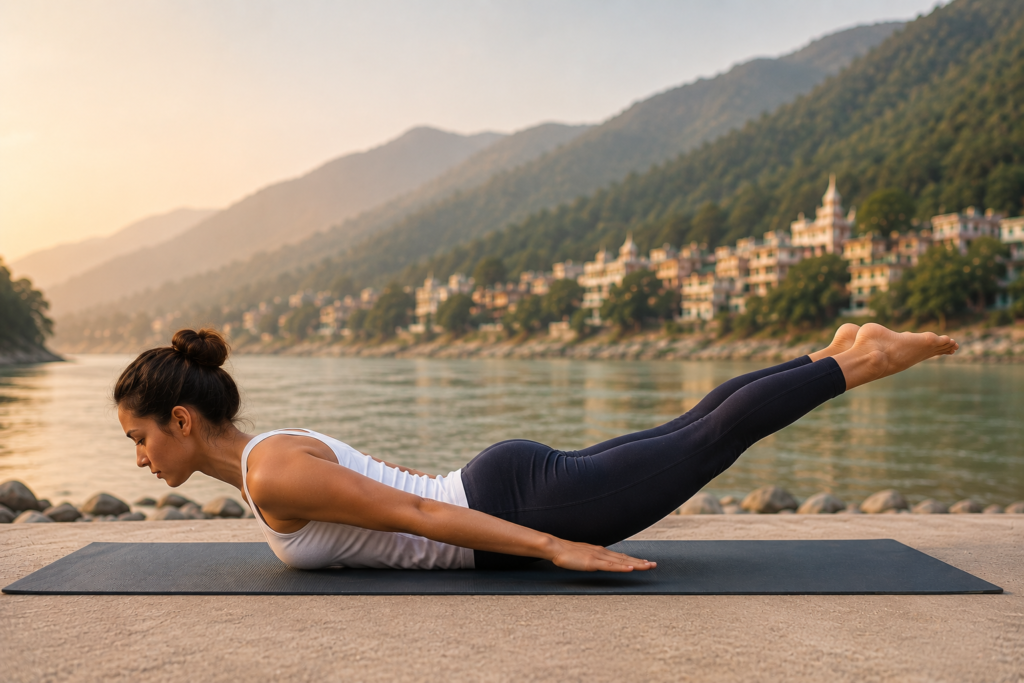
Śalabhāsana, commonly known as Locust Pose, is a powerful prone backbend in Hatha Yoga that strengthens the entire posterior chain, improves posture, and develops spinal resilience. Derived from the Sanskrit words Śalabha meaning “locust” and Asana meaning “pose,” this posture resembles a locust lifting itself upward from the ground.
Although it appears simple, Śalabhāsana is one of the most effective yoga poses for strengthening the lower back, glutes, hamstrings, and core muscles. In today’s sedentary world, where long hours of sitting contribute to poor posture and back discomfort, Locust Pose offers a valuable antidote.
Whether you are a beginner progressing from Ardha Śalabhāsana (Half Locust Pose) or an experienced practitioner looking to deepen your backbend practice, this complete guide will help you understand the benefits, proper technique, precautions, and traditional yogic significance of Śalabhāsana.
What is Śalabhāsana?
Śalabhāsana is a prone backbending posture in which both legs are lifted simultaneously while the chest remains grounded or lightly elevated, depending on the variation being practiced.
Unlike its preparatory variation, Ardha Śalabhāsana (Half Locust Pose), which lifts one leg at a time, Śalabhāsana requires greater strength, coordination, and spinal stability.
The posture primarily strengthens:
- Lower back muscles
- Glutes
- Hamstrings
- Core stabilizers
- Upper back muscles
- Shoulders
Because of its strengthening effects, Śalabhāsana is often included in traditional Hatha Yoga and Yoga Teacher Training programs.
Meaning of Śalabhāsana in Sanskrit
The name comes from two Sanskrit words:
- Śalabha = Locust
- Asana = Pose
The final shape resembles a locust lifting its body upward, symbolizing strength, vitality, and determination.
How to Do Śalabhāsana (Locust Pose)
Practicing with proper alignment is essential to avoid unnecessary strain on the lower back.
Step 1: Lie on Your Stomach
Lie flat on your belly with the legs together and arms resting alongside the body.
Step 2: Position the Chin
Rest the chin lightly on the mat while keeping the neck long.
Step 3: Engage the Core
Gently activate the abdominal muscles to stabilize the pelvis.
Step 4: Lift Both Legs
Inhale deeply and raise both legs simultaneously without bending the knees.
Keep:
- Legs straight
- Toes pointed
- Hips grounded as much as possible
Step 5: Hold the Pose
Maintain the posture for 5–10 breaths while breathing smoothly.
Step 6: Lower Slowly
Exhale and gently release both legs back to the floor.
Repeat 2–3 rounds.
Breathing Technique in Locust Pose
Proper breathing enhances stability and awareness.
- Inhale while lifting the legs
- Breathe naturally while holding
- Exhale while lowering
Avoid holding the breath unnecessarily.
Benefits of Śalabhāsana
Locust Pose offers numerous physical and energetic benefits.
1. Strengthens the Entire Back Body
Śalabhāsana is one of the best yoga poses for strengthening the posterior chain.
It activates:
- Lower back
- Mid-back
- Glutes
- Hamstrings
Regular practice can improve spinal support and overall posture.
2. Improves Posture
Weak back muscles often contribute to rounded shoulders and slouching.
Śalabhāsana helps reverse these patterns by strengthening the muscles responsible for maintaining an upright posture.
3. Builds Core Stability
Although often considered a back-strengthening pose, Locust Pose also activates the abdominal muscles to support spinal alignment.
4. Enhances Spinal Flexibility
As a gentle backbend, Śalabhāsana improves spinal mobility while developing strength.
Practitioners often combine it with Bhujangasana (Cobra Pose) to create a balanced spinal strengthening sequence.
5. Tones the Legs and Glutes
The simultaneous leg lift creates strong activation throughout the lower body.
This helps improve:
- Hip stability
- Leg strength
- Muscular endurance
6. Stimulates Digestive Organs
The gentle abdominal compression created during the pose may help stimulate circulation around the digestive organs.
Therapeutic Benefits of Locust Pose
When practiced correctly, Śalabhāsana may help:
- Improve postural alignment
- Reduce lower back weakness
- Counteract prolonged sitting
- Increase spinal endurance
- Develop body awareness
Because of its strengthening nature, the pose is frequently included in therapeutic yoga programs.
Common Mistakes to Avoid
Lifting the Legs Too High
Focus on maintaining length rather than maximizing height.
Bending the Knees
Keep the legs active and straight throughout the pose.
Compressing the Neck
Avoid throwing the head backward.
Holding the Breath
Maintain smooth and steady breathing.
Overusing the Lower Back
Engage the glutes and core to distribute effort evenly.
Preparatory Poses for Śalabhāsana
Warming up properly can make the pose safer and more effective.
Recommended Preparatory Poses
- Cat-Cow Stretch
- Setu Bandhasana (Bridge Pose)
- Ardha Śalabhāsana (Half Locust Pose)
- Bhujangasana (Cobra Pose)
- Makarasana (Crocodile Pose)
These poses prepare the spine, hips, and back muscles for deeper engagement.
Follow-Up Poses After Locust Pose
Counterposes help release tension from the back body.
Recommended Counterposes
- Balasana (Child’s Pose)
- Makarasana (Crocodile Pose)
- Supine spinal twists
- Knees-to-chest pose
Following Śalabhāsana with restorative poses helps relax the nervous system and neutralize the spine.
Śalabhāsana vs Ardha Śalabhāsana
Many students begin with Half Locust Pose before progressing to the full variation.
| Ardha Śalabhāsana | Śalabhāsana |
|---|---|
| One leg lifted | Both legs lifted |
| Beginner-friendly | Intermediate |
| Less demanding | Greater strength required |
| Therapeutic preparation | Full strengthening posture |
Mastering Ardha Śalabhāsana creates a strong foundation for practicing Śalabhāsana safely.
Contraindications and Precautions
Avoid or modify the pose if you have:
- Pregnancy
- Hernia
- Recent abdominal surgery
- Severe lower back injuries
- Acute sciatica
- Chronic spinal disorders
Always seek guidance from a qualified yoga teacher if you have health concerns.
Energetic Benefits of Śalabhāsana
According to traditional yogic philosophy, Śalabhāsana helps activate:
Manipura Chakra
Associated with:
- Confidence
- Personal power
- Motivation
Muladhara Chakra
Associated with:
- Grounding
- Stability
- Physical vitality
The pose is considered energizing and strengthening both physically and mentally.
Tips for Beginners
Build Strength Gradually
Start with shorter holds and fewer repetitions.
Practice Half Locust First
Beginners often benefit from mastering Ardha Śalabhāsana before attempting the full pose.
Focus on Alignment
Good technique is more important than lifting the legs higher.
Use Counterposes
Follow your practice with Balasana (Child’s Pose) or Makarasana (Crocodile Pose) to relax the spine.
Śalabhāsana in Traditional Hatha Yoga
Traditional Hatha Yoga views Śalabhāsana as more than a physical exercise.
The posture teaches:
- Discipline
- Concentration
- Breath awareness
- Energetic balance
In yoga schools in Rishikesh, students often practice Śalabhāsana alongside Bhujangasana, Ardha Śalabhāsana, and other classical backbends to systematically build spinal strength and awareness.
Looking to deepen your yoga practice? Our 200 Hour Yoga Teacher Training Course in Rishikesh offers in-depth training in classical Hatha Yoga, including backbending postures like Śalabhāsana, along with pranayama, meditation, yoga philosophy, anatomy, and teaching techniques.
Conclusion
Śalabhāsana (Locust Pose) is a powerful Hatha Yoga posture that strengthens the back body, improves posture, develops core stability, and enhances spinal health. As a natural progression from Ardha Śalabhāsana, it helps practitioners build resilience, confidence, and awareness through mindful movement.
With consistent practice and proper alignment, Locust Pose can become one of the most effective postures for developing a strong and healthy spine while supporting overall physical and energetic well-being.
Frequently Asked Questions
Is Śalabhāsana suitable for beginners?
Beginners can practice the pose, but many benefit from first learning Ardha Śalabhāsana.
How long should I hold Locust Pose?
Start with 5–10 seconds and gradually increase as strength develops.
Does Śalabhāsana help lower back pain?
When practiced correctly, it may strengthen muscles that support the spine and improve posture.
Which poses should I practice after Śalabhāsana?
Balasana and Makarasana are excellent counterposes after Locust Pose.
What muscles does Śalabhāsana strengthen?
It primarily strengthens the lower back, glutes, hamstrings, core, and upper back muscles.



This blog was… how do you say it? Relevant!! Finally I’ve found something that helped
me. Cheers!
Since the admin of this web site is working, no question very quickly it will be well-known, due to its quality contents.
I’ve been surfing on-line more than 3 hours lately, but I never discovered
any fascinating article like yours. It’s lovely value
sufficient for me. Personally, if all website owners and bloggers made excellent
content material as you probably did, the web will likely be much more useful than ever before.