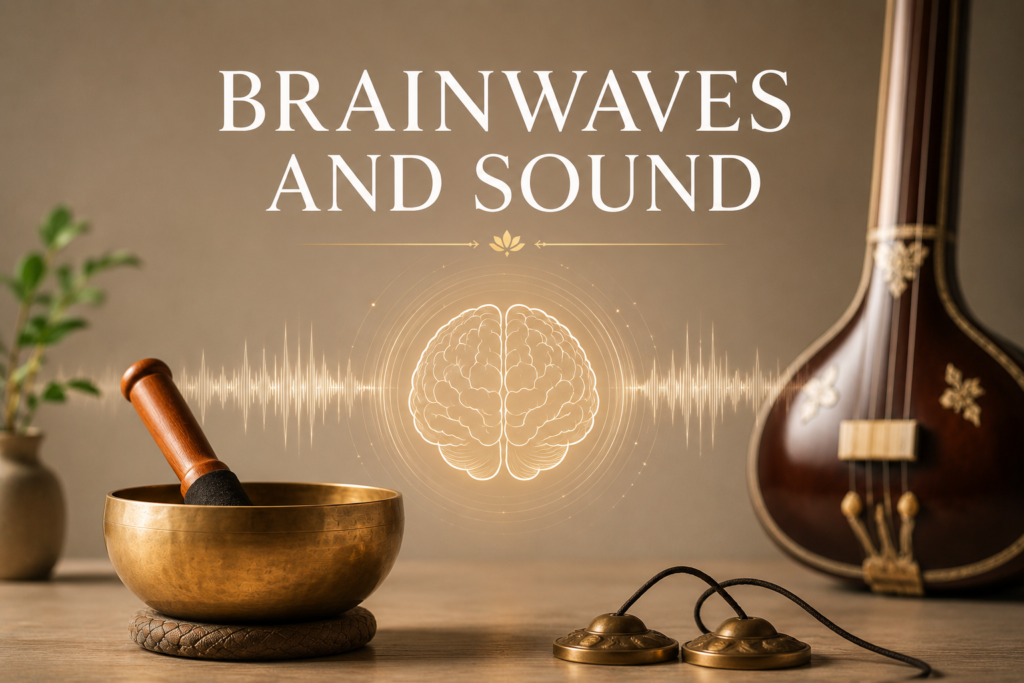
Have you ever noticed how certain sounds instantly make you feel calm while others increase stress or alertness? A gentle stream, the rhythmic sound of ocean waves, the resonance of a singing bowl, or the repetition of a mantra can all influence your mental state within minutes. This is not merely a psychological response. It is closely connected to the brain’s electrical activity, known as brainwaves.
Every thought, emotion, memory, and state of consciousness is associated with specific brainwave patterns. As these patterns change throughout the day, so do our levels of attention, relaxation, creativity, and sleep. One of the reasons sound-based healing practices have become increasingly popular is their ability to encourage the brain to transition into calmer and more restorative states.
Modern neuroscience is now investigating how rhythm, vibration, and frequency affect brainwave activity. At the same time, ancient yogic traditions have used mantra, meditation, and sacred sound for thousands of years to guide practitioners toward deeper states of awareness. This growing connection between science and tradition has inspired many students to pursue a sound healing teacher training in Rishikesh, where these principles are taught within the authentic framework of Nada Yoga.
In this article, we will explore what brainwaves are, how sound influences them, what current sound healing evidences suggest, and why understanding brainwave states is essential for anyone interested in sound healing.
What Are Brainwave States?
The human brain is made up of billions of neurons that communicate through tiny electrical impulses. These electrical signals create rhythmic patterns known as brainwaves, which can be measured using an electroencephalogram (EEG).
Brainwave activity changes constantly depending on what we are doing, thinking, or feeling. Rather than remaining in one state, the brain naturally shifts between different frequencies throughout the day.
The five primary brainwave states are:
- Delta
- Theta
- Alpha
- Beta
- Gamma
Each state serves a unique purpose, supporting everything from deep sleep to focused problem-solving.
Understanding these states helps explain why sound can have such a profound effect on our emotional and mental well-being.
The Five Brainwave States Explained
To understand how brainwaves work, first we need to understand the five brainwave states:
Delta Waves (0.5–4 Hz)
Delta waves are the slowest brainwaves and are most commonly associated with deep, dreamless sleep.
During Delta activity, the body focuses on:
- Physical restoration
- Tissue repair
- Hormonal regulation
- Immune function
Although people are generally unconscious during Delta dominance, experienced meditators may occasionally enter Delta while maintaining awareness.
Theta Waves (4–8 Hz)
Theta waves are commonly linked with:
- Deep meditation
- Creativity
- Intuition
- Emotional processing
- Dreaming
Many people experience Theta during sound healing sessions or prolonged meditation.
This brainwave state allows the conscious mind to become quieter while subconscious processes become more active.
Alpha Waves (8–13 Hz)
Alpha represents relaxed alertness.
It commonly appears when:
- Closing the eyes
- Meditating
- Practicing breathwork
- Listening to calming music
- Receiving a sound bath
Alpha waves are associated with:
- Reduced stress
- Improved learning
- Enhanced creativity
- Emotional balance
- Calm focus
Many sound-based healing practices aim to encourage Alpha activity because it provides a bridge between active thinking and deep meditation.
Beta Waves (13–30 Hz)
Beta waves dominate most waking hours.
They support:
- Logical thinking
- Decision-making
- Conversation
- Planning
- Concentration
However, prolonged high Beta activity is often associated with:
- Chronic stress
- Anxiety
- Mental fatigue
- Overthinking
One of the primary goals of sound healing is helping the brain shift away from excessive Beta activity toward calmer Alpha and Theta states.
Gamma Waves (30–100 Hz)
Gamma waves are linked with:
- Peak concentration
- Memory processing
- Learning
- Insight
- Higher cognitive function
Although Gamma receives less attention in sound healing discussions, advanced meditation practitioners sometimes demonstrate increased Gamma activity during states of heightened awareness.
How Sound Influences Brainwave Activity
The brain naturally synchronizes with rhythmic sensory input, a phenomenon known as brainwave entrainment.
When repetitive sound patterns are introduced, the brain often begins adjusting its own electrical rhythms in response.
This process does not force the brain into a particular state. Instead, it gently encourages relaxation and attentional shifts.
Examples include:
- Steady drumming
- Mantra chanting
- Tibetan singing bowls
- Crystal bowls
- Gong meditation
- Tanpura drone
- Nature sounds
These sounds provide consistent rhythmic stimulation that supports meditation and relaxation.
Why Sound Baths Encourage Alpha and Theta States
A sound bath creates an immersive listening experience where participants simply rest while therapeutic instruments produce sustained harmonic vibrations.
Unlike silent meditation, which requires active mental discipline, sound naturally captures attention.
As the mind follows these vibrations:
- Internal dialogue slows.
- Breathing becomes deeper.
- Muscle tension decreases.
- Heart rate often lowers.
- Mental distractions gradually fade.
Many participants report entering Alpha and Theta states during sound baths, describing feelings of timelessness, emotional release, and profound calm.
Although individual experiences vary, these shifts align with growing scientific observations regarding relaxation and meditation.
Sound Healing Evidences From Neuroscience
Interest in sound healing has expanded significantly over the past decade.
Current sound healing evidences suggest that therapeutic sound experiences may contribute to:
- Reduced anxiety
- Lower perceived stress
- Improved sleep quality
- Better emotional regulation
- Increased mindfulness
- Greater relaxation
Researchers believe these outcomes may result from several interacting mechanisms:
- Auditory stimulation
- Parasympathetic nervous system activation
- Breath regulation
- Focused attention
- Brainwave synchronization
- Emotional processing
While further large-scale studies are needed, existing research increasingly supports many observations preserved within ancient contemplative traditions.
Ancient Yogic Wisdom and Brainwave States
Thousands of years before EEG technology existed, yogic sages described states of consciousness remarkably similar to modern brainwave research.
Nada Yoga teaches that external sound gradually leads practitioners toward inner silence.
Practices include:
- Mantra chanting
- Om meditation
- Tanpura listening
- Breath awareness
- Deep meditation
- Silent observation
Rather than discussing Alpha or Theta waves, yogic texts describe progressive states of concentration, meditation, and absorption.
Modern neuroscience simply offers another language for understanding experiences practitioners have explored for centuries.
Why Brainwave Knowledge Matters in a Sound Healing Teacher Training in Rishikesh
Professional practitioners should understand not only how to play healing instruments but also why they influence the mind.
A comprehensive sound healing teacher training in Rishikesh combines traditional yogic philosophy with contemporary scientific understanding.
Students typically explore:
- Brainwave states
- Nervous system regulation
- Meditation psychology
- Anatomy of hearing
- Breathwork
- Nada Yoga philosophy
- Voice as a healing instrument
- Therapeutic applications of vibration
This integrated approach enables future practitioners to confidently explain sound healing using both traditional wisdom and evidence-informed concepts.
Choosing a Sound Healing Course in Rishikesh
If you are considering a sound healing course in Rishikesh, look for programs that move beyond instrument demonstrations.
The best courses include:
- History of sound healing
- Neuroscience of sound
- Brainwave states
- Practical instrument training
- Guided meditation
- Voice cultivation
- Session planning
- Ethics
- Teaching methodology
Learning within the spiritual atmosphere of Rishikesh also allows students to experience mantra, meditation, and Nada Yoga in their traditional setting.
This immersive environment often creates a deeper understanding than self-paced online study alone.
Building a Career Through Sound Healing Certification
As interest in holistic wellness continues to grow, qualified practitioners are increasingly in demand.
A recognized sound healing certification prepares graduates to work in:
- Yoga studios
- Wellness retreats
- Holistic clinics
- Meditation centers
- Corporate wellness programs
- Private practice
- Online education
Beyond career opportunities, certification also provides confidence, practical experience, and a structured understanding of therapeutic sound.
For many practitioners, learning how brainwave states relate to sound becomes one of the most valuable aspects of professional training.
Conclusion
Brainwave states provide a fascinating window into understanding how sound influences the human mind. As the brain naturally shifts between Beta, Alpha, Theta, Delta, and Gamma activity, our thoughts, emotions, and levels of awareness also change. Therapeutic sound, whether through mantra, singing bowls, gongs, or a calming sound bath, can help guide these transitions, encouraging relaxation, focused attention, and deeper meditative states.
Modern neuroscience continues to expand our understanding of these processes, adding to the growing body of sound healing evidences that support the role of sound in promoting mental well-being. At the same time, the principles behind these discoveries have been practiced for centuries within the tradition of Nada Yoga.
For those who wish to deepen both their knowledge and practical skills, a sound healing teacher training in Rishikesh offers an ideal environment to study the relationship between sound, consciousness, and healing. Through a comprehensive sound healing course in Rishikesh and professional sound healing certification, students gain not only technical expertise but also a deeper appreciation for the timeless connection between vibration and the human mind.