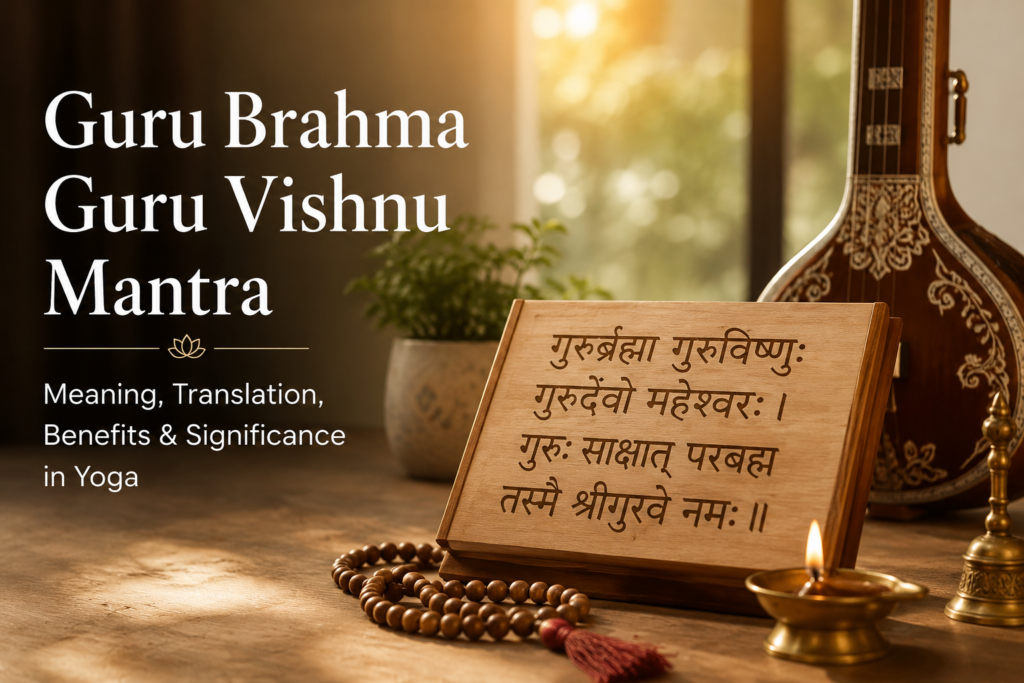
The Guru Brahma Guru Vishnu mantra is one of the most cherished prayers in the yogic tradition. Students, teachers, musicians, and spiritual seekers chant this mantra to express gratitude toward the guru before beginning their practice. Across India, this verse has guided generations of learners who seek wisdom with humility and devotion.
Unlike an ordinary teacher, a guru helps students transform their lives through knowledge and experience. Instead of simply sharing information, the guru inspires inner growth and encourages self realization. Therefore, this mantra reminds every student to approach learning with respect and sincerity.
Yoga schools, meditation centers, and traditional music academies often begin their sessions with this sacred chant. As a result, students prepare both their minds and hearts to receive knowledge with openness.
Although the mantra is short, it carries profound spiritual meaning. Every line highlights a different quality of the guru and explains why the teacher occupies such a respected place in Indian philosophy.
Guru Brahma Guru Vishnu Mantra in Sanskrit
गुरुर्ब्रह्मा गुरुर्विष्णुः गुरुर्देवो महेश्वरः ।
गुरुः साक्षात् परब्रह्म तस्मै श्रीगुरवे नमः ॥
Guru Brahma Guru Vishnu Mantra Transliteration with Swara
Gurur Brahmā Gurur Viṣṇuḥ Gurur Devo Maheśvaraḥ ।
Guruḥ Sākṣāt Parabrahma Tasmai Śrī Gurave Namaḥ ॥
Guru Brahma Guru Vishnu Mantra Translation
“The Guru is Brahma, the Creator. The Guru is Vishnu, the Preserver. The Guru is Maheshwara, the Destroyer. The Guru is the Supreme Absolute Reality itself. I bow to that revered Guru with deep respect.”
Even though the translation appears simple, every word reveals an important aspect of the teacher’s role. Rather than praising an individual’s personality, the verse honors the divine wisdom that shines through an enlightened guru.
Understanding the Meaning of the Guru Brahma Guru Vishnu Mantra
Each line of the mantra represents one stage of spiritual growth.
Gurur Brahmā
Lord Brahma symbolizes creation. Likewise, a guru creates new understanding within the student. Fresh knowledge replaces confusion and opens the door to a more meaningful life.
Instead of creating something physical, the teacher awakens wisdom that already exists within every seeker.
Gurur Viṣṇuḥ
Lord Vishnu represents preservation. After knowledge arises, consistent practice becomes essential. Consequently, the guru encourages discipline, patience, and dedication throughout the learning journey.
Regular guidance allows students to strengthen their understanding day after day.
Gurur Devo Maheśvaraḥ
Lord Shiva, also known as Maheshwara, symbolizes transformation. However, true transformation begins only when ignorance, fear, and ego gradually disappear.
By removing these obstacles, the guru helps students recognize their true nature. Eventually, spiritual growth becomes a lived experience instead of an intellectual idea.
Guruḥ Sākṣāt Parabrahma
Finally, the mantra declares that the guru reflects Parabrahman, the Supreme Reality.
This statement does not suggest that every teacher is God. Instead, it teaches that an enlightened guru serves as a living expression of divine wisdom. Therefore, students bow before the truth that the guru represents.
Spiritual Significance of the Guru Mantra in Yoga
Every authentic yoga tradition places great importance on the guru because wisdom passes from teacher to student through direct experience.
For this reason, practitioners chant the Guru Brahma Guru Vishnu mantra before yoga classes, meditation sessions, scripture study, and spiritual gatherings. Such a practice creates an atmosphere of gratitude while helping students become more receptive to learning.
Furthermore, the mantra reminds practitioners that spiritual knowledge grows through humility rather than pride. A sincere student remains willing to learn regardless of previous achievements.
Even experienced yoga teachers continue chanting this verse because learning never truly ends.
Benefits of Chanting the Guru Brahma Guru Vishnu Mantra
Regular chanting offers benefits that extend beyond spiritual practice.
Develops Humility
First, the mantra encourages gratitude toward teachers and sacred knowledge. As humility increases, learning becomes much easier.
Improves Concentration
Steady chanting naturally settles the breath and quiets mental distractions. Consequently, meditation often becomes deeper and more focused.
Supports Emotional Balance
Sacred sound has a calming influence on the mind. Moreover, repeating meaningful Sanskrit verses can reduce stress and create inner peace.
Builds Respect for Knowledge
Instead of collecting information, practitioners learn to value wisdom that transforms daily life. Because of this shift, every lesson becomes more meaningful.
Deepens Spiritual Awareness
Consistent practice gradually strengthens devotion, mindfulness, and self reflection. Over time, these qualities support lasting personal growth.
The Guru Brahma Guru Vishnu Mantra in Nada Yoga
Nada Yoga, often called the Yoga of Sound, teaches that sound can become a pathway to higher awareness. Since every mantra carries vibration as well as meaning, proper pronunciation plays an important role in the practice.
Students do not simply recite Sanskrit words. Rather, they experience how sacred sound influences breath, attention, and consciousness.
For anyone who wishes to explore mantra chanting, healing vibrations, and traditional sound practices in greater depth, sound healing teacher training in Rishikesh offers structured learning that combines yogic philosophy with practical experience. Along with sound meditation, students learn about chanting techniques, therapeutic vibrations, and the spiritual science behind sacred sound.
Why Every Yoga Student Should Learn This Guru Mantra
Many yoga practitioners memorize this verse during the early stages of their journey. Nevertheless, its meaning continues to deepen with years of practice.
Every repetition reminds students to remain humble while honoring the wisdom passed down through generations. In addition, chanting the mantra strengthens the connection between teacher and disciple.
Those who wish to study this tradition more deeply often choose Nada Yoga teacher training, where they explore mantra chanting, Sanskrit pronunciation, Indian classical music, meditation, breath awareness, and the philosophy of sacred sound. Such training helps students understand both the meaning and the vibrational power of ancient mantras.
How to Chant the Guru Brahma Guru Vishnu Mantra
Anyone can include this mantra in a daily spiritual routine.
Follow these simple steps.
- Sit comfortably with your spine upright.
- Close your eyes and relax your breathing.
- Inhale slowly before beginning the chant.
- Pronounce each Sanskrit word clearly.
- Focus equally on the sound and its meaning.
- Remain silent for a minute after completing the chant.
Although many practitioners chant the mantra three or eleven times, sincere attention matters far more than the number of repetitions.
Final Thoughts on the Guru Brahma Guru Vishnu Mantra
The Guru Brahma Guru Vishnu mantra continues to inspire millions of seekers because its message remains timeless. Every stage of learning begins with guidance, grows through discipline, and blossoms into wisdom.
Above all, this sacred verse teaches us to honor the source of true knowledge. As gratitude develops, the mind becomes calmer, and the heart becomes more receptive. Consequently, spiritual practice transforms into a lifelong journey of discovery.
Whether you practice yoga, meditation, or Nada Yoga, chanting this mantra with understanding can enrich your daily routine. More importantly, it reminds us that the greatest teacher awakens the wisdom that already exists within us.