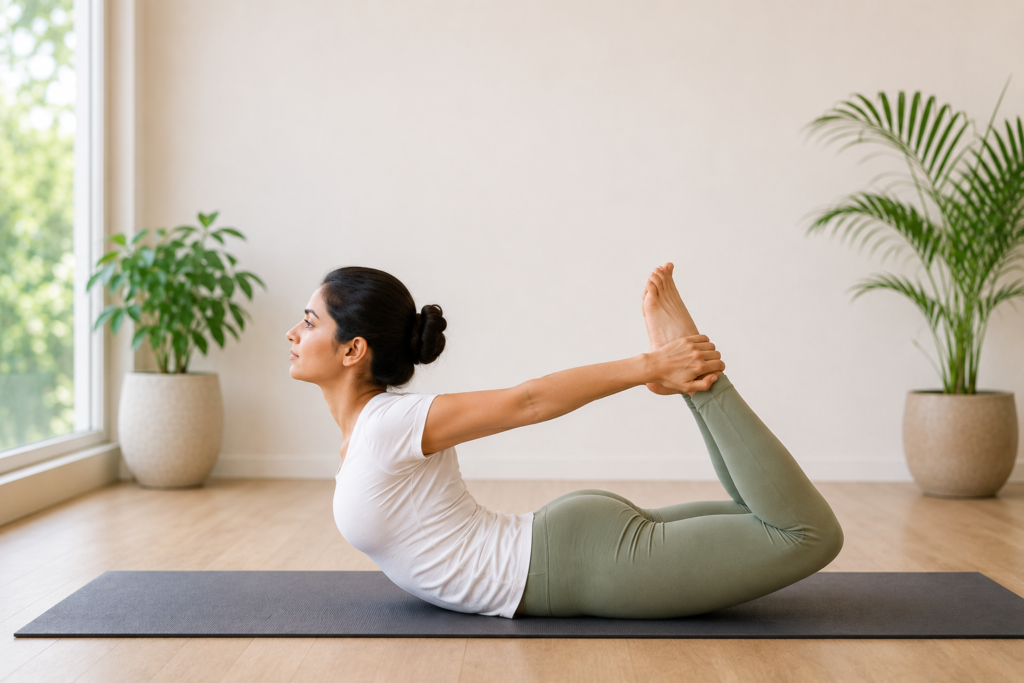
Saral Dhanurāsana, commonly known as Easy Bow Pose, is a beginner-friendly variation of the traditional Dhanurāsana (Bow Pose). The Sanskrit word Saral means “simple” or “easy,” while Dhanur means “bow.” In this posture, the body forms a gentle bow shape, helping practitioners experience the benefits of backbending without the intensity of the full Bow Pose.
Saral Dhanurāsana is often introduced in beginner yoga classes as it improves spinal flexibility, strengthens the back muscles, and opens the chest while remaining accessible to most practitioners.
Meaning of Saral Dhanurāsana
The name Saral Dhanurāsana comes from three Sanskrit words:
- Saral – Easy or Simple
- Dhanu – Bow
- Āsana – Posture or Pose
Together, Saral Dhanurāsana translates to “Easy Bow Pose.”
If you wish to learn about yoga and its philosophy with proper alignment of asanas, you can enroll in our Hatha Yoga 200-hour yoga teacher training course in Rishikesh.
How to Practice Saral Dhanurāsana (Step-by-Step)
Step 1: Starting Position
- Lie comfortably on your stomach.
- Keep your legs hip-width apart.
- Rest your forehead on the mat.
- Relax your shoulders.
Step 2: Bend the Knees
- Slowly bend both knees.
- Bring the heels toward the buttocks.
Step 3: Hold the Ankles
- Reach your hands back and hold your ankles.
- Keep your grip relaxed.
Step 4: Lift the Chest
- Inhale deeply.
- Lift your chest slightly off the floor.
- Gently pull the shoulders back.
Step 5: Raise the Legs
- Lift the thighs slightly off the ground.
- Allow the body to form a soft bow shape.
Step 6: Hold and Breathe
- Maintain steady breathing.
- Stay in the posture for 15–30 seconds.
Step 7: Release
- Exhale slowly.
- Lower the chest and legs.
- Release the ankles.
- Relax in Makarasana (Crocodile Pose).
Benefits of Saral Dhanurāsana
Improves Spinal Flexibility
The gentle backbend mobilizes the entire spine and helps maintain healthy spinal movement.
Strengthens Back Muscles
The pose engages the lower back, upper back, and spinal support muscles, helping improve posture.
Opens the Chest and Shoulders
Regular practice expands the chest region, improving breathing capacity and counteracting slouched posture.
Stimulates Digestive Organs
The abdominal compression and stretch may support healthy digestion and improve circulation to internal organs.
Enhances Energy Levels
Backbending postures are known for their energizing effect, helping reduce feelings of fatigue and sluggishness.
Improves Posture
Saral Dhanurāsana strengthens the posterior chain muscles responsible for maintaining proper posture.
Reduces Sedentary Lifestyle Effects
The pose helps reverse the forward-rounded posture commonly caused by prolonged desk work and screen time.
Muscles Activated in Easy Bow Pose
Saral Dhanurāsana works several muscle groups, including:
- Erector spinae (back muscles)
- Gluteal muscles
- Hamstrings
- Hip flexors
- Quadriceps
- Chest muscles
- Shoulder stabilizers
- Core muscles
Common Mistakes to Avoid
Pulling Too Hard on the Ankles
Avoid forcing the posture. The lift should come from muscular engagement rather than excessive pulling.
Holding the Breath
Maintain smooth and relaxed breathing throughout the pose.
Overarching the Lower Back
Distribute the backbend evenly across the spine rather than compressing the lumbar region.
Knees Too Wide Apart
Keep the knees approximately hip-width apart for better alignment.
Forcing the Pose
Progress gradually and respect your body’s limits.
Precautions and Contraindications
Avoid or practice under professional guidance if you have:
- Recent abdominal surgery
- Severe lower back injuries
- Hernia
- Uncontrolled high blood pressure
- Pregnancy
- Severe neck injuries
Always consult a qualified yoga teacher or healthcare professional if you have pre-existing medical conditions.
Beginner Modifications
Use a Yoga Strap
Loop a strap around the ankles if reaching the feet is difficult.
Practice One Leg at a Time
Work with one leg before attempting the full pose.
Reduce the Lift
Focus on lifting the chest slightly rather than trying to achieve a deep backbend.
Saral Dhanurāsana vs Dhanurāsana
| Feature | Saral Dhanurāsana | Dhanurāsana |
|---|---|---|
| Difficulty | Beginner | Intermediate |
| Backbend Intensity | Gentle | Deep |
| Flexibility Required | Moderate | Higher |
| Suitable for Beginners | Yes | Limited |
| Duration | Longer Hold Possible | Shorter Hold Initially |
Preparatory Poses
Practice these poses before Saral Dhanurāsana:
- Bhujangasana (Cobra Pose)
- Sphinx Pose
- Salabhasana (Locust Pose)
- Cat-Cow Stretch
Counter Poses
After practicing Easy Bow Pose, relax with:
- Makarasana (Crocodile Pose)
- Balasana (Child’s Pose)
- Advasana (Reverse Corpse Pose)
Frequently Asked Questions (FAQs)
Is Saral Dhanurāsana suitable for beginners?
Yes. It is specifically designed as a gentler version of Bow Pose and is suitable for most beginners.
How long should I hold the pose?
Beginners can start with 15–20 seconds and gradually increase to 30–60 seconds.
Can Saral Dhanurāsana help improve posture?
Yes. It strengthens the back muscles and opens the chest, which can contribute to better posture.
Should I practice Saral Dhanurāsana daily?
Daily practice is generally safe when performed correctly and within your comfort level.
Conclusion
Saral Dhanurāsana (Easy Bow Pose) is an excellent beginner-friendly backbend that helps improve spinal flexibility, strengthen the back muscles, open the chest, and enhance overall posture. Whether you are new to yoga or looking for a gentle alternative to traditional Bow Pose, incorporating Saral Dhanurāsana into your practice can support both physical strength and energetic vitality.
With consistent and mindful practice, this simple yet effective yoga posture can become a valuable part of your wellness journey.