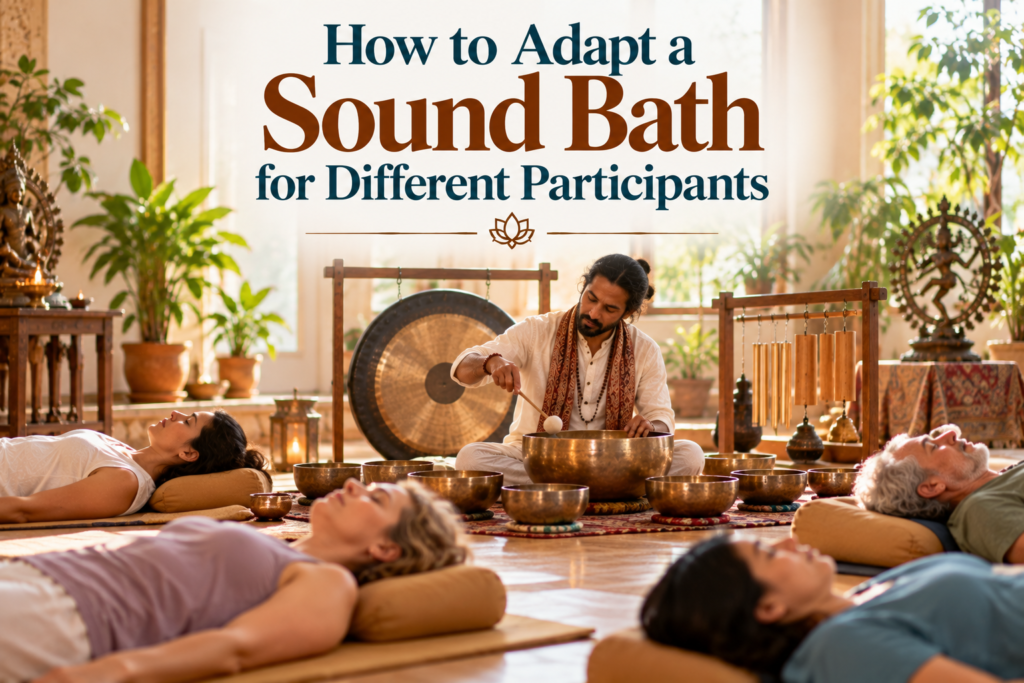
A sound bath can create a space for relaxation, attentive listening and quiet reflection. During a session, participants may experience the sounds of singing bowls, gongs, chimes and other instruments while resting in a comfortable position. Each person brings different expectations, sensory preferences, physical needs and levels of familiarity with sound healing, which makes thoughtful session planning an essential skill for every practitioner.
Learning how to adapt a sound bath for different participants helps practitioners create sessions that feel comfortable, inclusive and purposeful. A first-time participant may appreciate a gentle introduction to the instruments, while an experienced meditator may prefer longer periods of sustained sound and silence. Someone who experiences sound sensitivity may need greater control over volume and distance from the instruments. By understanding these differences, a sound healing practitioner can make informed choices about the session environment, instrument selection, sound intensity and overall structure.
This guide explains how to adapt a sound healing session for individuals and groups, how to respond to different sensory and physical needs, and how to develop a more participant-centred approach to sound bath facilitation.
Why every sound bath requires a flexible approach
A sound bath involves several elements that influence the participant’s experience. Instrument choice, volume, rhythm, duration, room acoustics and the practitioner’s playing technique all contribute to the atmosphere of a session. Even the same singing bowl can produce different experiences depending on how closely someone sits to it and how the practitioner plays it.
Participants also respond to sound in individual ways. Some enjoy deep gong tones and rich layers of resonance, while others feel more comfortable with soft chimes or a single sustained singing bowl. A person who regularly practises meditation may settle into a quiet soundscape quickly, whereas a beginner may need time to become familiar with the environment.
For this reason, a sound bath facilitator should approach each session with a clear plan and enough flexibility to adjust it. The objective is to create appropriate conditions for listening and relaxation while respecting each participant’s comfort, preferences and personal boundaries.
1. Adapt a sound bath for beginners
People attending their first sound bath often arrive with questions about the instruments, the session structure and the sensations they might experience. A short introduction helps them understand what will happen and gives them an opportunity to communicate their preferences before the session begins.
Explain that participants can usually sit or lie down, keep their eyes open or closed, and change their position whenever they need to. Let them know that they can ask for a quieter experience or take a break. This simple orientation helps beginners approach the session with greater confidence.
During a beginner sound bath, start with a small selection of instruments and introduce each sound gradually. A singing bowl with a clear, gentle tone can establish the listening environment before you introduce additional layers. Allow enough space between sounds for participants to notice the resonance and become familiar with its changing qualities.
Keep the opening section relatively simple. Once the group settles into the session, you can gradually introduce more instruments, varied tones or longer periods of sustained sound. A calm closing section with softer sounds and silence gives participants time to reorient themselves before getting up.
2. Adapt the sound bath to different sensory preferences
Sound sensitivity deserves particular attention when planning a sound healing session. Some participants enjoy strong vibrations and complex soundscapes, while others find sudden changes in volume, sharp high-pitched tones or overlapping sounds uncomfortable. People with tinnitus, hyperacusis, migraine-related sound sensitivity or sensory processing differences may have specific preferences that affect their experience.
Ask participants about their comfort levels before choosing the instruments and setting the volume. A short intake conversation can cover preferred sound intensity, sensitivity to particular tones and any sounds they would like to avoid. Encourage participants to share only the information they feel comfortable discussing.
For participants who prefer gentle sounds
Choose instruments with softer attacks and controlled resonance. You might begin with a small singing bowl, a gentle chime or a quiet drone. Play each instrument at a comfortable volume and allow its sound to fade naturally before introducing another tone.
Avoid abrupt transitions and unexpectedly loud strikes. Gradual changes give participants time to adjust to the soundscape and decide how they feel about the experience.
For participants who enjoy rich, layered sounds
Some people appreciate the interaction between several instruments, including the overlapping tones of singing bowls, the sustained resonance of a gong and the delicate sounds of chimes. You can introduce these layers gradually while maintaining control over overall volume.
Pay attention to how the sounds combine in the room. Multiple instruments can create a dense soundscape, especially in a small space with reflective walls. Leave moments of simplicity between fuller passages so participants can follow the changing sounds.
For participants with tinnitus or pronounced sound sensitivity
Invite these participants to communicate their needs before the session and give them meaningful control over their position and exposure to sound. A quieter arrangement, greater distance from the instruments and the option to leave the room can make participation more manageable.
Sound baths may feel uncomfortable for some people with tinnitus or sound sensitivity, and responses vary. Explain the nature of the session in advance, encourage participants to stop if discomfort develops, and suggest seeking advice from an appropriate healthcare professional when they have concerns about their symptoms.
3. Adapt the session for physical comfort and accessibility
A comfortable position allows participants to focus more easily on listening. However, lying flat on the floor may feel difficult for someone with back pain, joint stiffness, limited mobility or other physical considerations. A sound bath facilitator should offer practical options that support individual comfort.
Provide yoga mats, cushions, bolsters, blankets and chairs where possible. Participants may choose to lie on their backs, rest on their sides, sit upright or use a chair. Encourage everyone to select a position that feels manageable for the planned duration of the session.
Room layout also matters. Keep pathways clear, allow sufficient space between mats and ensure that participants can reach the entrance easily. People who use mobility aids may need additional room to move and position themselves comfortably.
Consider the environment as a whole. Temperature, lighting, ventilation and the texture of the floor can influence how comfortable people feel. A softly lit room may support relaxation, while adequate lighting around entrances and walkways helps participants move safely.
A sound healing session should allow people to adjust their position whenever necessary. Explain this before the session begins, so participants understand that their comfort takes priority over maintaining a particular posture.
4. Choose the right instruments for each group
Sound bath instruments offer different tones, playing techniques and levels of intensity. Selecting instruments according to the needs of the group helps create a coherent session with appropriate sound variation.
| Instrument | Sound characteristics | Considerations for adapting a session |
| Tibetan singing bowls | Clear tones with layered overtones and sustained resonance | Useful for controlled volume, individual tones and gradual transitions |
| Crystal singing bowls | Often produce strong, sustained tones with a prominent tonal quality | Test volume and placement carefully, especially in reflective rooms |
| Gong | Can produce a wide range of textures, from gentle resonance to powerful, complex sound | Introduce gradually and adjust intensity according to participant preferences |
| Chimes | Produce delicate, high-frequency tones | Use sparingly when participants prefer a simple soundscape or report sensitivity to high pitches |
| Tuning forks | Produce focused tones that depend on the fork’s design and playing method | Explain the intended use and obtain consent before bringing a fork close to someone |
| Tanpura or drone instruments | Provide a continuous tonal foundation | Can support sustained listening and a consistent musical atmosphere |
These descriptions offer general guidance because individual instruments vary considerably. The size, construction, playing technique, room acoustics and distance from the listener all affect the resulting sound.
For a mixed group, begin with instruments that allow precise control over volume and duration. Add more powerful or complex sounds only when they suit the group and the space. A carefully selected combination of two or three instruments can provide enough variety for a complete sound bath.
5. Adjust the duration and pace of a sound bath
The ideal length of a sound bath depends on the group, the setting and the purpose of the session. A short introduction to sound healing may work well in a brief workshop, while a dedicated meditation event may allow more time for settling, sustained listening and a gradual conclusion.
For a general introductory session, you could plan a structure like this:
| Session stage | Example duration | Purpose |
| Welcome and orientation | 5 minutes | Explain the session, comfort options and expectations |
| Settling and gentle sounds | 5 minutes | Give participants time to adjust |
| Main sound bath | 15 to 25 minutes | Develop a varied soundscape at a suitable intensity |
| Gradual closing | 5 minutes | Reduce sound activity and introduce silence |
| Reorientation and feedback | 5 to 10 minutes | Allow participants to return to ordinary activity and share feedback if they wish |
This example provides a starting point for planning, and practitioners can adjust it according to the setting and participants. Some groups may benefit from a shorter sound bath with longer breaks, while others may enjoy a more extended session.
Pacing matters as much as duration. A continuous stream of sound can feel tiring for some participants, particularly when the instruments produce strong or overlapping tones. Alternating periods of sound with quieter passages gives listeners an opportunity to notice changes in resonance and settle their attention.
Leave enough time at the end for participants to become fully alert before standing up. A gradual closing also helps create a clear transition between the sound bath and the rest of their day.
6. Adapt sound baths for children and older adults
Age can influence comfort, attention and the practical arrangements required for a group sound bath. Children may enjoy exploring different instruments and noticing how each one sounds, while older adults may appreciate clear instructions, comfortable seating and enough time to settle into position. Individual preferences remain the most important guide.
Sound baths for children
Keep sessions for children shorter and more interactive than a typical adult session. Introduce the instruments in simple language, demonstrate gentle playing techniques and explain that the group will listen together. Allow children to ask questions and offer a comfortable way to participate.
Use moderate volume and avoid sudden, intense sounds. Children may have different sensory needs, so caregivers can help communicate preferences where appropriate. Establish clear boundaries around handling instruments, especially those that are heavy, fragile or capable of producing loud sounds.
Sound baths for older adults
Offer chairs, cushions and other supports so participants can choose a comfortable position. Speak clearly when explaining the session and allow extra time for entering, settling and leaving the room.
Ask about sound preferences and any practical needs before beginning. Some older adults may enjoy a gentle soundscape with clear transitions, while others may prefer a more varied musical experience. Avoid making assumptions based on age alone.
For both groups, a well-planned session prioritises safety, clear communication and age-appropriate facilitation.
7. Adapt sound baths for individual sessions and group sessions
A private sound healing session gives the practitioner more opportunities to understand one person’s preferences and make adjustments throughout the experience. A group sound bath requires a broader approach because participants may respond differently to the same instruments.
Individual sound healing sessions
Begin with a short conversation about the participant’s goals, previous experience and sound preferences. Ask about preferred volume, instrument choices, physical comfort and any relevant sensory considerations. Agree on a simple way for the participant to communicate if they want the sound to change or stop.
During the session, observe verbal feedback and any clear signs of discomfort. Check in when appropriate, especially after introducing a new instrument or increasing the intensity. Avoid assuming that a quiet participant feels comfortable simply because they remain still.
Individual sessions allow for more tailored instrument selection and pacing. Even so, the participant should retain control over their comfort and level of involvement.
Group sound baths
For group sessions, gather preferences in advance when possible. A registration form can ask about sound sensitivity, accessibility requirements, preferred volume and previous experience. Keep any personal information confidential and explain how you will use it to prepare the session.
Choose a soundscape that accommodates the group’s stated needs. Position instruments thoughtfully, maintain a manageable overall volume and explain how participants can move, request a change or leave the space if necessary.
A group facilitator also needs to remain aware of the room as a whole. A sound that feels gentle close to one mat may seem much louder from another position because of the instrument’s direction and the room’s acoustics. Walk through the space before the session and test the sound from different listening positions.
8. Create an inclusive sound bath environment
Inclusion begins before the first instrument sounds. Clear information about the session helps people decide whether it suits their needs and gives them a realistic understanding of what to expect.
Describe the instruments you plan to use, the approximate duration and the available seating or resting options. Explain whether the session involves spoken guidance, music, periods of silence or instruments played while the facilitator moves around the room. Participants can then make informed choices about their participation.
Accessibility also includes communication. Use straightforward instructions, provide written information when helpful and allow participants to ask questions privately. Avoid requiring people to explain personal circumstances in front of the group.
Consent is particularly important when a practitioner plans to move instruments near participants or use touch as part of a session. Explain the proposed action and obtain clear permission beforehand. Offer an equivalent option for people who prefer greater distance or no physical contact.
An inclusive sound bath recognises that people may participate in different ways. Some may lie down with their eyes closed, others may sit upright and listen, and some may prefer to observe from a comfortable position. Each person should have a clear understanding of the options available.
9. Recognise when a sound bath needs to change
A practitioner should remain attentive throughout the session and respond when someone communicates discomfort. Participants may report that a tone feels too loud, a particular instrument causes discomfort or the overall soundscape feels overwhelming.
If someone asks for a change, reduce the volume, stop the instrument or provide additional space as appropriate. If a participant experiences dizziness, significant discomfort, pain or other concerning symptoms, stop the activity for that person and help them access appropriate assistance when needed.
Practitioners should also recognise the limits of their role. Sound healing can form part of a personal relaxation or contemplative routine, while medical symptoms and diagnosed conditions require appropriate healthcare assessment. A sound bath facilitator should avoid diagnosing participants or promising specific health outcomes.
After the session, invite feedback without pressuring anyone to share personal details. Ask which sounds felt comfortable, whether the pacing worked well and what they would prefer in a future session. This information can guide future planning and help the practitioner develop stronger facilitation skills.
10. Develop your skills as a sound bath facilitator
Adapting a sound bath requires more than learning how to play singing bowls or gongs. Practitioners need to understand instrument characteristics, volume control, room acoustics, session planning, communication and participant consent. These skills develop through deliberate practice and thoughtful reflection.
Practise playing each instrument at different intensities and listen to how its tone changes with the playing technique. Experiment with the distance between instruments and listeners, and notice how different rooms influence resonance. Recording observations after practice sessions can help you identify useful adjustments.
It also helps to experience sound baths from the participant’s perspective. Notice how you respond to changes in volume, prolonged tones, silence and overlapping sounds. This experience can develop empathy and improve your ability to plan sessions for people with different preferences.
Training can provide a structured environment for developing these skills. A sound healing course may include instrument practice, sound bath facilitation, session design, listening exercises and supervised opportunities to work with participants. When choosing a programme, look for practical teaching, clear ethical guidance and opportunities to receive feedback on your facilitation.
For students interested in developing these skills in a traditional Indian yoga environment, Nada Yoga School offers a Sound Healing Teacher Training Course in Rishikesh. Exploring sound healing alongside attentive listening and traditional sound practices can help students build a more considered approach to their work.
Frequently asked questions
How do you adapt a sound bath for beginners?
Explain the session structure before starting, introduce instruments gradually and keep the opening soundscape simple. Offer comfortable resting positions and let participants know they can request changes or take a break whenever necessary.
What instruments are best for a gentle sound bath?
Singing bowls played at a controlled volume, soft chimes and sustained drone instruments can work well for a gentle session. The best choice depends on the individual instrument, the room and the preferences of the participants.
How long should a sound bath last?
A short introductory session may last around 20 to 30 minutes, while a longer event can include additional time for orientation, settling and closing. Choose a duration that suits the group, the setting and the purpose of the session.
Can people with sound sensitivity attend a sound bath?
Some people with sound sensitivity may choose to attend when the session allows suitable adjustments. Discuss their preferences in advance, offer control over volume and positioning, and make it easy to stop or leave if discomfort develops. People with significant symptoms should seek appropriate professional guidance about their individual needs.
How can a practitioner make a group sound bath more inclusive?
Provide clear information before the session, offer different resting positions, maintain accessible pathways, explain the instruments and obtain consent before any close-up instrument use or physical contact. Give participants meaningful choices throughout the experience.
What skills does a sound healing practitioner need?
A practitioner benefits from instrument knowledge, attentive listening, controlled playing techniques, session planning, clear communication and an understanding of consent and professional boundaries. Practical training and supervised experience can help develop these skills.
Final thoughts
Adapting a sound bath for different participants begins with listening to their needs and making thoughtful choices about the experience. Instrument selection, sound intensity, session duration, physical comfort and clear communication all influence how people engage with the soundscape. A practitioner who pays attention to these details can create sessions that feel more welcoming and responsive.
Every group brings its own combination of preferences and practical considerations. By gathering information before a session, observing feedback during the experience and reflecting afterwards, sound healing practitioners can continue improving their approach. This process supports responsible facilitation and helps participants engage with sound in a way that respects their comfort and individual needs.