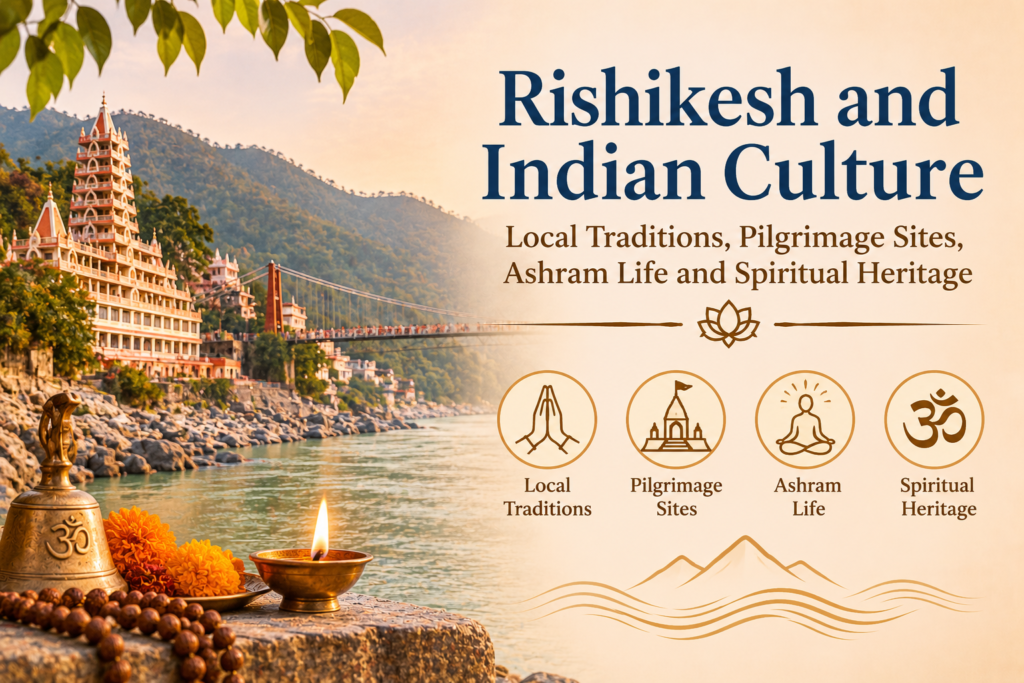
Rishikesh holds a special place in India’s cultural and spiritual landscape. Situated in the foothills of the Himalayas in Uttarakhand, where the Ganges emerges from the mountains and flows towards the plains, the city has welcomed pilgrims, spiritual seekers, yogis and travellers for centuries. Its temples, ashrams, riverbanks and traditional ceremonies reflect a way of life deeply connected with Hindu philosophy, religious practices and Indian cultural heritage.
Known internationally as the Yoga Capital of the World, Rishikesh attracts visitors interested in yoga, meditation and spiritual study. Its identity, however, extends across many aspects of Indian culture. Daily rituals along the Ganges, traditional music, pilgrimage routes, Sanskrit chanting and the customs of local communities all contribute to the character of the city.
Understanding Rishikesh requires an appreciation of its religious history, local traditions and everyday life. These elements reveal how ancient practices continue to influence the cultural identity of this Himalayan town.
The cultural and historical significance of Rishikesh
Rishikesh is located in the Dehradun district of Uttarakhand, along the banks of the River Ganges. The name is traditionally associated with Hrishikesha, a name of Lord Vishnu. According to Hindu tradition, the area has long been regarded as a sacred place for meditation, pilgrimage and spiritual practice.
The city forms part of the wider sacred geography of Uttarakhand, which includes important pilgrimage destinations such as Badrinath, Kedarnath, Gangotri and Yamunotri. These destinations attract pilgrims throughout the year, particularly during the traditional Char Dham pilgrimage season.
Rishikesh also developed as a centre for religious learning. Sages and spiritual teachers have traditionally visited the region to practise meditation, study sacred texts and teach different paths of yoga. Its location near the Himalayan foothills has supported a culture of pilgrimage and retreat, with the river and surrounding natural landscape holding deep religious significance.
Over time, Rishikesh became an important destination for international visitors interested in Indian spirituality. Its ashrams, yoga schools and meditation centres introduced many people to traditional Indian practices and philosophical teachings.
The sacred River Ganges and its place in local culture
The River Ganges, known as Ganga in Sanskrit and Hindi, occupies a central position in the religious and cultural life of Rishikesh. In Hindu tradition, Ganga is worshipped as a goddess and regarded as a sacred river associated with purification, devotion and spiritual renewal.
The river influences everyday life throughout the town. Residents and pilgrims visit its banks for prayer, meditation, ritual bathing and religious ceremonies. Some people collect Ganga water for use in household worship, while others visit the river to offer flowers and light small lamps.
The ghats, or steps leading down to the river, provide spaces for these activities. Triveni Ghat and other riverfront areas become especially active during the early morning and evening, when people gather for prayer and ritual observances.
The Ganges also has an important place in the traditional understanding of pilgrimage. Many Hindus believe that visiting the river and performing rituals along its banks can support spiritual purification. These beliefs influence the customs and ceremonies practised throughout Rishikesh.
Ganga Aarti: An evening tradition
One of the most recognisable cultural experiences in Rishikesh is Ganga Aarti, an evening ceremony dedicated to the River Ganges. It is commonly performed at riverfront locations such as Triveni Ghat and Parmarth Niketan.
During the ceremony, priests offer prayers while holding large lamps and moving them in rhythmic patterns. Devotional songs, Sanskrit mantras, bells and the sound of conch shells accompany the ritual. Visitors and local residents gather along the river to participate in the ceremony or observe the proceedings.
Small leaf bowls containing flowers and lamps are sometimes placed on the water as offerings. These illuminated offerings create a distinctive sight along the river after sunset.
Ganga Aarti reflects the importance of devotion, gratitude and reverence for nature in Hindu religious practice. For many visitors, attending the ceremony provides an introduction to the devotional traditions of Rishikesh.
Important pilgrimage sites in Rishikesh
Rishikesh contains several temples, ashrams and sacred locations that attract pilgrims throughout the year. Each place has its own history, religious associations and cultural significance.
Triveni Ghat
Triveni Ghat is one of the most important bathing ghats in Rishikesh. The name refers to the traditional belief that three sacred rivers, Ganga, Yamuna and the mythical Saraswati, meet at this location.
Pilgrims visit the ghat to take ritual baths, offer prayers and participate in religious ceremonies. The evening Ganga Aarti attracts large gatherings, making Triveni Ghat an important centre of devotional activity.
The ghat also reflects the relationship between public spaces and religious life in Indian towns. People visit throughout the day, and the riverfront remains an important place for prayer and community interaction.
Neelkanth Mahadev Temple
Located in the forested hills above Rishikesh, Neelkanth Mahadev Temple is dedicated to Lord Shiva. According to Hindu mythology, this is the place associated with the story of Samudra Manthan, the churning of the cosmic ocean.
During this event, a deadly poison called Halahala emerged from the ocean. Lord Shiva consumed the poison to protect the universe, holding it in his throat. His throat became blue, giving him the name Neelkanth, meaning the blue-throated one.
The temple attracts devotees throughout the year, particularly during the festivals of Maha Shivaratri and the month of Shravan. Its location among the hills and forests also makes the journey an important part of the pilgrimage experience.
Bharat Mandir
Bharat Mandir is regarded as one of the oldest temples in Rishikesh. It is traditionally associated with Adi Shankaracharya, the philosopher and spiritual teacher who played an important role in the development of Advaita Vedanta.
The temple is dedicated to Lord Vishnu, worshipped here in the form of Bharat. Its religious history is connected with the traditional sacred identity of the town.
The temple provides an opportunity to understand the historical development of Hindu worship in the region. Its rituals and annual religious observances continue to attract local devotees.
Lakshman Jhula and Ram Jhula
Lakshman Jhula and Ram Jhula are among the most recognised landmarks associated with Rishikesh. These suspension bridges connect different areas along the Ganges and have become important points of reference for visitors exploring the town.
According to local tradition, Lakshman crossed the Ganges at this location using a jute rope bridge. The present iron suspension bridge was constructed in the twentieth century. Ram Jhula is another prominent bridge that connects areas containing ashrams, temples and religious institutions.
The surrounding neighbourhoods reflect the spiritual character of Rishikesh, with small temples, shops selling religious items, yoga centres and traditional eateries.
Ashram life and traditional spiritual learning
Ashrams form an important part of Rishikesh’s cultural identity. Traditionally, an ashram is a place dedicated to spiritual study, disciplined living and personal development. Many ashrams in the town continue to offer residential programmes focused on yoga, meditation, philosophy and religious study.
Daily life in a traditional ashram generally follows a structured routine. Residents and students may begin the day with early morning meditation, followed by yoga practice, chanting or philosophical study. Meals, personal responsibilities and periods of silence form part of the daily schedule in some institutions.
The routine varies according to the teachings and traditions followed by each ashram. Some focus primarily on Hatha Yoga, while others emphasise Vedanta, devotional practice, meditation or Sanskrit studies.
The importance of Guru and Shishya tradition
The Guru-Shishya tradition has a long history in Indian education and spiritual learning. Guru refers to the teacher, while Shishya refers to the student or disciple.
In this traditional relationship, knowledge is transmitted through direct instruction, observation, practice and personal guidance. Students learn through regular interaction with their teachers and gradually develop an understanding of the subject through experience.
This approach has influenced the teaching of yoga, Indian classical music, Sanskrit and many traditional disciplines. In Rishikesh, the Guru-Shishya relationship remains an important part of several spiritual and educational institutions.
Daily practices in an ashram
A typical ashram schedule may include several traditional activities:
- Morning meditation: Students begin the day with quiet sitting, breath awareness or mantra repetition.
- Yoga practice: Asana and pranayama sessions form part of many residential programmes.
- Satsang: Students gather for spiritual discussions, devotional singing or teachings from a teacher.
- Study of scriptures: Some ashrams offer classes on texts such as the Bhagavad Gita, Yoga Sutras and Upanishads.
- Seva: Selfless service involves contributing to the daily responsibilities of the community.
- Evening prayers: Chanting, devotional music and rituals may conclude the day’s activities.
These practices reflect the traditional emphasis on discipline, study and conscious living within Indian spiritual communities.
Yoga and its cultural roots in Rishikesh
Yoga has a long philosophical and practical history in India. Its teachings appear in several ancient texts and philosophical traditions, including the Upanishads, Bhagavad Gita and Yoga Sutras of Patanjali.
In Rishikesh, yoga education developed through the work of spiritual teachers, monastic institutions and traditional schools. The town became especially well known during the twentieth century, when Indian teachers began welcoming international students interested in studying yoga.
Today, Rishikesh offers a wide range of yoga programmes. These include Hatha Yoga, Ashtanga Yoga, meditation, pranayama, Yoga Nidra and traditional philosophy.
Many schools also introduce students to the wider cultural context of yoga. Lessons may include Sanskrit terminology, Indian scriptures, mantra chanting, yogic ethics and traditional approaches to meditation.
Nada Yoga and the tradition of sacred sound
Sound has an important place in Indian spiritual and musical traditions. Nada Yoga, often described as the yoga of sound, explores the relationship between sound, listening and awareness.
The Sanskrit word Nada refers to sound or vibration. In Nada Yoga, practitioners explore sound through attentive listening, vocal practice, mantra, music and contemplative exercises.
Indian classical music provides an important practical context for studying sound. Students may learn about swaras, ragas, rhythm and the use of instruments such as the tanpura, harmonium and tabla. Mantra chanting and devotional singing also introduce the traditional role of sound in spiritual practice.
Rishikesh offers an environment where these practices can be explored alongside yoga and meditation. At Nada Yoga School, students can study the Nada Yoga teacher training programme in Rishikesh, which introduces the relationship between traditional yoga, Indian classical music and the philosophy of sound.
Local traditions, festivals and devotional music
The cultural life of Rishikesh follows the religious calendar of Hindu festivals and local observances. These celebrations bring together residents, pilgrims and visitors through temple rituals, devotional music and community gatherings.
Maha Shivaratri
Maha Shivaratri is one of the most significant festivals celebrated in Rishikesh. Dedicated to Lord Shiva, the festival attracts devotees to temples throughout the region.
People observe fasting, offer prayers and participate in night-long devotional activities. Temples dedicated to Shiva become especially active, and Neelkanth Mahadev Temple receives many pilgrims during this period.
Holi
Holi is the spring festival associated with colours, community gatherings and the celebration of new beginnings. In Rishikesh, the festival is observed through traditional prayers, gatherings and the familiar practice of applying coloured powders.
The celebration reflects the social and devotional aspects of Indian festival culture.
Ganga Dussehra
Ganga Dussehra celebrates the descent of the River Ganges to Earth according to Hindu tradition. The festival is observed at sacred river locations, including Rishikesh, where devotees gather for ritual bathing, prayers and offerings.
The occasion highlights the religious importance of the Ganges and its place in Indian cultural identity.
Kirtan and Bhajan
Devotional singing is a familiar part of everyday spiritual life in Rishikesh. Kirtan involves the collective singing of devotional names and mantras, often accompanied by harmonium, tabla, cymbals and other traditional instruments.
Bhajan refers to devotional songs dedicated to deities or spiritual themes. These songs are commonly performed in temples, ashrams and community gatherings.
Kirtan encourages participation through repetition and collective singing. The musical structure allows people with different levels of musical experience to join the practice.
For visitors, attending a traditional kirtan offers an opportunity to experience devotional music as part of community life.
Indian food and everyday customs in Rishikesh
Food is closely connected with religious and cultural practices in Rishikesh. Many ashrams follow a vegetarian diet, reflecting principles of Ahimsa, or non-violence, found in several Indian philosophical traditions.
Traditional meals often include dal, rice, roti, seasonal vegetables, curd and simple preparations using local spices. Some ashrams serve meals according to fixed schedules, while others follow specific dietary customs associated with their spiritual traditions.
The town also has numerous local eateries serving North Indian dishes, snacks and traditional sweets. Visitors can experience familiar regional foods alongside meals influenced by the dietary preferences of yoga and meditation communities.
Respect for religious customs is another important part of daily life. Visitors entering temples or certain ashrams may be expected to remove their footwear, dress modestly and follow instructions regarding photography and conduct. Some religious institutions also request silence in meditation areas.
Understanding these customs helps visitors participate respectfully in local cultural life.
The spiritual heritage of Rishikesh and the Himalayas
Rishikesh has a close relationship with the wider Himalayan spiritual landscape. For centuries, the mountains have been associated with meditation, pilgrimage and the search for spiritual knowledge in Indian traditions.
The region surrounding Rishikesh contains forests, rivers, caves and mountain paths that have traditionally provided spaces for spiritual retreat. Sages and ascetics have visited these areas to practise meditation and study religious teachings.
The sacred geography of Uttarakhand also connects Rishikesh with the Char Dham pilgrimage. Many travellers begin or organise their journeys through the town before continuing towards the Himalayan temples.
This heritage continues to influence the identity of Rishikesh. Religious ceremonies take place alongside modern educational institutions, yoga schools and international retreat centres. The town remains a meeting point for local traditions and visitors interested in India’s spiritual culture.
How to experience the culture of Rishikesh respectfully
Visitors can gain a deeper understanding of Rishikesh by taking time to observe its traditions and participate in appropriate cultural activities.
A few simple practices can make the experience more meaningful:
Attend Ganga Aarti: Visit Triveni Ghat or another established riverfront location to observe the evening ceremony. Arrive early to find a suitable place and follow the instructions given by organisers.
Visit traditional temples: Explore places such as Bharat Mandir and Neelkanth Mahadev Temple to understand the religious heritage of the region.
Spend time in an ashram: Some ashrams welcome visitors for meditation sessions, satsang and educational programmes. Check their schedules and visitor guidelines before arriving.
Experience devotional music: Attend a kirtan or bhajan gathering to learn about the role of music and collective singing in Indian spiritual traditions.
Learn about yoga philosophy: Join a class or discussion that introduces the Yoga Sutras, Bhagavad Gita or traditional approaches to meditation.
Respect local customs: Dress appropriately in religious spaces, remove footwear when required and ask permission before photographing people or ceremonies.
These experiences allow visitors to understand Rishikesh through its living traditions and the people who continue to preserve them.
Frequently asked questions about Rishikesh and Indian culture
Why is Rishikesh considered a spiritual city?
Rishikesh is considered a spiritual city because of its religious history, sacred connection with the River Ganges, temples, ashrams and traditions of yoga and meditation. It has served as a destination for pilgrims and spiritual seekers for generations.
What is Rishikesh famous for culturally?
Rishikesh is known for Ganga Aarti, traditional ashrams, yoga education, Hindu temples, kirtan, meditation and its connection with Himalayan pilgrimage routes. These traditions contribute to its cultural identity.
Which are the important pilgrimage sites in Rishikesh?
Important religious sites include Triveni Ghat, Bharat Mandir and Neelkanth Mahadev Temple. Lakshman Jhula and Ram Jhula are also prominent landmarks associated with the town’s religious and cultural history.
What is ashram life like in Rishikesh?
Ashram life generally follows a structured daily routine involving yoga, meditation, prayer, spiritual study and community activities. The schedule and teachings vary according to each institution.
What is the significance of Ganga Aarti?
Ganga Aarti is an evening worship ceremony dedicated to the River Ganges. It involves prayers, lamps, devotional songs and traditional rituals that express reverence for the river.
Can visitors participate in traditional Indian spiritual practices in Rishikesh?
Yes. Visitors can attend yoga classes, meditation sessions, kirtan gatherings, Ganga Aarti and selected ashram programmes. Each institution follows its own guidelines for participation.
What is the best time to visit Rishikesh?
The months from September to November and March to April generally offer pleasant conditions for exploring Rishikesh. Winter brings cooler temperatures, while the summer months can become hot. The monsoon season brings heavy rainfall and may affect travel in the surrounding hills.
Conclusion
Rishikesh offers a meaningful introduction to India’s spiritual and cultural heritage. Its sacred river, ancient temples, traditional ashrams and devotional practices reflect the influence of Hindu philosophy and religious customs on everyday life.
The experience of visiting Rishikesh involves understanding the traditions that shape the town. Watching Ganga Aarti, listening to devotional music, exploring pilgrimage sites and observing the daily routine of an ashram provide different perspectives on its cultural identity.
For students of yoga and spiritual traditions, Rishikesh also offers opportunities to explore the philosophical foundations of Indian practices. The study of yoga, meditation, Sanskrit, mantra and Nada Yoga connects visitors with knowledge that has been preserved and developed across generations.
Through its living traditions and Himalayan heritage, Rishikesh continues to hold an important place in India’s cultural and spiritual landscape.