A mantra can begin with a simple name.
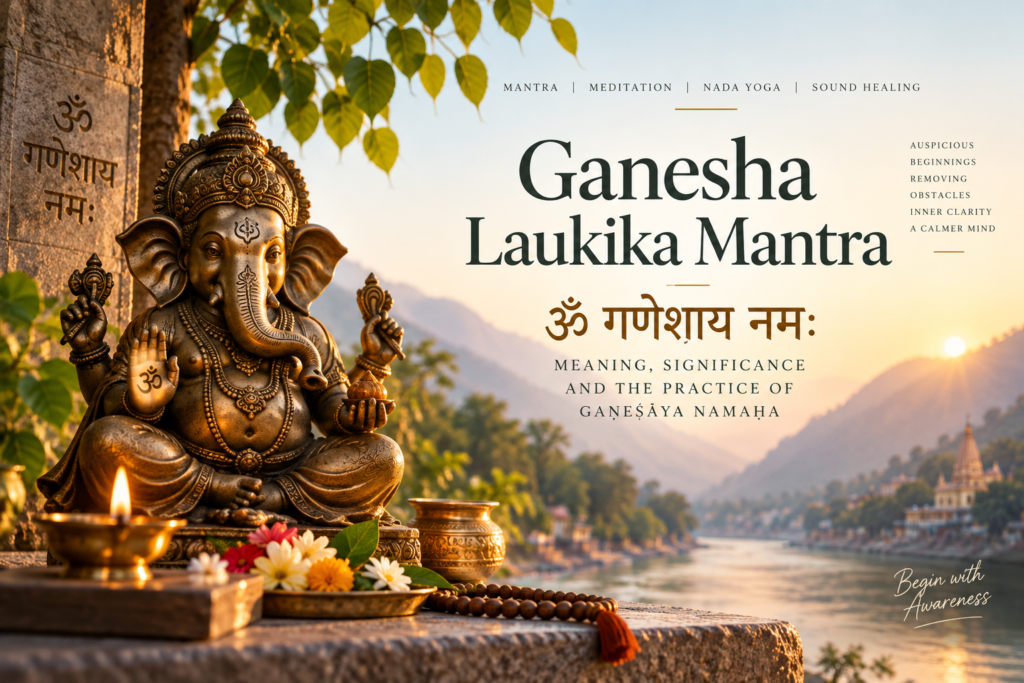
Gaṇeśāya Namaḥ, commonly chanted as Om Gaṇeśāya Namaḥ, is a traditional Ganesha mantra that expresses reverence toward Lord Ganesha. Its short structure makes it easy to remember, while its meaning connects the practice with wisdom, auspicious beginnings and the overcoming of obstacles.
The Ganesha Laukika Mantra also offers an interesting introduction to the relationship between Sanskrit, sound and meditation. When chanted aloud, each syllable becomes part of an audible vibration. When repeated quietly, attention can move toward the breath and the subtle resonance of the voice.
For practitioners interested in mantra meditation, Nada Yoga and sound-based practices, Gaṇeśāya Namaḥ provides a simple way to explore how meaning and sound can work together.
What is the Ganesha Laukika Mantra?
The mantra is written as:
ॐ गणेशाय नमः
Om Gaṇeśāya Namaḥ
The central expression is Gaṇeśāya Namaḥ.
It can be understood through two main words:
- Gaṇeśāya means “to Ganesha”
- Namaḥ expresses salutation, reverence or bowing
A simple translation is:
“Salutations to Ganesha.”
The addition of Om gives the mantra an opening sacred syllable that is widely used across Indian spiritual traditions.
Because of its concise form, the mantra can be used for japa, meditation, devotional chanting and personal prayer.
What does Gaṇeśāya Namaḥ mean?
The name Ganesha is traditionally associated with gaṇa, meaning a group or multitude, and īśa, meaning lord or master. Ganesha is therefore commonly understood as the Lord of the Ganas.
The form Gaṇeśāya is used when addressing or offering something to Ganesha.
The second part, Namaḥ, carries the sense of salutation or reverence.
Together, Gaṇeśāya Namaḥ becomes an invocation directed toward Ganesha.
The meaning also explains why the Ganesha mantra is frequently associated with beginnings. In Hindu devotional traditions, Ganesha is commonly invoked before important activities, ceremonies, journeys and undertakings.
The mantra can therefore mark the beginning of a practice with a deliberate moment of attention.
Why is Ganesha associated with removing obstacles?
One of Ganesha’s most familiar traditional associations is with obstacles.
He is known by names such as Vighneshvara, which connect him with the realm of obstacles and their removal. Devotional traditions therefore often invoke Ganesha before starting an important activity.
The idea can also become relevant during meditation.
A practitioner may encounter distraction, restlessness, impatience or difficulty maintaining attention. Returning to a familiar mantra provides a steady point of focus.
In this context, the Ganesha mantra becomes a practical part of a meditation routine while retaining its devotional meaning.
What is the meaning of Ganesha’s form?
Ganesha’s distinctive form has inspired many symbolic interpretations within Hindu traditions.
His elephant head is often associated with wisdom and strength. His large ears are commonly connected with attentive listening, while his single tusk carries several traditional interpretations.
The connection with listening has particular relevance to Nada Yoga.
Nada Yoga places attention on sound and listening as part of yogic practice. Ganesha’s large ears provide a familiar symbolic image for the quality of attentive hearing that can develop through mantra chanting.
When a practitioner chants Gaṇeśāya Namaḥ, listening becomes part of the practice. The practitioner creates the sound through the voice and then receives that sound through the ears.
How do you pronounce Gaṇeśāya Namaḥ?
The Sanskrit form is:
ॐ गणेशाय नमः
A simple pronunciation guide is:
Om Ga-nesh-aa-ya Na-ma-ha
A more precise transliteration is:
Oṃ Gaṇeśāya Namaḥ
The long ā in Gaṇeśāya should receive its proper length. The final ḥ in Namaḥ creates a breath-like ending.
Sanskrit mantra chanting benefits from careful pronunciation because small differences in vowel length and consonant articulation can change the sound of a word.
Listening to an experienced teacher can help students develop a clearer pronunciation. This is particularly useful when mantra forms part of Nada Yoga teacher training, where the voice and ear become important tools for learning.
The sound structure of the Ganesha mantra
A short mantra can be surprisingly rich when approached through attentive listening.
Try breaking the phrase into smaller units:
Om
Ga-ṇa-śā-ya
Na-maḥ
Instead of rushing through the entire mantra, listen to each sound individually.
Notice how the voice begins.
Observe the resonance during the syllable.
Listen as the sound fades.
Then allow the next syllable to begin.
This simple practice changes the experience of chanting. The mantra becomes a sequence of sounds that the practitioner can hear, reproduce and observe.
This is one of the basic ways Nada Yoga and mantra meditation can meet.
Ganesha mantra and japa
Japa refers to the repetition of a mantra.
Gaṇeśāya Namaḥ works well for simple japa because its structure is short and easy to remember. The practitioner can repeat it aloud, whisper it or practice it mentally.
A mala can provide a physical rhythm for the practice. With each repetition, one bead moves through the fingers while attention returns to the mantra.
The repetition creates continuity.
Over time, the practitioner may become increasingly aware of small details in pronunciation, rhythm and breath. The mantra becomes familiar, allowing attention to move beyond remembering the words and toward experiencing the sound.
Ganesha mantra meditation
Gaṇeśāya Namaḥ can also serve as an object of mantra meditation.
Begin by sitting comfortably and allowing the breath to settle. After several natural breaths, chant Om Gaṇeśāya Namaḥ slowly.
Keep the voice comfortable.
Listen carefully to the sound.
Allow each repetition to finish before beginning the next.
After several repetitions, soften the volume. The mantra can gradually move from audible chanting toward whispering and then mental repetition.
This creates a natural progression from external sound to quieter awareness.
The practitioner can also bring the meaning into the meditation. Ganesha may be contemplated through traditional qualities such as wisdom, discernment and auspicious beginnings.
Listening while chanting
Chanting becomes a deeper listening exercise when the practitioner pays attention to their own voice.
This may sound obvious, yet many people repeat a mantra while their attention moves elsewhere.
Nada Yoga encourages a different quality of engagement.
Listen to the first syllable.
Follow its resonance.
Hear the transition into the next syllable.
Notice the final sound disappearing into silence.
Then begin again.
This type of attentive listening can also be useful when working with singing bowls, gongs, tuning forks or the human voice in contemporary sound-based practices. Each sound has a beginning, a duration, a resonance and an ending.
The ear learns to notice these details through repeated attention.
Ganesha mantra and Nada Yoga
Nada Yoga traditionally explores sound as a support for concentration, meditation and awareness.
Mantra offers a structured form of sound because the practitioner works repeatedly with the same syllables. The voice creates an external sound, the ear receives it, and the mind follows its rhythm and meaning.
Gaṇeśāya Namaḥ therefore provides a practical starting point for exploring sound through a yogic lens.
A practitioner can begin with audible chanting and gradually reduce the volume. As the external sound becomes quieter, attention can move toward mental repetition and silence.
This creates a simple movement:
Voice → sound → listening → mental repetition → silence
The role of Om in the Ganesha mantra
When the mantra is practiced as Om Gaṇeśāya Namaḥ, Om creates a resonant opening.
Om has a significant place in Indian spiritual traditions and appears throughout the Upanishadic and yogic literature.
From a sound perspective, Om also offers an interesting contrast with the articulated syllables that follow.
The practitioner can sustain Om gently and then move into Gaṇeśāya Namaḥ.
The opening sound can be allowed to resonate before the mantra continues.
This creates an opportunity to notice changes in pitch, resonance, articulation and breath.
For students of Nada Yoga, such simple observations can develop greater sensitivity toward the voice and its relationship with space.
Ganesha mantra and the human voice
The human voice is one of the most accessible instruments in sound practice.
It requires no external equipment. Breath becomes the source of movement, the vocal folds create vibration, and the mouth shapes the resulting sound.
Mantra chanting brings these elements together.
When chanting Gaṇeśāya Namaḥ, the practitioner can observe the movement of breath through the body and the changing resonance of each syllable.
This makes mantra especially interesting within sound healing and voice-based practices.
The experience remains grounded in traditional mantra when the Sanskrit phrase, pronunciation and devotional meaning are preserved.
Ganesha mantra and sound healing
The relationship between mantra and sound healing deserves some distinction.
Gaṇeśāya Namaḥ belongs to a Hindu devotional and Sanskrit mantra tradition. Contemporary sound healing is a broader field that may include singing bowls, gongs, tuning forks, voice, music and guided listening.
The two fields can meet through the human experience of sound.
For example, a practitioner may use chanting as part of a meditation session and then spend time listening to a singing bowl or another sustained tone. In each case, attention can rest on resonance, duration and the transition into silence.
The purpose and tradition of each practice remain important.
A sound healing course can therefore introduce students to sound through instruments, voice, listening and guided practices, while a mantra study can focus more specifically on Sanskrit, devotion and traditional contemplative methods.
Ganesha mantra and Indian classical music
Indian classical music provides another useful context for understanding sound.
Students of classical music develop sensitivity to pitch, resonance, rhythm and subtle changes in tonal movement. Listening becomes an active skill.
Mantra chanting can develop a related form of attention.
When chanting Gaṇeśāya Namaḥ, the practitioner can listen to the pitch of the voice, the duration of each syllable and the resonance that follows.
This relationship between mantra, music and attentive listening forms an important part of the broader Nada Yoga approach.
At Nada Yoga School, students encounter mantra and Indian classical music alongside meditation, kirtan and traditional yoga practices.
A simple Ganesha mantra practice
A short practice can take around ten minutes.
Sit comfortably and allow the body to settle. Take several natural breaths before beginning the mantra.
Start with three slow repetitions of Om.
Then chant:
Om Gaṇeśāya Namaḥ
Repeat the mantra slowly for several minutes.
Listen carefully to your voice and keep the pronunciation clear. Allow each repetition to end completely before starting the next.
After a few minutes, reduce the volume to a whisper.
Continue for several repetitions.
Then allow the mantra to become a mental repetition.
At the end, release the deliberate repetition and sit quietly for a minute.
Notice the silence that remains after the final sound.
This simple practice brings together mantra chanting, breath awareness, listening and meditation.
When can you chant the Ganesha mantra?
Ganesha is traditionally associated with beginnings, so practitioners often invoke him before starting an important activity.
The mantra can be included before meditation, study, yoga practice, travel or another meaningful undertaking.
It can also form part of a regular japa practice.
Consistency can make mantra practice easier to develop. Choosing a regular time allows the mantra to become familiar while giving the mind a clear transition into meditation.
The devotional intention remains an important part of the practice.
What does Laukika mean in relation to a mantra?
The Sanskrit word laukika can mean worldly, ordinary or pertaining to common life. In discussions of mantra, the term can have different technical meanings depending on the tradition or classification being used.
Some traditional discussions distinguish simple devotional mantras used in everyday practice from more specialized mantra systems.
For this reason, Ganesha Laukika Mantra can be used to describe a simple and accessible invocation such as Gaṇeśāya Namaḥ, while recognizing that mantra classifications vary between traditions.
The important point for practitioners is the context in which the mantra is taught and practiced.
Frequently asked questions about the Ganesha Laukika Mantra
What is the Ganesha Laukika Mantra?
The term commonly refers to the simple Ganesha invocation Gaṇeśāya Namaḥ, often practiced in the form Om Gaṇeśāya Namaḥ.
What does Gaṇeśāya Namaḥ mean?
It means “Salutations to Ganesha” or “Reverence to Ganesha.”
What is the Ganesha mantra for removing obstacles?
Ganesha is traditionally associated with obstacles and their removal. Om Gaṇeśāya Namaḥ is one simple mantra used in devotional practice to invoke Ganesha.
Can beginners chant the Ganesha mantra?
Yes. Its short structure makes it accessible for beginners. Starting slowly and learning the pronunciation carefully can help establish a steady practice.
Can Gaṇeśāya Namaḥ be used for meditation?
Yes. The mantra can be chanted aloud, whispered or repeated mentally while maintaining attention on sound, breath and meaning.
What is the connection between Ganesha mantra and Nada Yoga?
Both can involve careful attention to sound. Nada Yoga provides a traditional framework for exploring sound and listening, while mantra provides a structured sequence of sacred syllables for practice.
Can Ganesha mantra be part of sound healing?
The mantra can be used as a vocal and contemplative sound practice. Sound healing has a broader contemporary framework that may include voice, instruments and guided listening.
What is the best time to chant the Ganesha mantra?
Because Ganesha is traditionally associated with beginnings, some practitioners chant the mantra at the start of meditation, study, yoga practice or another important activity. A regular personal practice can also include the mantra at a chosen time each day.
Final thoughts
Gaṇeśāya Namaḥ brings together devotion, Sanskrit and sound in a remarkably simple form.
The mantra can begin as a name spoken aloud. With repetition, it becomes a rhythm for the breath and a point of concentration. Through careful listening, the practitioner can begin to notice pronunciation, resonance and the silence surrounding each repetition. That makes the Ganesha mantra especially relevant to Nada Yoga. The practice begins with an audible voice and can gradually move toward quieter forms of awareness.
For someone exploring mantra meditation, sound healing or the yoga of sound, Gaṇeśāya Namaḥ offers an accessible starting point. Its traditional association with Ganesha gives the practice a devotional foundation, while its sound gives the practitioner something immediate to hear, repeat and contemplate. The mantra may be short, yet attentive practice can reveal considerable depth within those few syllables.