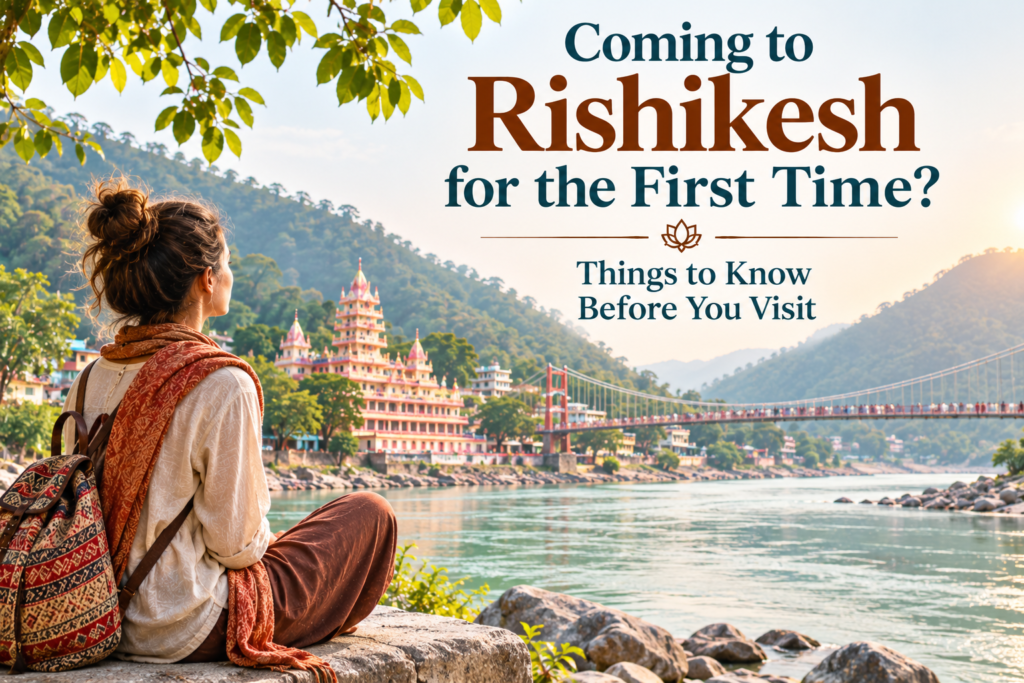
Rishikesh is a town in Uttarakhand, northern India, where the Ganga flows past ancient temples, yoga centres, busy markets and foothills that lead towards the Himalayas. Travellers arrive for many reasons. Some come to attend the evening Ganga Aarti, others want to explore Indian spirituality, practise yoga, go river rafting or spend a few days away from their usual routines.
For first-time visitors, Rishikesh can feel unfamiliar at first. The town has its own rhythm, shaped by religious traditions, early morning activities, seasonal weather and the steady movement of pilgrims and travellers. Understanding a few local customs and practical details before arriving can make the visit easier and more rewarding.
This guide covers the essential things to know before visiting Rishikesh, including the best time to travel, where to stay, what to wear, how to get around and how to experience the town respectfully.
1. Understand the different areas of Rishikesh
One of the first things to know about Rishikesh is that different neighbourhoods offer different experiences. Your choice of accommodation can influence how you spend your days, especially if you plan to walk to yoga classes, temples, cafes or the river.
Tapovan
Tapovan is popular with international travellers, yoga practitioners and people staying for several days or weeks. The area has guesthouses, cafes, yoga studios, shops and wellness centres. It is a useful base for travellers who want access to organised activities and a lively social environment.
Some roads are steep, and traffic can become busy around popular junctions. Check the exact location of your accommodation before booking because a property described as being in Tapovan may still be some distance from the places you plan to visit.
Ram Jhula and Swarg Ashram
The Ram Jhula and Swarg Ashram area has a strong connection with traditional yoga, meditation, temples and ashram life. You will find spiritual centres, riverside walking routes, small shops and places where visitors can attend prayers or spend time in quiet reflection.
This area can suit travellers interested in learning about Indian spiritual traditions. If you intend to join a yoga class or spend time studying meditation, check the daily schedule and location of the centre in advance.
The main town and Triveni Ghat
The central town is useful for transport connections, shopping, everyday services and access to Triveni Ghat. The evening Ganga Aarti at the ghat draws visitors and local worshippers who gather for prayers beside the river.
The main town has a busier atmosphere than some of the ashram areas. Staying here can be convenient if you expect to travel around Uttarakhand or need easy access to shops and transport.
Before booking a room, check the walking distance to the river, the nearest bridge, luggage access and whether taxis can reach the property directly.
2. Choose the best time to visit Rishikesh
The best time to visit Rishikesh depends on your interests and tolerance for heat, cold and crowds.
September to November
The monsoon season usually begins to recede around September, although rainfall and river conditions vary from year to year. Autumn can be a pleasant time for walking, sightseeing, yoga and exploring the surrounding hills. October and November often bring comfortable daytime temperatures and cooler evenings.
If river rafting is part of your plans, confirm that the activity is operating on your chosen dates. River levels, weather and official restrictions can affect access.
December to February
Winter brings cool mornings and evenings. Visitors who enjoy meditation, yoga and a quieter daily routine may appreciate this season, although temperatures can drop considerably, especially before sunrise.
Pack warm layers, socks and a jacket. Accommodation standards vary, so ask whether your room has adequate blankets or heating if you are sensitive to cold.
March to May
Spring and early summer attract yoga students, domestic travellers and international visitors. Daytime temperatures can rise significantly as summer approaches, so plan outdoor walks for the morning or late afternoon. Carry water and protect yourself from the sun.
March is also associated with Holi and the International Yoga Festival period, which can affect visitor numbers and accommodation demand.
June to August
The monsoon brings humidity, rainfall and changing river conditions. Heavy rain can affect road travel, trekking routes and outdoor activities. Visitors travelling during this period should check weather alerts and local advice, especially before planning excursions into the hills.
For official destination information and seasonal guidance, consult the Uttarakhand Tourism website.
3. Know how to reach Rishikesh
Rishikesh is accessible by road, rail and air. The most suitable route depends on where you are travelling from and whether you prefer a direct transfer or public transport.
By air
Jolly Grant Airport near Dehradun is the nearest airport commonly used by visitors travelling to Rishikesh. From the airport, you can continue by taxi or a prearranged transfer. Travel time depends on traffic and the exact destination within the town.
Travellers arriving on international flights often connect through Delhi. If you are taking a separate domestic flight, allow enough time between connections in case your first flight is delayed.
By train
Haridwar is an important railway connection for Rishikesh, with services from several Indian cities. Depending on your itinerary, you may also find a suitable train to Rishikesh itself. Check the current timetable before purchasing tickets.
From the railway station, local taxis and other transport options can take you to your accommodation.
By road
Buses and taxis connect Rishikesh with Delhi, Haridwar, Dehradun and other destinations in Uttarakhand. Journey times vary according to traffic, roadworks and weather.
If you are arriving by overnight bus, confirm the exact drop-off point. Some services stop outside the central town, which can require another transfer to reach your accommodation.
Keep your accommodation address saved on your phone, along with an offline map. This is particularly useful if you arrive late at night or have limited mobile data.
4. Dress comfortably and respect local customs
Rishikesh is a religious and spiritual centre, and visitors regularly encounter temples, ashrams, ceremonies and places used for prayer. Modest, comfortable clothing is appropriate in these settings.
For everyday sightseeing, lightweight trousers, long skirts, T-shirts and breathable shirts work well. When entering a temple or ashram, follow the posted instructions and observe how local visitors behave. You may be asked to remove your shoes before entering certain spaces.
If you plan to attend a yoga class, choose clothing that allows you to move comfortably. A light shawl can be useful during meditation, evening ceremonies and cooler mornings.
Photography etiquette also matters. Ask permission before photographing individuals, especially during prayer or other personal religious activities. Some temples and spiritual spaces restrict photography, so check the rules before taking pictures.
A respectful approach helps visitors understand local life and feel more comfortable in unfamiliar surroundings.
5. Learn about food and drinking water
Rishikesh has a wide range of food options, including traditional Indian meals, simple vegetarian dishes, cafes and international cuisine. Many establishments serve vegetarian food, reflecting the town’s religious culture.
You can find dal, rice, roti, seasonal vegetables, poha, idli, dosa and other familiar Indian dishes. Cafes in areas popular with international travellers also serve coffee, smoothies and Western-style breakfasts.
If you are unfamiliar with Indian food, start with meals that suit your appetite and gradually explore local dishes. Tell restaurant staff about allergies or dietary requirements clearly. If you have a severe allergy, confirm ingredients and the possibility of cross-contact before ordering.
For drinking water, use sealed bottled water from a reliable seller or water that has been properly filtered or treated. Be cautious with ice when its source is uncertain, and choose freshly prepared food from places with good hygiene practices.
Carry a reusable bottle that you can refill at a trusted filtered-water station. This helps reduce plastic waste while keeping you hydrated throughout the day.
6. Understand the local approach to alcohol and nightlife
Rishikesh is widely known for its religious and spiritual traditions. The town has a strong vegetarian and alcohol-restricted culture, and many establishments follow rules that reflect this setting. Availability and regulations can vary by area and venue, so visitors should check current local rules rather than assume that every service operates as it would in a large metropolitan city.
Evenings often revolve around riverside walks, temple visits, kirtan, meditation, cafes and the Ganga Aarti. Some cafes close relatively early, and quieter neighbourhoods may have limited activity late at night.
If you prefer a social evening, check the location and closing time of a cafe or event in advance. Travellers staying in ashrams should follow the accommodation’s timings and guidelines.
7. Attend the Ganga Aarti respectfully
The Ganga Aarti is one of the most memorable experiences for many first-time visitors. During the ceremony, worshippers gather beside the river as priests perform rituals involving lamps, chants and offerings.
Triveni Ghat is a well-known place to attend the ceremony. Other riverside locations also host prayers and devotional gatherings, including events associated with local ashrams.
Arrive early if you want a good view, particularly during busy travel periods. Keep pathways clear, follow instructions from organisers and avoid pushing through the crowd. If you wish to take photographs, do so discreetly and respect any restrictions.
Visitors may observe the ceremony without participating in every ritual. Listening quietly and allowing space for local worshippers is a simple way to show respect.
8. Be careful around the Ganga
The Ganga is central to Rishikesh’s religious and cultural life, and visitors often spend time on the riverbanks or take part in permitted bathing activities. However, the river can have strong currents, changing water levels and slippery rocks.
Always follow local safety advice. Avoid swimming in unfamiliar areas, particularly during or after heavy rain, and never assume that a calm-looking section of water is safe. Use designated bathing areas where available and pay attention to barriers and warning signs.
If you want to go river rafting, choose a properly authorised operator and follow the guide’s instructions. Wear the required safety equipment and ask about the difficulty of the route before booking. Rafting availability can change with seasonal conditions and official decisions.
The riverbanks can also become slippery, so wear footwear with a reliable grip and keep a safe distance from steep edges.
9. Getting around Rishikesh takes a little planning
Many popular areas are walkable, particularly if your accommodation is near the places you plan to visit. Walking can be one of the best ways to discover small shops, temples, riverside paths and local food spots.
However, hills, steps, narrow lanes and traffic can make some journeys slower than expected. During busy periods, allow extra time to cross the town or reach an appointment.
Auto-rickshaws, taxis and other local transport options are available on many routes. Confirm the fare or agree on the price before starting a journey if the vehicle does not use a meter. For longer trips, arrange transport with a trusted provider.
Keep in mind that some bridges are designed for pedestrians and may not allow motor vehicles. This can affect how you reach accommodation on the opposite side of the river. Check luggage access before choosing a riverside guesthouse, especially if you are carrying large suitcases.
10. Plan your budget and carry some cash
Your daily expenses in Rishikesh depend on where you stay, the type of food you prefer and the activities you choose. Guesthouses, ashrams, boutique hotels and larger resorts offer different levels of comfort and services.
Before booking accommodation, check whether the price includes meals, Wi-Fi, hot water, laundry or organised activities. Read the cancellation policy and confirm whether taxes or other charges are included.
Digital payments are common in many parts of India, and some businesses accept international cards. However, smaller shops, local transport providers and certain guesthouses may prefer cash. Keep a reasonable amount of Indian rupees for everyday purchases and check international card fees with your bank.
If you plan to visit during a festival or a busy holiday period, book accommodation early. Prices and availability can change according to demand.
11. Explore yoga and meditation at your own pace
Rishikesh has a long association with yoga, meditation and Indian philosophical traditions. Visitors can attend a single drop-in class, join a meditation session or spend several weeks studying at a residential centre.
If you are new to yoga, start with a class that matches your experience and physical comfort. Ask the teacher about the style, duration and intensity before joining. A beginner-friendly Hatha Yoga session can provide an introduction to posture, breathing and relaxation.
Visitors who want to study yoga in greater depth can explore the different types of programmes available in the town. For example, a 200-hour yoga teacher training course in Rishikesh generally offers an extended introduction to asana, pranayama, meditation, anatomy and yoga philosophy. Such training requires a significant time commitment, so it is worth reviewing the curriculum and daily schedule before deciding whether it fits your plans.
Rishikesh also has a distinctive connection with Indian classical music and devotional sound. Mantra chanting, bhajans and kirtan are part of the spiritual life of many communities. Travellers interested in the relationship between sound and meditation can learn about Nada Yoga teacher training, which explores sound, listening, mantra and musical practice within a yogic framework.
Those curious about singing bowls and other sound-based practices may also wish to read about a sound healing teacher training course in Rishikesh. These programmes are useful to research if you are considering a longer educational stay. For a short visit, a public class or an introductory session may be enough to discover which practices interest you.
Whatever you choose, give yourself time to rest between activities. Early morning classes, walking and sightseeing can quickly fill a day, especially when you are adjusting to a new climate and time zone.
12. Visit temples and cultural sites with an open mind
Rishikesh offers many places to explore beyond yoga studios and riverside cafes. Triveni Ghat is known for its evening Aarti, while Bharat Mandir is associated with the town’s religious history. Ram Jhula connects areas with ashrams, temples and shops, and the Beatles Ashram offers a look at a site associated with the international interest in meditation during the 1960s.
You can also explore local markets, attend a devotional music gathering or take a walk along accessible riverside paths. If you want to visit waterfalls or nearby hill destinations, check route conditions and transport arrangements beforehand.
Some sites have entry fees, visiting hours or restrictions. Check current information before setting out, and remember that temple schedules may change during festivals and religious events.
Instead of trying to visit every attraction in one day, choose a few places that interest you and allow enough time to experience each one.
13. Pack for the weather and your daily activities
Your packing list should reflect the season and the reason for your visit. Comfortable walking shoes are useful for exploring the town, while sandals can be convenient for short trips and places where shoes must be removed.
Consider packing:
- Lightweight, modest clothing for warm days and temple visits.
- A warm layer for winter mornings and evenings.
- A rain jacket or compact umbrella during the monsoon.
- Sunscreen, sunglasses and a reusable water bottle.
- Personal medication and basic toiletries.
- A small day bag for walking and sightseeing.
- A power adapter if your devices require one.
- A copy of important travel documents, stored separately from the originals.
If you plan to attend yoga classes, bring clothes that allow free movement. Many studios provide mats and props, although it is worth checking in advance.
Travellers staying for an extended period may also want a notebook for study, a light shawl for meditation and a small bag for carrying personal items to class.
14. Stay aware of your surroundings
As in any destination, practical awareness helps make a visit smoother. Keep valuables secure in crowded markets and busy areas. When walking near monkeys, avoid displaying food or carrying loose items that may attract their attention. Do not attempt to feed or approach them.
Use reliable transport after dark, keep your accommodation details accessible and tell someone your plans if you are heading out on a remote trail. Solo travellers should check local advice before walking in isolated areas, particularly after sunset.
If you are travelling during heavy rain, follow weather warnings and avoid unnecessary trips along the river or into the surrounding hills. Save emergency contact details and keep your phone charged.
Visitors who are unsure about an activity can ask their accommodation or a recognised local operator for current guidance.
15. Give yourself enough time to experience Rishikesh
A short visit can cover the main ghats, a yoga class, a local market and an evening ceremony. With several days, you can explore different neighbourhoods, visit cultural sites and take a day trip into the surrounding hills, depending on the weather.
A longer stay gives you time to understand the town’s daily rhythm. You might attend a regular yoga class, listen to live devotional music, learn about local traditions or spend a morning beside the river before the streets become busy.
Try leaving some open space in your itinerary. Rishikesh can be rewarding when you have time to walk without rushing, sit quietly after a visit to the ghat or return to a place that interested you.
Frequently asked questions about visiting Rishikesh
Is Rishikesh suitable for first-time visitors to India?
Yes. Rishikesh receives visitors from across India and around the world, and many travel there for yoga, sightseeing and spiritual experiences. Planning your transport and accommodation in advance, observing local customs and taking ordinary travel precautions can help you feel more prepared.
How many days should I spend in Rishikesh?
Three to five days can provide time for the main sights, a Ganga Aarti, local food and a yoga class. Travellers interested in hiking, rafting or visiting nearby destinations may want to stay longer. A residential course requires a separate schedule based on the programme.
What is the best month to visit Rishikesh?
March, April, October and November are often suitable months for general sightseeing and outdoor activities. September can also be pleasant, although monsoon conditions may continue. The best dates depend on the weather, river conditions and your planned activities.
What should I wear in Rishikesh?
Choose comfortable clothing suited to the weather. Modest clothing is appropriate when visiting temples and ashrams. Pack warm layers in winter and rain protection during the monsoon.
Can beginners attend yoga classes in Rishikesh?
Yes. Many centres offer classes for different experience levels. Check the class description and tell the teacher if you are new to yoga or have movement limitations. Choose a session that suits your needs and comfort.
Is river rafting available throughout the year?
Rafting is seasonal and depends on river conditions, weather and official restrictions. Check current availability with an authorised operator before making plans, and follow all safety instructions.
What should I know about local customs?
Dress respectfully at religious sites, remove your shoes where requested, ask permission before photographing people and follow the rules of temples and ashrams. During ceremonies, leave space for worshippers and keep noise to a minimum.
Final thoughts
Visiting Rishikesh for the first time is an opportunity to discover a town shaped by the Ganga, religious traditions, yoga and everyday life in the Himalayan foothills. A little preparation helps you choose the right area to stay, plan around the weather and understand local customs.
Keep your itinerary flexible, take care around the river and approach spiritual spaces with respect. Whether you spend a few days exploring the ghats or stay longer to study yoga and meditation, allow yourself time to experience Rishikesh at a comfortable pace.