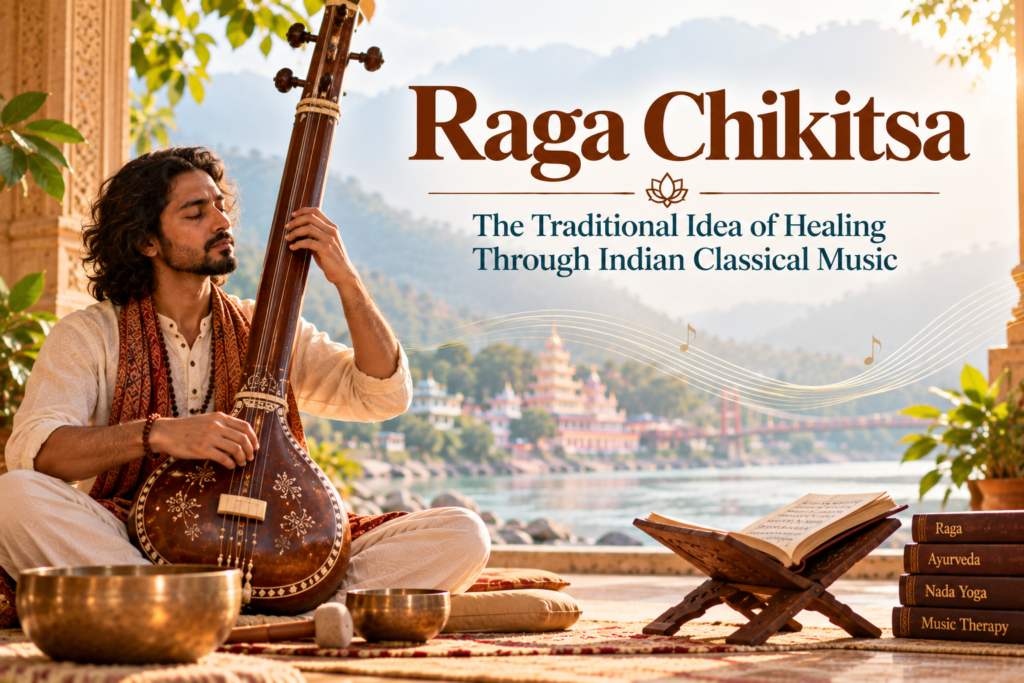
Imagine sitting in a quiet room as a tanpura sustains a gentle drone and a musician begins to unfold a raga. One note leads naturally into another, the melody develops gradually, and the spaces between phrases become part of the listening experience. As attention settles on the music, the listener may begin to notice changes in mood, breathing and awareness.
This relationship between music and human experience has a long history in India. Within traditional musical and healing frameworks, the concept of Raga Chikitsa explores the potential of Indian classical melodies to support emotional balance, relaxation and contemplative practice. The tradition draws on the distinctive structures of ragas, the expressive qualities of musical notes and the close relationship between sound and the listener.
Raga Chikitsa offers an interesting meeting point between Indian classical music, traditional knowledge systems and contemporary interest in music-based wellbeing. Understanding the concept requires attention to its musical foundations, historical development and the evidence available today. It also reveals why attentive listening remains an important part of India’s wider sound traditions.
What is Raga Chikitsa?
Raga Chikitsa is a term commonly used for the traditional idea of therapeutic applications of Indian classical ragas. The Sanskrit-derived word chikitsa means treatment or therapeutic care, while raga refers to a melodic framework that gives Indian classical music its distinctive character. Together, the words describe an approach that explores the possible role of melodic music in supporting wellbeing.
Indian classical music includes two major traditions, Hindustani music in northern India and Carnatic music in southern India. Both traditions use ragas as the foundation for melodic composition and improvisation, although they differ in repertoire, performance conventions and musical development. A raga follows particular rules concerning notes, melodic movement, characteristic phrases and expressive emphasis.
Raga Chikitsa draws on the idea that musical structures can shape a listener’s emotional experience. Traditional interpretations associate particular ragas with qualities such as serenity, devotion, joy, longing or contemplation. Practitioners interested in therapeutic applications explore these qualities through listening sessions, vocal music or instrumental performances.
The term encompasses a range of traditional ideas and modern approaches. Its use in contemporary wellness settings therefore requires careful explanation, especially when people describe specific ragas as treatments for particular illnesses.
The historical background of Raga Chikitsa
Music has occupied an important place in Indian religious, artistic and cultural life for centuries. Vedic chanting, devotional singing, temple music and classical performance all demonstrate the close relationship between sound, ritual and contemplative experience. These practices developed within different historical contexts, each with its own musical forms and purposes.
Ancient Indian literature discusses music through concepts such as svara, shruti, raga and tala. Over time, musicians and theorists developed increasingly detailed approaches to melody, rhythm, performance and musical expression. These traditions provided a rich foundation for later discussions about the emotional and therapeutic potential of music.
The specific idea of Raga Chikitsa appears in discussions of traditional Indian music therapy. Historical accounts refer to texts and practices that explore the relationship between ragas, human emotions and wellbeing. However, the history of the concept involves different sources and periods, so claims about a single ancient system of raga prescriptions require careful examination.
Modern interest in Raga Chikitsa has grown alongside research into music therapy and the effects of music on human experience. Researchers have explored Indian classical music in settings involving relaxation, anxiety, pain management and psychological wellbeing. This work creates opportunities for further study while leaving many traditional claims open to investigation.
How a raga works in Indian classical music
To understand Raga Chikitsa, it helps to understand what makes a raga distinctive. A raga is a melodic framework with its own characteristic movements, important notes and expressive phrases. Musicians use these elements to create a recognisable musical identity through improvisation and composition.
The seven basic swaras are Sa, Re, Ga, Ma, Pa, Dha and Ni. These names correspond to Shadja, Rishabha, Gandhara, Madhyama, Panchama, Dhaivata and Nishada. Depending on the raga, musicians may use different forms of certain notes, omit notes in particular directions or emphasise specific phrases that give the melody its character.
A raga also has a characteristic way of moving through its notes. Its ascending and descending patterns, known as aroha and avaroha, offer part of its framework. Musicians also use pakad, a characteristic melodic phrase, and vadi and samvadi, traditionally understood as especially important notes within the raga.
These musical features influence how a raga unfolds during performance. A musician may begin with a slow exploration of the melodic framework, gradually introduce rhythmic movement and develop the performance through improvisation. The listener experiences a musical journey shaped by pitch, rhythm, ornamentation, timbre and silence.
Why ragas can influence mood and attention
Music can influence emotional experience in several ways. Melody, tempo, volume, musical expectation and personal associations all contribute to how a listener responds. A slow, spacious performance may encourage quiet attention for one person, while another listener may respond more strongly to a lively rhythmic composition.
Indian classical music offers a particularly rich setting for this experience because ragas develop through detailed melodic relationships. A musician may sustain a note, approach it through a gradual glide or return to a characteristic phrase several times. These choices create a sense of continuity and allow listeners to follow subtle changes in the music.
Listening also involves attention and expectation. Familiar melodies can evoke memories or cultural associations, while unfamiliar music may encourage listeners to focus closely on changes in pitch and rhythm. Personal preference, previous musical experience and the listening environment all shape the resulting experience.
Traditional Raga Chikitsa connects these musical qualities with the possibility of supporting emotional balance. Modern research investigates related questions through studies of music listening, stress, mood and physiological responses. Current findings suggest that music can influence experience, although researchers still need stronger evidence to establish the specific effects of individual ragas.
Ragas traditionally associated with different moods
Indian classical music traditions often connect particular ragas with certain moods, times of day and expressive qualities. These associations influence performance practice and provide a cultural framework for listening. In Raga Chikitsa discussions, people sometimes use these traditional associations to explore how music might support different emotional states.
The following examples introduce commonly discussed associations. They describe musical and cultural interpretations, rather than established prescriptions for medical conditions.
Raga Yaman: Serenity and expansiveness
Raga Yaman holds a prominent place in Hindustani classical music and often introduces students to the relationship between melodic structure and expressive development. Its characteristic use of the tivra Ma, along with its distinctive phrases, gives the raga a recognisable identity.
Performances of Yaman often unfold with a sense of spaciousness and lyrical movement. Many listeners experience its melodies as peaceful, reflective or uplifting, although individual responses vary. Its expressive quality makes it a useful example when exploring attentive listening and the emotional dimensions of Indian classical music.
Raga Bhairav: Reflection and solemnity
Raga Bhairav belongs to the morning repertoire of Hindustani classical music. Its distinctive use of komal Re and komal Dha contributes to its characteristic melodic expression.
Musicians and listeners often associate Bhairav with solemnity, devotion and introspection. A slow performance can draw attention to the weight of individual notes and the careful movement between them. These qualities make Bhairav an interesting raga for exploring reflective listening within the traditional morning-raga framework.
Raga Bageshri: Longing and inward attention
Raga Bageshri is known for its expressive treatment of melody and its association with themes of longing, tenderness and introspection. Its characteristic phrases allow musicians to develop a deeply expressive performance through sustained notes, ornamentation and gradual melodic movement.
Listeners may find Bageshri evocative because the melody creates a sense of emotional continuity. Its traditional associations offer a starting point for reflecting on how musical phrasing communicates feeling. The actual response depends on the performer, the listener and the context of the performance.
Raga Malkauns: Depth and contemplation
Raga Malkauns uses five notes and has a distinctive melodic identity shaped by its note selection and characteristic phrases. Hindustani musicians often associate it with a serious, meditative or inward quality.
Its slow development can draw attention to the resonance and expressive weight of individual notes. During a performance, the musician may allow phrases to unfold gradually, creating space for the listener to follow the melodic structure. Such listening can support contemplation for people who enjoy this style of music.
Raga Bhimpalasi: Tenderness and emotional expression
Raga Bhimpalasi is associated with the afternoon in many Hindustani performance traditions. Its melodic framework allows for expressive phrasing that musicians often use to convey tenderness, yearning and introspection.
A performance may move between restrained phrases and more expansive melodic passages. These shifts illustrate how a raga creates emotional character through the relationships between notes, timing and ornamentation.
These examples show how traditional mood associations can guide listening. Musicians interpret ragas through performance, and listeners bring their own experiences to the music. The same raga may create different responses in different people, so its traditional mood offers a useful reference point rather than a guaranteed emotional outcome.
The traditional time theory of ragas
One distinctive feature of Hindustani classical music is its association between certain ragas and particular times of day. Traditional performance frameworks organise ragas according to periods such as early morning, late morning, afternoon, evening and night. Some traditions also connect musical expression with seasonal cycles.
This time theory forms part of the cultural and aesthetic framework of raga performance. Musicians and listeners may understand a raga’s character through the relationship between its melodic features and the atmosphere of its traditional performance time. The practice also encourages people to experience music in relation to changing light, activity and the rhythms of daily life.
Raga Chikitsa discussions sometimes draw on this framework when considering the use of music for wellbeing. A practitioner may select a raga according to its traditional time association and the intended atmosphere of a listening session. This approach belongs to the traditional framework, while its specific therapeutic value requires further research.
The time theory also offers a practical way to develop a listening routine. Someone interested in Indian classical music might explore a morning raga during a quiet part of the day and notice how the performance shapes their attention. Such a practice can deepen musical appreciation without assuming that the time or raga will produce a particular health outcome.
Raga Chikitsa and the science of music
Modern research into music therapy examines how music may influence mood, attention, stress and aspects of physical experience. Researchers use different approaches, including questionnaires, physiological measurements, controlled trials and interviews about participants’ experiences. This work helps distinguish personal impressions from effects that researchers can measure systematically.
Some studies have explored Indian classical music as a listening intervention in healthcare and wellbeing settings. Researchers have examined questions involving anxiety, pain, mood and other outcomes. Results vary across studies, and differences in musical selection, session length, participant groups and study design make comparisons difficult.
A systematic review published in 2025 examined randomized controlled trials of classical Indian music in hospital settings. Its meta-analysis of two trials involving 197 participants could not establish a significant benefit for anxiety or several measured physiological outcomes, and the authors rated the certainty of the evidence as very low. These findings highlight the need for better-designed studies before researchers can draw firm conclusions about specific clinical applications.
Raga Chikitsa therefore sits at an intersection between traditional knowledge and ongoing scientific investigation. Traditional descriptions can provide important cultural and musical context, while contemporary research can examine particular outcomes through carefully designed methods. Both perspectives benefit from clear distinctions between historical belief, personal experience and demonstrated clinical effects.
How to listen to a raga for relaxation and reflection
A simple listening practice can help people appreciate the expressive qualities of Indian classical music. It also offers an opportunity to develop concentration and become more aware of how melody, rhythm and silence influence personal experience.
Choose a suitable recording
Select a raga performance that appeals to you and suits the time available for listening. You might begin with a slow alap, in which the musician explores the raga’s melodic framework without a fixed rhythmic cycle. Instrumental and vocal performances can both work well, depending on your preferences.
Create a comfortable listening environment
Find a place where you can listen with minimal interruption. Adjust the volume to a comfortable level and choose a position that allows you to remain relaxed and attentive. Headphones can help with focused listening, while speakers may suit people who prefer a more spacious listening environment.
Follow the melody carefully
Begin by noticing the tanpura drone, if the performance includes one. Then follow the movement of the melody, paying attention to sustained notes, ornamentation, pauses and characteristic phrases. Allow your attention to return to the music whenever other thoughts arise.
Notice your response
After listening for several minutes, observe your mood, attention and physical comfort. You might notice a sense of calm, curiosity, emotional movement or no particular change. Each response offers information about your personal relationship with the music.
End with a moment of silence
When the recording finishes, remain quiet for a short period. Notice the transition from active listening to silence and reflect on the experience. This closing pause can help you appreciate the role of attentive listening in a contemplative routine.
People who experience sound sensitivity or discomfort should choose music and volume levels that suit their needs. Anyone exploring music for a health concern should also seek appropriate professional guidance.
Raga Chikitsa and Nada Yoga
Raga Chikitsa and Nada Yoga both explore the significance of sound within Indian traditions, although they have distinct purposes and frameworks. Raga Chikitsa focuses on the traditional idea of using ragas in support of wellbeing, while Nada Yoga places particular emphasis on sound, attentive listening and the contemplative dimensions of auditory experience.
Nada Yoga encourages practitioners to develop a refined awareness of sound. Musical tones, mantra, the tanpura drone and periods of silence can all provide opportunities to practise sustained attention. Through repeated listening, students may become more sensitive to changes in pitch, resonance, rhythm and the spaces between sounds.
Indian classical music offers a valuable setting for this work. Learning a raga involves close attention to swara, shruti, melodic phrasing and the relationships between notes. These elements encourage patient listening and help students recognise the detail contained within a musical phrase.
At Nada Yoga School, the study of traditional sound practices and Indian classical music can complement a broader exploration of contemplative listening. Students interested in developing these skills can learn more about the Nada Yoga Teacher Training in Rishikesh and the school’s Sound Healing Teacher Training Course.
Why Raga Chikitsa remains relevant today
Raga Chikitsa continues to attract interest because it connects India’s musical heritage with contemporary questions about sound and wellbeing. Its traditional framework encourages people to consider the emotional qualities of ragas, the importance of attentive listening and the role of music within contemplative life.
The concept also creates opportunities for dialogue between musicians, traditional practitioners, music therapists and researchers. Musicians contribute knowledge of raga structure and performance, while researchers can investigate particular questions through careful study. This collaboration can help preserve musical traditions while improving the quality of claims about therapeutic effects.
For listeners, exploring Raga Chikitsa can begin with a simple appreciation of Indian classical music. Listening to different ragas, learning about their structures and noticing personal responses can deepen one’s understanding of the relationship between melody and emotion. Over time, this approach may also enrich meditation and other contemplative practices.
Frequently asked questions
What does Raga Chikitsa mean?
Raga Chikitsa refers to the traditional idea of using Indian classical ragas in support of wellbeing. It explores the relationship between melodic structures, emotional experience and therapeutic listening within Indian musical traditions.
Which ragas are traditionally associated with relaxation?
Listeners often describe ragas such as Yaman, Bageshri and Malkauns as peaceful, reflective or contemplative. These descriptions reflect traditional musical associations and individual responses, rather than guaranteed effects.
Can Raga Chikitsa treat medical conditions?
Researchers continue to investigate the potential applications of Indian classical music in healthcare. Current evidence remains limited for many specific claims about individual ragas, so Raga Chikitsa should not replace appropriate medical care or prescribed treatment.
What is the relationship between Raga Chikitsa and Nada Yoga?
Raga Chikitsa explores the traditional therapeutic use of ragas, while Nada Yoga focuses on sound and attentive listening as part of contemplative practice. Both connect Indian sound traditions with human experience, although their teachings and methods differ.
Can beginners explore Raga Chikitsa?
Beginners can start by listening to Indian classical music, learning the basic structure of ragas and observing their own responses. A music teacher or qualified practitioner can provide additional guidance for anyone interested in deeper musical or therapeutic study.
Final thoughts
Raga Chikitsa reflects a longstanding Indian interest in the relationship between music, emotion and wellbeing. Through the distinctive structures of ragas, Indian classical music offers a rich setting for attentive listening, emotional expression and contemplation. Its traditional associations provide a meaningful cultural framework for exploring how people experience melody and sound.
Modern research continues to examine music’s possible effects on wellbeing, and the evidence for specific therapeutic claims remains limited. A thoughtful approach respects the depth of India’s musical traditions while recognising the value of careful research. By listening closely, learning about ragas and exploring their musical character, people can develop a deeper appreciation of the role sound plays in human experience.