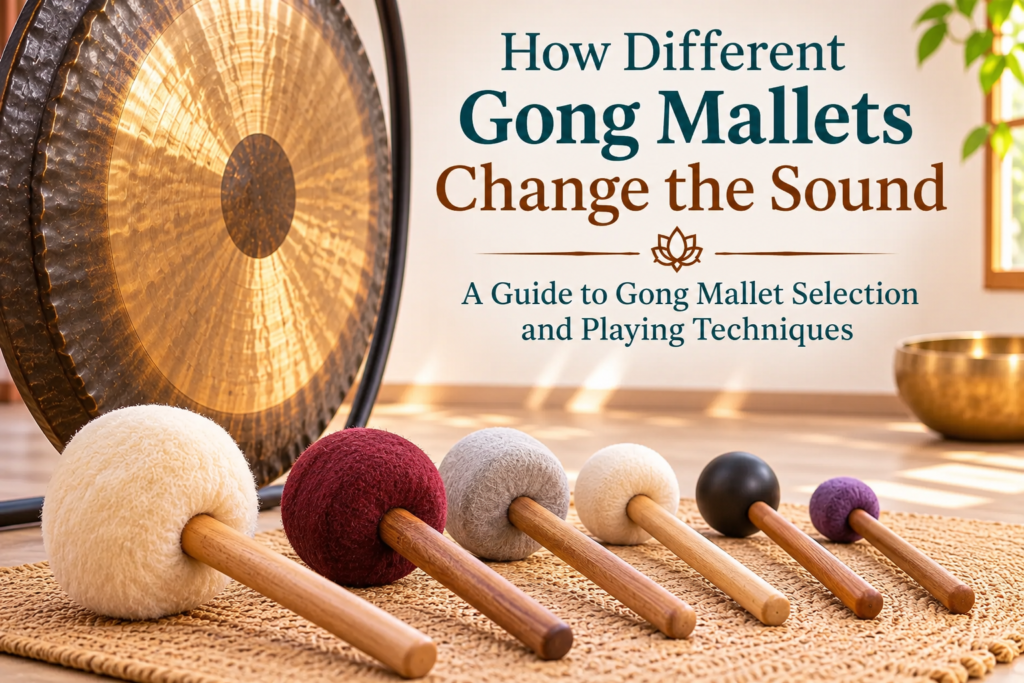
A gong can produce a surprisingly wide range of sounds, even when the instrument itself remains unchanged. A gentle strike may create a soft, rounded tone, while a firmer impact can produce a powerful metallic attack followed by complex resonance. One of the factors responsible for these differences is the mallet.
Gong mallets vary in weight, size, shape and covering material. Felt, rubber, foam and leather-covered heads each interact differently with the gong’s metal surface. Their construction influences how energy transfers into the instrument, affecting its initial attack, tonal balance and overall sound.
For musicians and sound healing practitioners, understanding gong mallets is an important part of developing control over the instrument. The right mallet helps produce the intended sound while allowing the player to explore different playing techniques.
How does a gong mallet produce sound?
A gong belongs to a group of musical instruments called idiophones. These instruments produce sound through the vibration of their own material.
When a mallet strikes a gong, it transfers mechanical energy into the metal. The gong begins vibrating through several different modes, producing sound waves that travel through the surrounding air.
The mallet influences how this energy enters the instrument. Its weight, head material, size and shape affect the force and duration of contact.
A hard mallet generally creates a shorter contact time and a sharper initial attack. A softer mallet compresses against the metal during impact, producing a different contact pattern and often a more rounded beginning.
The gong itself also determines the final result. Its diameter, thickness, shape, metal composition and striking position influence how it responds.
For a closer look at these acoustic properties, read our article on gong acoustics and how size, shape and playing technique influence sound.
1. How gong mallet material affects sound
The material covering a mallet head plays an important role in shaping the initial sound. Different materials have different levels of hardness, flexibility and compressibility. These properties influence the way the mallet makes contact with the gong.
Felt mallets
Felt mallets generally produce a warm and rounded attack. The material compresses slightly when it contacts the gong, which helps soften the initial impact.
Players often use felt mallets when they want a controlled sound with a gentle beginning. Depending on the density and size of the head, felt mallets can produce anything from a quiet tone to a strong, full-bodied response.
Rubber mallets
Rubber mallets provide a firmer contact surface. They can produce a more defined attack and a strong initial vibration.
The type of rubber makes a difference. Softer rubber offers some flexibility, while harder rubber transfers energy more directly. Gong players should choose the hardness carefully because an unsuitable mallet can produce an overly sharp sound.
Foam mallets
Foam mallets usually have a soft and compressible head. They can create gentle sounds with a smooth attack, especially when the player uses controlled movements.
Their response depends on foam density. A dense foam head behaves differently from a very soft one. The size of the head also affects how the mallet interacts with the gong.
Leather-covered mallets
Some gong mallets use leather as an outer covering. Their sound depends on the material underneath, the thickness of the leather and the overall construction.
Leather-covered heads can provide a firm yet slightly yielding contact. Their response varies between designs, so players should test each mallet with the gong they intend to use.
2. How mallet weight changes gong sound
Mallet weight influences the amount of energy transferred to the gong. A heavier mallet can create a stronger vibration when the player uses a similar movement and striking speed.
However, weight alone does not determine volume. The player’s technique, the speed of the mallet and the point of contact also matter.
Lightweight mallets
Lightweight mallets allow precise movements and controlled playing. They are useful for creating delicate sounds, gentle pulses and subtle changes in intensity.
They can also help players explore the gong’s quieter tonal details. A light mallet is often suitable for the beginning of a sound session, when the practitioner wants to introduce the instrument gradually.
Medium-weight mallets
Medium-weight mallets offer flexibility across different playing techniques. They can produce gentle tones with controlled movement and stronger sounds when the player increases speed and force.
Many gong players use medium-weight mallets as their regular playing tools because they offer a useful balance between control and energy.
Heavy mallets
Heavy mallets can transfer considerable energy into the gong. They often produce a powerful response with a strong low-frequency presence, depending on the instrument and playing area.
Players need to use them carefully. Excessive force can create an uncomfortable volume level and may place unnecessary stress on the instrument. Heavy mallets also require good control because their momentum makes sudden changes in movement more difficult.
3. How mallet size and head shape affect the sound
The size and shape of a mallet head influence the contact area between the mallet and the gong.
A small head creates a more concentrated contact area. This can produce a focused attack and make it easier to explore specific areas of the gong.
A large head spreads the contact across a wider area. It may produce a broader and fuller response, depending on its material and construction.
The shape also affects how the mallet meets the surface. Rounded heads create a different contact pattern from flat or elongated heads. A rounded head generally makes contact across a smaller area initially, while a flatter head can distribute pressure across a wider surface.
These differences influence the attack and tonal character of the sound.
4. Why soft and hard mallets produce different overtones
A gong produces several frequencies when it vibrates. These include its fundamental and many higher-frequency components, commonly described as partials or overtones.
The mallet influences which vibration patterns become prominent after a strike. A harder mallet generally delivers energy over a shorter contact period. This type of impact can excite a broad range of vibration modes, including higher-frequency components.
A softer mallet usually creates a longer and more gradual contact. This can reduce the sharpness of the initial attack and change the balance of frequencies heard by the listener.
The final sound depends on several interacting factors. The gong’s construction, striking position and playing force all influence its vibration patterns. Therefore, a soft mallet does not always produce only low tones, and a hard mallet does not always produce only high tones.
This relationship is closely connected with the study of timbre and sound perception. Our article on psychoacoustics and sound healing explains how frequency components, loudness and other acoustic characteristics influence the way we perceive different instruments.
5. Choosing a mallet for different gong playing techniques
Gong players use several techniques to create changes in sound. Each technique places different demands on the mallet.
Single strikes
A single strike creates an individual sound that develops and fades over time. A medium or soft mallet can help produce a rounded attack, while a firmer mallet can create a more defined beginning.
The player should select the mallet according to the desired intensity and the response of the gong.
Gong rolls
A gong roll involves a series of repeated strikes. The player moves the mallet across the surface or repeats controlled strokes to create a continuous sound texture.
Mallet weight and head material affect how easily the player can maintain an even rhythm. A mallet that feels too heavy may make rapid movements difficult. A very light mallet may require greater effort to create a strong and consistent sound.
Sweeping and circular movements
Some gong techniques involve moving the mallet across the surface in circular or sweeping patterns. These movements can create gradual changes in intensity and sound texture.
A suitable mallet should move smoothly across the gong while maintaining consistent contact. The material and shape of the head influence how easily the player can perform these movements.
Friction techniques
Certain gong techniques use friction instead of a conventional strike. The mallet or another suitable tool moves against the gong’s surface to create sustained or changing sounds.
The contact material is especially important in these techniques. Players should use tools designed for the intended instrument and follow the manufacturer’s guidance to avoid damaging the surface.
6. How to select the right mallet for your gong
Choosing a mallet requires attention to the gong’s size, construction and acoustic response. A mallet that works well with one gong may produce an entirely different result with another.
Consider these factors before selecting one:
- Gong size: Larger gongs may respond well to larger or heavier mallets, depending on their construction. Smaller gongs often require more controlled contact.
- Gong thickness: The thickness of the metal influences how the instrument vibrates. Test different mallets to understand the gong’s response.
- Desired sound: Choose a softer mallet for a rounded attack or a firmer one for a more defined initial sound. Listen to the full decay before making a decision.
- Playing technique: Consider whether the mallet allows comfortable movement during single strikes, rolls and other techniques.
- Player control: The mallet should feel comfortable in the hand. Good control allows the player to manage volume and intensity throughout a session.
It is useful to keep several mallets available. This gives the player more options when working with different sound textures.
7. How to test different mallets on the same gong
A simple comparison exercise can help players understand how different mallets influence the sound.
Begin by placing the gong securely on its stand. Check that it hangs freely and that nothing touches its vibrating surface.
Choose two or three mallets with different head materials or weights. Follow the same procedure with each one:
- Strike the same area of the gong using a gentle and consistent movement.
- Listen to the initial attack and the sound that follows.
- Observe how the sound develops and how long it takes to fade.
- Repeat the strike with a different mallet using a similar level of force.
- Compare the volume, tonal character and overall response.
For a more detailed comparison, record each strike from the same listening position. Keep the microphone distance and recording level consistent.
A frequency analyser or spectrogram can help reveal differences in the sound spectrum. It may show changes in the strength of certain frequency components and the way the sound develops over time.
This exercise also teaches an important aspect of gong playing: the player’s movement matters as much as the equipment. A change in striking speed or force can influence the result, even when the same mallet is used.
8. The importance of mallet selection in sound healing sessions
In a sound healing session, the choice of mallet influences the atmosphere created by the gong. Practitioners can use different mallets to introduce gradual changes in volume, texture and intensity.
A softer mallet may be useful when introducing the gong or creating gentle sound passages. A medium-weight mallet can support fuller tones and controlled dynamic changes. A heavier mallet may create a powerful sound when the session calls for greater intensity.
The practitioner should consider the comfort of participants throughout the session. Strong gong sounds can feel overwhelming for some people, especially those who are sensitive to loud or sudden sounds.
Maintain a comfortable volume and observe participants’ responses. Keep the gong at a suitable distance and provide space for people to move away from the instrument if they need to.
Room acoustics also influence the final listening experience. Reflections and reverberation can cause sounds to overlap, particularly when a gong produces a long decay. Read more about how room acoustics change the experience of sound healing.
A well-planned session uses sound with awareness and control. The practitioner should understand the gong’s response and select each mallet with a clear intention.
Students who want to develop practical knowledge of gong playing, instrument selection and sound session design can explore the Sound Healing Teacher Training Course in Rishikesh.
Conclusion
Different mallets can transform the sound of the same gong. Their material, weight, size and shape influence how energy enters the metal and how the instrument responds. These factors affect the initial attack, tonal balance, volume and overall sound texture.
For gong players and sound healing practitioners, experimenting with different mallets is an important part of developing a deeper understanding of the instrument. Regular practice helps them recognise subtle changes and choose suitable tools for each technique.
By learning how mallets interact with the gong, practitioners can develop greater control over their playing and create more considered sound experiences.
Frequently asked questions about gong mallets
Does a heavier gong mallet always produce a louder sound?
A heavier mallet can transfer more energy to the gong when used with a similar movement. However, volume also depends on striking speed, force, contact area and the gong’s construction.
Which gong mallet is best for beginners?
A medium-weight mallet with a suitable felt or soft-covered head can be a useful starting point. It offers control and allows beginners to explore different levels of intensity.
Can the wrong mallet damage a gong?
A mallet with an unsuitable hard surface or excessive weight may create harsh impacts and place unnecessary stress on the instrument. Always use mallets designed for the gong and follow the manufacturer’s recommendations.
Do different mallets change the frequency of a gong?
The gong’s physical construction determines its main resonant characteristics. Different mallets can change which vibration modes are excited and the relative strength of frequency components. This changes the sound’s tonal balance without necessarily changing the gong’s underlying resonant frequencies.
How many mallets should a gong player have?
There is no fixed number. Having a small selection of mallets with different weights and head materials gives players greater flexibility. The right collection depends on the gong, playing techniques and intended sound.