Ardha Śalabhāsana, also known as Half Locust Pose, is a foundational backbend in traditional Hatha Yoga that strengthens the lower back, tones the legs, and improves posture. Derived from the Sanskrit words Ardha meaning “half,” Śalabha meaning “locust,” and Asana meaning “pose,” this posture is often practiced as a preparatory pose for the full Śalabhāsana (Locust Pose).
In today’s sedentary lifestyle, where prolonged sitting and poor posture are increasingly common, Ardha Śalabhāsana offers a simple yet effective way to strengthen the spine and awaken the posterior body. Whether you are a beginner exploring yoga for flexibility or an experienced practitioner deepening your backbend practice, this classical posture can bring remarkable physical and energetic benefits.
In this complete guide, you will learn how to do Ardha Śalabhāsana correctly, its benefits, precautions, variations, and how it fits into a traditional Hatha Yoga practice.
What is Ardha Śalabhāsana?
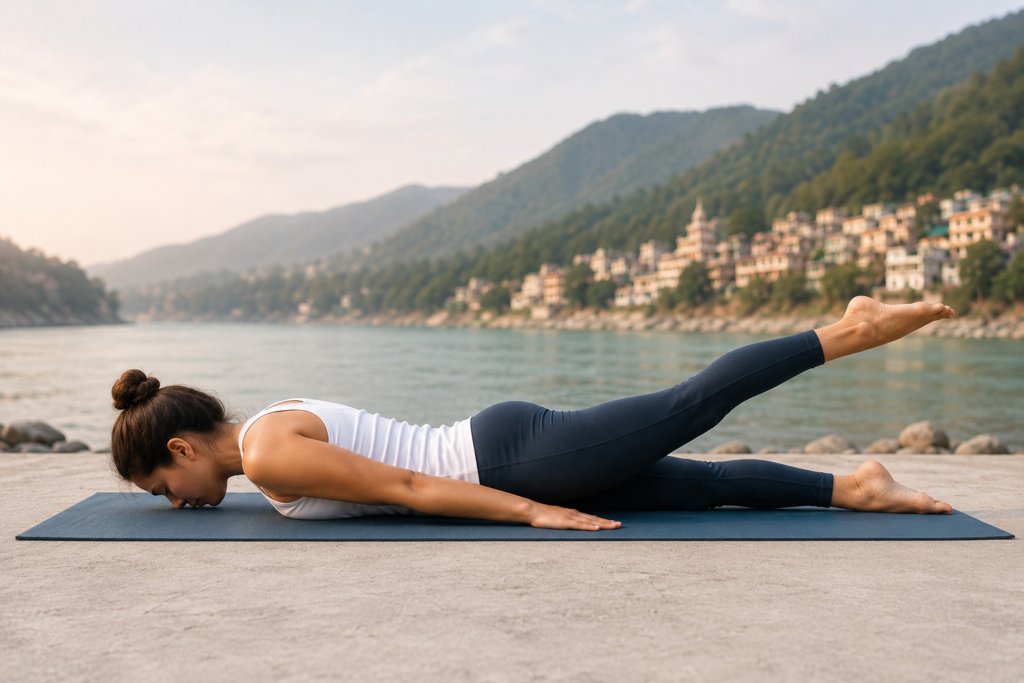
Ardha Śalabhāsana is a prone backbend in which one leg is lifted at a time while the rest of the body remains grounded. Compared to the full Locust Pose, this variation is gentler on the lower back and more accessible for beginners.
The posture primarily activates:
- Lower back muscles
- Glutes
- Hamstrings
- Core stabilizers
- Hip extensors
Because of its therapeutic and strengthening nature, Ardha Śalabhāsana is commonly included in beginner yoga classes and spinal strengthening sequences.
Meaning of Ardha Śalabhāsana in Sanskrit
The Sanskrit name of the pose reflects both its structure and symbolic meaning:
- Ardha = Half
- Śalabha = Locust
- Asana = Pose
The posture resembles a locust lifting upward from the earth, symbolizing lightness, steadiness, and inner strength.
How to Do Ardha Śalabhāsana (Half Locust Pose)
Practicing the pose with correct alignment helps maximize its benefits while protecting the spine.
Step-by-Step Instructions
1. Lie Down on Your Stomach
Begin by lying flat on your belly with the legs extended and feet together. Rest your forehead or chin gently on the mat.
2. Place the Arms Alongside the Body
Keep the palms facing downward beside the thighs. Some practitioners prefer placing the palms underneath the thighs for extra support.
3. Engage the Core Muscles
Lightly activate the abdominal muscles to stabilize the pelvis and support the lumbar spine.
4. Lift the Right Leg
Inhale deeply and slowly raise the right leg upward without bending the knee. Keep both hips grounded evenly on the floor.
5. Hold the Pose
Maintain the posture for 5–10 breaths while breathing steadily and keeping the neck relaxed.
6. Lower the Leg Slowly
Exhale as you gently release the leg back down to the mat.
7. Repeat on the Left Side
Practice the same movement with the opposite leg.
Breathing Awareness in Half Locust Pose
Breath awareness is an essential part of traditional yoga practice.
- Inhale while lifting the leg
- Breathe naturally while holding the posture
- Exhale while lowering the leg
Coordinating movement with breath improves concentration and helps release unnecessary tension from the body.
Benefits of Ardha Śalabhāsana
Ardha Śalabhāsana offers numerous physical and mental benefits when practiced consistently.
1. Strengthens the Lower Back
One of the primary benefits of Half Locust Pose is strengthening the muscles surrounding the lumbar spine. This can help improve spinal support and reduce weakness caused by prolonged sitting.
2. Improves Posture
By activating the muscles along the back body, the posture helps counteract slouching and rounded shoulders commonly associated with modern lifestyles.
3. Tones the Legs and Glutes
The lifted leg engages the hamstrings, gluteal muscles, and calves, helping build lower-body strength and stability.
4. Enhances Spinal Flexibility
As a gentle backbend, Ardha Śalabhāsana improves spinal mobility and prepares the body for deeper backbending practices.
Practicing complementary backbends like Bhujangasana (Cobra Pose) alongside Half Locust Pose can further improve spinal flexibility and chest opening.
5. Stimulates Digestive Organs
The mild pressure applied to the abdomen during the posture may help stimulate digestion and improve circulation around the abdominal organs.
6. Improves Body Awareness
Since one leg is lifted at a time, practitioners develop greater awareness of muscular engagement, balance, and alignment.
Therapeutic Benefits of Half Locust Pose
In yoga therapy, Ardha Śalabhāsana is often recommended for individuals experiencing mild postural imbalances or lower back weakness.
With proper guidance, the pose may support:
- Improved spinal alignment
- Better muscular coordination
- Relief from sedentary stiffness
- Enhanced lower back endurance
- Increased hip stability
Its accessible nature makes it a valuable preparatory posture before attempting deeper backbends.
Common Mistakes to Avoid
Although the posture appears simple, incorrect technique can create unnecessary strain.
Lifting the Leg Too High
The goal is not height but controlled engagement. Excessively lifting the leg may compress the lower back.
Twisting the Pelvis
Keep both hips grounded evenly on the mat to maintain spinal alignment.
Holding the Breath
Breathing should remain smooth and natural throughout the practice.
Bending the Knee
The raised leg should remain active and straight for proper muscular engagement.
Overarching the Lower Back
Avoid collapsing into the lumbar spine by gently engaging the core muscles.
Contraindications and Precautions
While Ardha Śalabhāsana is generally safe, certain individuals should practice with caution.
Avoid or Modify the Pose If You Have:
- Pregnancy
- Hernia
- Recent abdominal surgery
- Severe lower back injuries
- Acute sciatica pain
- Chronic spinal conditions
If you have any medical concerns, consult a qualified yoga teacher or healthcare professional before practicing.
Preparatory Poses for Ardha Śalabhāsana
Preparing the spine and hips before entering the posture can improve comfort and alignment.
Recommended Preparatory Poses
- Cat-Cow Stretch
- Gentle hamstring stretches
- Setu Bandhasana (Bridge Pose)
- Bhujangasana (Cobra Pose)
- Makarasana (Crocodile Pose) for relaxation and spinal preparation
Practicing these postures helps warm the back muscles and improve body awareness before deeper spinal engagement.
Follow-Up Poses After Half Locust Pose
Counterposes are important for releasing tension from the spine after backbending postures.
Recommended Counterposes
- Balasana (Child’s Pose) to gently release the lower back
- Makarasana (Crocodile Pose) for deep relaxation
- Supine spinal twists
- Knees-to-chest pose
These calming postures help neutralize the spine and relax the nervous system after practice.
Ardha Śalabhāsana vs Full Śalabhāsana
Many practitioners progress from Half Locust Pose toward the full variation.
| Ardha Śalabhāsana | Full Śalabhāsana |
|---|---|
| One leg lifted at a time | Both legs lifted together |
| Beginner-friendly | More advanced |
| Less spinal pressure | Greater back strength required |
| Therapeutic and accessible | Deeper backbend |
Building strength gradually through the half variation creates a safer foundation for advanced backbending practices.
Energetic Benefits of Ardha Śalabhāsana
In traditional Hatha Yoga, backbending postures are believed to stimulate vitality and awaken dormant energy.
Ardha Śalabhāsana is associated with:
- Manipura Chakra (Solar Plexus Chakra) — linked to confidence and inner strength
- Muladhara Chakra (Root Chakra) — associated with grounding and stability
The posture encourages both physical strength and energetic balance.
Tips for Beginners
Start Slowly
Focus on gentle lifts rather than forcing the leg upward.
Coordinate Movement with Breath
Breath awareness improves stability and concentration.
Practice Consistently
Regular practice creates gradual improvements in flexibility and strength.
Relax the Face and Neck
Avoid unnecessary tension while holding the posture.
How Long Should You Hold Half Locust Pose?
Beginners can hold the pose for:
- 5–10 seconds on each side
Intermediate practitioners may gradually increase the duration to:
- 20–30 seconds
Always prioritize steady breathing and comfort over intensity.
Ardha Śalabhāsana in Traditional Hatha Yoga
In traditional yoga schools in Rishikesh, during a 200 hour yoga teacher training, Ardha Śalabhāsana is taught not only as a physical posture but also as a tool for cultivating awareness and discipline.
Students are encouraged to:
- Synchronize movement with breath
- Develop spinal awareness gradually
- Balance effort and relaxation
- Practice with mindfulness rather than force
This traditional approach transforms simple postures into deeper meditative experiences.
Conclusion
Ardha Śalabhāsana (Half Locust Pose) is a powerful yet accessible yoga posture that strengthens the lower back, tones the legs, improves posture, and enhances body awareness. Suitable for beginners and experienced practitioners alike, it serves as an excellent foundation for deeper backbending practices.
With regular and mindful practice, this classical Hatha Yoga pose can support spinal health, improve muscular endurance, and cultivate greater stability both physically and mentally.
Whether you are beginning your yoga journey or deepening your practice, Ardha Śalabhāsana reminds us that small and conscious movements often create the most lasting transformation.
Frequently Asked Questions (FAQs)
Is Ardha Śalabhāsana suitable for beginners?
Yes, Half Locust Pose is beginner-friendly and commonly practiced in foundational Hatha Yoga classes.
How often should I practice Ardha Śalabhāsana?
It can be practiced daily as part of a balanced yoga sequence.
Does Half Locust Pose reduce belly fat?
The pose helps strengthen the abdominal and lower back muscles, but overall fat reduction depends on consistent movement, nutrition, and lifestyle.
Can I practice Ardha Śalabhāsana during pregnancy?
Pregnant practitioners should generally avoid prone backbending postures unless specifically guided by a qualified prenatal yoga teacher.
Which poses should I practice after Ardha Śalabhāsana?
Relaxing counterposes like Balasana (Child’s Pose) and Makarasana (Crocodile Pose) are excellent after practicing Half Locust Pose.