Sound is part of every day. We hear music, voices, nature, traffic, household sounds, and countless subtle changes in our surroundings. With a little intention, sound can also become part of a personal practice for meditation, relaxation, concentration, and self-awareness.
Indian yogic traditions have explored sound through mantra, chanting, music, attentive listening, and Nada Yoga. Contemporary sound healing brings related experiences into practices involving singing bowls, gongs, chimes, tuning forks, voice, and sound baths.
You can bring these practices into your routine without setting aside a large amount of time. A few minutes of attentive listening in the morning, a short mantra practice during the day, or a calming sound meditation in the evening can create regular moments to pause and reconnect with yourself.
The most useful place to begin is with a practice that feels natural enough to repeat.
What are sound practices?
Sound practices involve intentional activities that use sound as a focus for awareness, meditation, relaxation, or expression.
Some practices take only a few minutes, while others work well as longer guided sessions. Your choice can depend on your experience, available time, and purpose.
Common sound practices include:
- Listening meditation
- Mantra repetition
- Vocal toning
- Singing bowl meditation
- Sound baths
- Indian classical music listening
- Chanting
- Nada Yoga practices
- Guided sound meditation
- Playing musical instruments
Each practice offers a different way to experience sound.
Mantra brings repetition and rhythm into meditation. Singing bowls create sustained tones that can support attentive listening. Indian classical music develops sensitivity to melody and resonance. A sound bath creates an immersive environment for relaxation.
Start your morning with sound
Morning can provide a natural opportunity to establish a calm relationship with sound.
Before moving into messages, notifications, conversations, and other daily activities, spend a few minutes listening. You could use a tanpura drone, play a gentle singing bowl, listen to a short mantra, or simply observe the sounds around you.
Give your attention to what you hear.
Notice which sounds are close and which are distant. Listen to changes in volume and pitch. Pay attention to the spaces between sounds.
Even five minutes can create a quiet beginning to the day.
A simple morning sound practice
Sit comfortably and allow your breathing to settle naturally.
Choose one sound and listen to it for several minutes. Follow the sound as it develops and fades. When your attention moves toward other thoughts, gently return to listening.
Finish with a few quiet breaths before continuing with your morning.
This simple practice can become a consistent starting point for the day.
Use mantra during your daily routine
Mantra offers one of the most accessible ways to bring intentional sound into everyday life.
Repeating a mantra brings together sound, breath, rhythm, pronunciation, and concentration. Depending on the tradition and the mantra, you can practise silently or use your voice.
A short mantra practice can fit naturally into different parts of your day. You might repeat a familiar mantra after waking, before meditation, during a quiet walk, or as part of your evening practice.
The repetition gives the mind a consistent point of focus.
For people exploring Nada Yoga, mantra also provides an important way to understand the relationship between sound and awareness.
Practise vocal toning
Your own voice can become part of a simple sound practice.
Vocal toning involves producing a sustained vowel or vocal sound while paying attention to breath, resonance, and vibration.
Choose a comfortable pitch and allow the sound to develop naturally. Keep the volume moderate and let the breath guide the sound.
As you continue, observe where you feel the vibration. You may notice sensations around the throat, chest, face, or head.
The value of the practice comes through attentive observation. Your voice gives you a direct way to experience sound through both hearing and physical sensation.
Bring sound into your meditation practice
Sound can provide a steady meditation object.
Some people find it easier to maintain attention with a sustained tone. A singing bowl, tanpura, mantra, or gentle instrumental recording can provide an auditory point of focus.
Try this simple approach:
- Sit comfortably and take a few natural breaths.
- Choose one sound and bring your attention toward it.
- Listen as the sound begins and develops.
- Follow its resonance as it gradually changes.
- Notice the moment the sound fades.
- Remain with the silence for a few breaths.
The final stage gives you an opportunity to observe the transition between sound and silence.
Listen to Indian classical music with attention
Music can become part of a sound practice when you listen with intention.
Indian classical music offers a particularly rich listening experience through raga, tala, drone, improvisation, resonance, and sustained tones.
Try listening to a slow alap or a piece centred around a tanpura drone.
Begin by noticing the tonal foundation. Then follow the movement of the melody and observe how each phrase develops.
Listen for changes in pitch, rhythm, texture, and resonance.
This type of listening can become a meditation in itself.
For students exploring Nada Yoga, attentive listening to Indian classical music can also help develop sensitivity to pitch, rhythm, resonance, and musical expression.
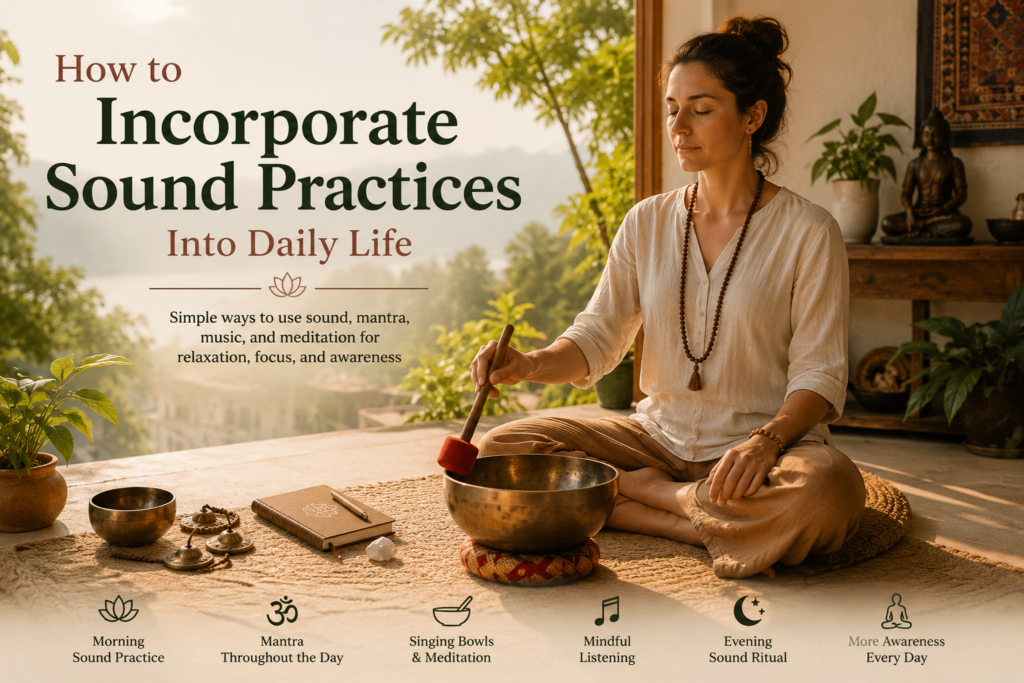
Use a singing bowl for daily meditation
Singing bowls have become widely used in contemporary sound healing and meditation.
Their sustained resonance makes them suitable for short periods of attentive listening.
Begin with a single strike and listen until the sound disappears completely. Give yourself a few moments of silence before producing another sound.
This creates a simple practice centred on sound, listening, and stillness.
A few minutes can be enough to establish the habit. With regular practice, the bowl can become a familiar part of your meditation routine.
Create an evening sound ritual
Evening offers another useful opportunity for sound practice.
A quiet sound meditation can help create a transition from daily activity toward rest. You might choose soft instrumental music, a gentle mantra, singing bowls, or a guided sound meditation.
Keep the environment comfortable and choose sounds that feel calming to you.
You can combine the practice with gentle yoga, conscious breathing, or seated meditation. A consistent sequence can make it easier to create a familiar rhythm around your evening.
Practise sound awareness while walking
Sound meditation can happen while you are moving.
During a walk, bring your attention toward the sounds around you. Listen to your footsteps, leaves, birds, wind, distant conversations, and changes in the surrounding environment.
Allow each sound to appear and disappear naturally.
You can also notice how the soundscape changes as you move through different spaces.
This turns an ordinary walk into an opportunity for attentive listening and introduces sound awareness into everyday activity.
Use sound during work or study
Sound can also become part of a focused work environment.
A quiet tanpura drone, gentle instrumental music, or consistent ambient sound can create an auditory background for certain tasks.
Your choice can depend on what you are doing. Reading and writing may benefit from a simple soundscape with fewer changes, while repetitive tasks may work well with music.
Try different options and observe how each one affects your concentration.
The goal is to choose a sound environment that supports the task rather than competing for your attention.
Explore sound through the breath
Breath and sound have a natural relationship.
Every vocal sound begins with breath. Chanting, humming, singing, and vocal toning all involve awareness of how the breath moves through the body.
You can explore this connection through a simple humming practice.
Take a comfortable breath and produce a gentle humming sound during the exhalation. Notice the vibration around the face, throat, and chest.
Allow the next breath to arrive naturally and repeat the process several times.
Keep your attention on the relationship between breath and vibration throughout the practice.
Add sound to your yoga practice
Sound can complement physical yoga practice in several ways.
You can begin a session with a mantra, use gentle music during your asana practice, or finish with a few minutes of sound meditation.
Hatha Yoga and sound practices can meet through breath awareness and concentration.
For example, you could begin with conscious breathing, move through your asana practice, and then sit quietly with a mantra or singing bowl.
This creates a gradual movement from physical awareness toward stillness.
Explore sound baths
A sound bath provides a longer and more immersive sound experience.
A session may include singing bowls, gongs, chimes, drums, voice, or other resonant instruments. Participants usually lie down or sit comfortably while a practitioner creates a changing environment of sound.
Sound baths can become part of a regular wellness routine.
You might attend a guided session periodically and maintain a shorter personal practice at home between sessions. This allows you to experience both structured guidance and independent practice.
Create a small sound practice space
A dedicated area can make sound practice easier to maintain.
The space can remain simple. A yoga mat, meditation cushion, singing bowl, or small instrument may be enough.
Choose a place where you can sit comfortably and practise without frequent interruptions. You can also keep your preferred mantra, meditation recording, or Indian classical music playlist ready for use.
A consistent practice space creates a physical reminder to slow down and listen.
How long should a daily sound practice last?
Sound practice can fit into different schedules.
Five minutes of attentive listening provides a simple starting point. Ten to fifteen minutes gives you more time for mantra, meditation, or vocal practice.
Longer sessions can work well when you have more time available.
Consistency plays an important role in developing a contemplative practice. A short daily session can become a meaningful habit when you approach it regularly.
Choose a duration that fits comfortably into your routine and allow the practice to develop gradually.
How to build a sustainable sound practice
A simple way to establish consistency is to connect sound practice with something you already do.
You could listen to a tanpura drone after your morning tea, practise mantra before your meditation, or use a singing bowl as a transition into your evening routine.
Another approach is to choose one practice and continue with it for several weeks.
This gives you enough time to become familiar with the practice and observe how your attention responds.
As the habit becomes established, you can explore other forms of sound practice.
Sound practice and Nada Yoga
For anyone interested in the deeper yogic study of sound, Nada Yoga provides an important traditional framework.
Nada Yoga explores sound through listening, mantra, meditation, music, and awareness. The practice encourages greater sensitivity to sound and a more attentive relationship with listening.
Daily sound practices can provide an accessible entry point into this wider tradition.
Listening to a tanpura drone, repeating a mantra, practising vocal sounds, or observing the silence after a tone fades can all develop awareness of sound.
Students who want to explore this approach in greater depth can study Nada Yoga teacher training, where sound can be explored alongside meditation, mantra, Indian classical music, and yogic philosophy.
Sound healing as a daily wellness practice
Contemporary sound healing offers several ways to bring intentional sound into everyday life.
You can attend a sound healing session, practise with singing bowls at home, listen to calming sounds during meditation, or explore guided sound practices.
Your purpose may be relaxation, meditation, concentration, or developing greater awareness of sound.
Sound healing can also complement other contemplative practices. A person might combine a sound meditation with gentle yoga, breath awareness, mantra, or an evening relaxation routine.
The practice can adapt to your lifestyle while keeping attentive listening at its centre.
Learning sound healing in Rishikesh
Rishikesh has a strong connection with yoga, meditation, mantra, Indian classical music, and traditional practices involving sound.
People exploring yoga in Rishikesh can encounter sound through different pathways, including Nada Yoga, mantra, Indian classical music, meditation, and sound healing.
For those who want structured study, a sound healing course in Rishikesh can provide practical experience with instruments, sound meditation, vibration, and guided sessions.
At Nada Yoga School, sound healing is explored alongside Nada Yoga, mantra, meditation, Indian classical music, and other yogic practices. This creates an environment where students can experience sound as a practical meditation tool while studying its wider yogic context.
A simple daily sound routine
If you want to begin today, keep the practice manageable.
Start your morning with a few minutes of attentive listening. During the day, use a short mantra or humming practice to reconnect with your breath. In the evening, spend several quiet minutes with a singing bowl, tanpura drone, gentle music, or another calming sound.
As the practice becomes familiar, you can explore longer meditation sessions, sound baths, vocal practices, or Nada Yoga.
Sound already surrounds us throughout the day. Intentional listening changes our relationship with it.
A single note can become an opportunity to concentrate. A mantra can bring rhythm into meditation. A singing bowl can guide attention toward resonance. Silence can give the mind space to settle.
With regular practice, these simple moments can become a meaningful part of your relationship with sound, meditation, and awareness.