Music and sound have long been part of human experiences involving relaxation, emotional expression and personal reflection. Across different cultures, people have used singing, chanting, musical instruments and rhythmic sounds during ceremonies, healing traditions and contemplative practices. Today, two approaches that involve these elements are commonly discussed: music therapy and sound healing.
Although both use sound as an important part of their practice, they differ in their professional foundations, methods, objectives and applications. Understanding these differences helps explain how each approach works and where they may be used.
What is music therapy?
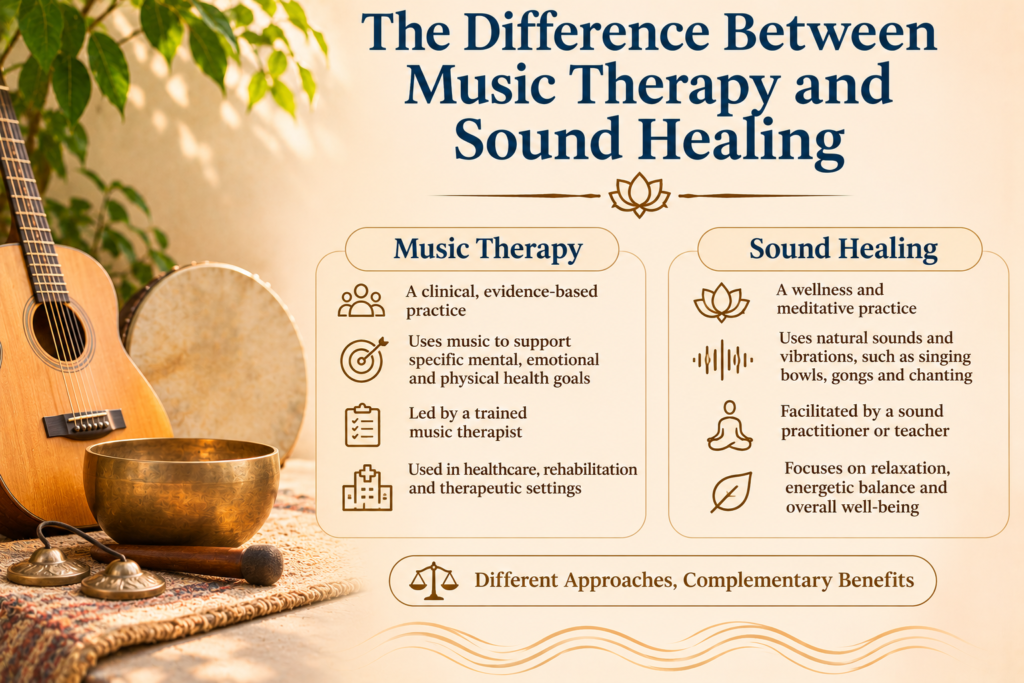
Music therapy is a recognised therapeutic profession in which trained music therapists use musical experiences to work towards specific therapeutic goals. These goals are developed according to the needs, abilities and circumstances of each person.
Music therapy can involve singing, playing instruments, improvisation, songwriting, listening to recorded music and discussing musical experiences. The therapist selects activities according to the individual’s requirements and evaluates progress throughout the therapeutic process.
Music therapy is used in various settings, including hospitals, rehabilitation centres, schools, mental health services and care facilities. It may support people experiencing neurological conditions, developmental difficulties, emotional challenges and other health-related concerns.
For example, a music therapist working with a person recovering from a stroke may use rhythmic musical activities to support movement and coordination. Another therapist may use songwriting or musical improvisation to encourage emotional expression and communication.
Music therapy therefore involves an individualised therapeutic process guided by professional training, assessment and clearly defined goals.
What is sound healing?
Sound healing is a broad term used for practices that employ sound and vibration as part of relaxation, meditation and personal well-being activities. These practices may involve singing bowls, gongs, tuning forks, chimes, drums, voice and other sound-producing instruments.
A sound healing session often takes place in a quiet environment where participants listen to different tones, rhythms and resonant sounds. The practitioner may play instruments around the room or at designated positions, creating an environment for attentive listening and relaxation.
Some sessions include guided breathing, meditation, mantra chanting or gentle vocalisation. Others focus primarily on listening to instruments and observing the sensations associated with sound.
Sound healing draws from various cultural and contemplative traditions. In India, practices involving mantra, chanting and attentive listening have connections with broader traditions of Nada Yoga. Contemporary sound healing also incorporates instruments and approaches from different parts of the world.
The aims of sound healing sessions commonly include relaxation, meditation, self-awareness and the exploration of sound. Scientific evidence for specific therapeutic claims remains limited, and sound healing should not replace medical or psychological treatment.
Key differences between music therapy and sound healing
Both approaches involve sound, yet their structure and professional context differ.
1. Professional training and qualifications
Music therapy is a professional discipline that requires specialised education and clinical or supervised training. Practitioners learn about music, psychology, therapeutic communication, assessment and the ethical responsibilities involved in working with clients.
Sound healing training varies considerably between schools and programmes. Courses may introduce sound-producing instruments, their acoustic properties, playing techniques, meditation practices and session facilitation.
The qualifications required for sound healing practitioners depend on the training programme and the setting in which they work. A sound healing certificate does not automatically qualify someone to provide clinical music therapy.
2. Purpose and therapeutic goals
Music therapy generally works towards specific goals established through an assessment of the individual’s needs. These may involve communication, emotional expression, physical rehabilitation, cognitive abilities or social interaction.
Sound healing sessions commonly focus on relaxation, meditation and personal well-being. Practitioners use sound as a way to create an environment for listening and reflection.
For example, a music therapist may use a rhythmic exercise to support a client’s motor coordination. A sound healing practitioner may use a gong or singing bowl to create a sustained listening experience during a group meditation.
3. Methods and techniques
Music therapy uses a wide range of active and receptive musical methods. Participants may sing, compose, improvise, play instruments or listen to selected music. Interaction between the therapist and participant is often central to the process.
Sound healing frequently involves receptive listening. Participants may remain seated or lie comfortably while the practitioner plays instruments such as singing bowls, gongs, chimes or tuning forks.
Some sound healing sessions also include active participation through chanting, humming or vocal toning. The exact method depends on the practitioner’s approach and the purpose of the session.
4. Individual sessions and group experiences
Music therapy can take place individually or in groups. The format depends on the therapeutic goals and the needs of the participants. Individual sessions allow the therapist to work closely with one person, while group sessions may focus on communication, interaction and shared musical experiences.
Sound healing is also offered individually and in groups. Group sound baths are particularly common, with participants listening to instruments played in a shared space. Individual sessions may involve a more personalised selection of instruments and listening arrangements.
5. Evidence and healthcare applications
Music therapy has an established research and clinical literature. Studies have examined its applications in areas such as neurological rehabilitation, mental health, pain management and supportive care. Its effectiveness depends on the population, therapeutic goals and methods used.
Research into sound healing is still developing. Some studies have explored the effects of singing bowls, sound meditation and related practices on relaxation, mood and perceived stress. However, the available evidence does not establish that sound healing can treat or cure specific medical conditions.
Both approaches require responsible communication about their benefits. Practitioners should explain the scope of their work clearly and refer participants to qualified healthcare professionals when appropriate.
Instruments used in both practices
Music therapy and sound healing can involve some of the same instruments, although their applications may differ.
Singing bowls: Singing bowls produce resonant tones when struck or played around the rim. In sound healing, they are frequently used during listening sessions and meditation. In music therapy, they may be incorporated into a broader musical activity when suitable for the therapeutic goals.
Gongs: Gongs produce complex sounds with a broad range of frequencies and changing tonal qualities. They are commonly used in sound baths and group sound meditation.
Drums: Drums provide rhythmic patterns and can encourage musical interaction. Music therapists may use rhythmic activities to support movement, communication and group participation. Sound healing practitioners may include drums in sessions involving rhythm and relaxation.
Voice and chanting: Singing, humming and chanting are important in both approaches. Music therapists may use vocal activities to encourage expression and communication, while sound healing practitioners may incorporate mantra repetition and vocal toning.
Tuning forks: Tuning forks produce tones at specific frequencies. They may be used in some sound-based practices, depending on the practitioner’s training and approach.
The instrument itself does not determine whether a session is music therapy or sound healing. The practitioner’s training, intention, methods and professional responsibilities establish the context.
The connection between sound healing and Nada Yoga
In Indian traditions, sound has an important place in musical, philosophical and contemplative practices. Nada Yoga explores sound as a focus for concentration and inner awareness.
The term Nada refers to sound, while Yoga describes a process of disciplined practice and integration. Within this tradition, practitioners may work with mantra, chanting, musical notes and attentive listening.
Ahata Nada refers to audible sound produced through vibration, including musical tones and vocal sounds. Anahata Nada is associated with inner sound in traditional yogic descriptions and contemplative interpretations.
Practices involving mantra chanting and listening can encourage concentration and a deeper awareness of the experience of sound. These traditions also provide cultural context for several contemporary sound-based practices.
At Nada Yoga School in Rishikesh, students explore sound through Indian musical traditions, chanting, traditional instruments and practical sound-based activities. Those interested in structured study can learn more about the Sound Healing Teacher Training Course in Rishikesh, which introduces participants to sound, vibration, instrument practices and session facilitation.
Can music therapy and sound healing be used together?
Music therapy and sound healing may share certain musical elements, and their activities can sometimes appear similar. However, combining them requires an understanding of their different professional responsibilities.
A qualified music therapist may incorporate singing bowls, gongs or other resonant instruments into a session when they support the client’s therapeutic goals. A sound healing practitioner may use musical techniques such as rhythm, melody or vocalisation during a relaxation session.
The distinction remains important when working with people who have specific medical or psychological needs. Clinical treatment should be provided by appropriately qualified professionals, while sound healing practitioners should remain within the scope of their training.
Clear communication helps participants understand the purpose of a session and the type of support they can expect.
Conclusion
Music therapy and sound healing both recognise the importance of sound in human experience. Music therapy is a professional therapeutic discipline guided by assessment, individual goals and specialised clinical training. Sound healing generally uses instruments, voice and sustained tones to support relaxation, meditation and personal well-being.
Understanding their differences helps practitioners communicate responsibly and allows participants to choose an approach suited to their needs. Both also offer opportunities to explore how sound influences attention, musical expression and the experience of listening.