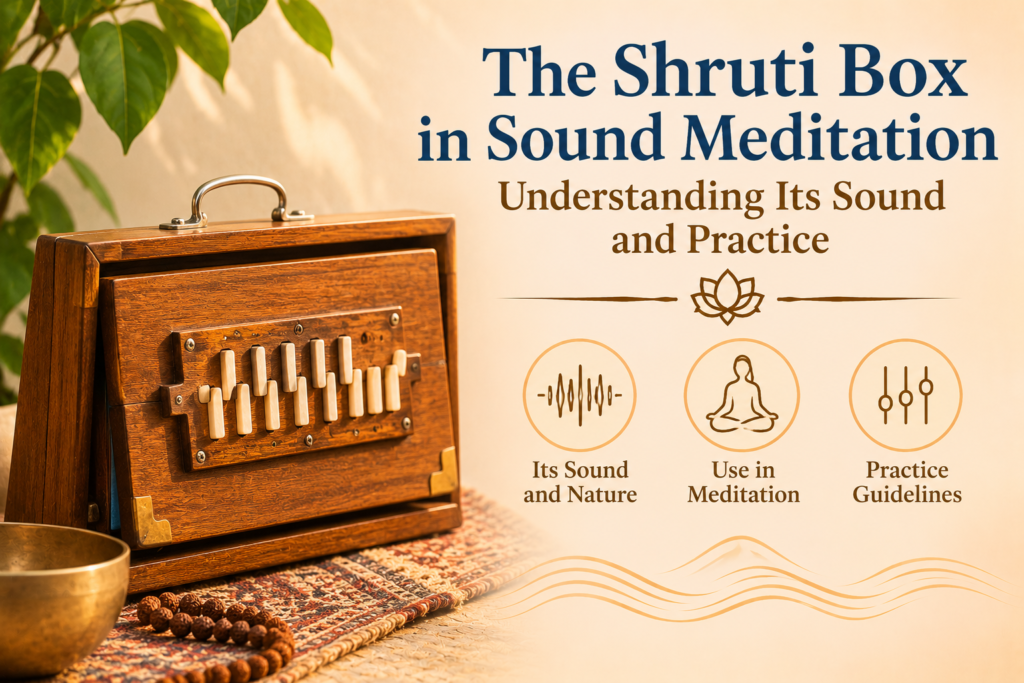
A continuous sound can create a steady point of attention during meditation. While many meditation practices use the breath or a mantra as their central focus, sound offers another way to settle the mind and develop awareness. One instrument frequently used for this purpose is the shruti box, a traditional Indian drone instrument known for its sustained, gentle tone.
The shruti box has a close connection with Indian classical music, vocal practice and chanting. Its continuous sound also makes it a useful instrument in contemporary sound meditation sessions. Understanding how it works and how to use it can help practitioners explore the relationship between sound, listening and concentration.
What is a shruti box?
A shruti box, also known as a surpeti, is a small, bellows-operated musical instrument that produces sustained notes. It resembles a harmonium in its basic construction, although it usually has no keyboard. Instead, it has small stops or knobs that allow the player to select specific notes.
The instrument contains metal reeds. When the player moves the bellows, air passes through the selected reeds, causing them to vibrate and produce sound. The player can maintain a continuous drone by operating the bellows at a steady pace.
The shruti box is traditionally used to provide a tonal reference for singers and instrumentalists. In Indian music, this drone supports the tonic, known as Sa, and gives musicians a consistent pitch foundation during practice and performance. It is also used to accompany devotional singing, mantra chanting and musical improvisation. <Cite refs={[“turn899753search2″,”turn899753search5”]}/>
The sound of the shruti box
The characteristic sound of a shruti box is continuous, steady and harmonically rich. Depending on the selected notes and the instrument’s construction, it can produce a full drone that remains audible throughout a meditation session.
A drone provides a stable musical foundation. Unlike a melody, which moves through different notes and phrases, the drone maintains a relatively consistent tonal centre. The listener can gradually become familiar with its sound and observe its qualities.
Several features make the shruti box suitable for sound meditation:
- Sustained tone: The player can maintain sound for an extended period by operating the bellows.
- Simple musical structure: A drone provides a consistent listening focus.
- Adjustable notes: Different note combinations allow the player to create varied tonal foundations.
- Gentle volume control: The movement of the bellows influences the strength of the sound.
The instrument can create a simple listening environment in which practitioners pay attention to pitch, resonance, vibration and the gradual changes in their own perception.
Why use a shruti box in sound meditation?
Sound meditation involves directing attention towards sound as an object of awareness. Practitioners may listen to instruments, chanting, natural sounds or sustained musical tones. The shruti box offers a continuous sound that can support this process.
Developing concentration through listening
During meditation, the mind may move between thoughts, memories and external distractions. A steady drone gives attention a consistent point of reference.
The practitioner can listen to the sound as it continues, noticing its pitch, texture and subtle variations. When attention moves elsewhere, the listener can gently return to the drone.
This process resembles breath awareness, where the breath provides an anchor for concentration.
Exploring resonance and vibration
The sound of a shruti box contains several acoustic components. Its reeds produce tones with harmonic content, creating a layered auditory experience.
During a session, practitioners can observe how the sound fills the room and how its character changes with distance, volume and the surrounding environment.
Listening carefully also encourages awareness of the relationship between sound and silence. When the instrument stops, the listener may notice the gradual disappearance of its audible resonance and the return of environmental sounds.
Supporting mantra and vocal practice
The shruti box is particularly useful when combined with vocal exercises. Its sustained drone provides a tonal reference for chanting, humming and singing.
A practitioner can use it while repeating a mantra or sustaining a vowel sound. The continuous pitch helps maintain tonal consistency and encourages attention towards the relationship between the voice and the accompanying sound.
This approach also connects with Nada Yoga, where attentive listening and the exploration of sound form important elements of practice.
The shruti box and Nada Yoga
Nada Yoga is a traditional Indian approach to working with sound and listening as part of spiritual practice. The term Nada refers to sound, while Yoga refers to the process of union or disciplined integration.
Within Nada Yoga, practitioners explore audible sound, musical tones, mantra and inner listening. The practice encourages concentration and a deeper awareness of sound as an experience.
The shruti box can serve as a practical instrument in this exploration. Its continuous drone offers a stable sound for listening meditation, vocal toning and mantra repetition.
A practitioner may begin by listening to the external sound of the instrument. With continued attention, the focus can gradually shift towards the experience of listening itself. This creates an opportunity to observe how awareness responds to sound and silence.
The shruti box does not represent the entirety of Nada Yoga. It is one instrument that can support certain listening and vocal practices within a broader tradition.
How to use a shruti box during meditation
A shruti box requires little musical experience to operate. A basic session can be organised around a comfortable sitting position and a steady drone.
1. Choose the notes
Select a suitable note or combination of notes using the stops on the instrument. For vocal practice, choose a pitch that feels comfortable for the practitioner.
2. Begin the drone
Open the bellows and move them gently to produce a continuous sound. Maintain an even movement so the tone remains reasonably steady.
3. Settle into listening
Sit comfortably and listen to the drone. Observe its pitch, texture and volume. Allow attention to remain with the sound.
4. Introduce gentle vocalisation
Once the listening practice feels settled, introduce a soft humming sound or mantra repetition. Follow the tonal foundation of the shruti box and avoid straining the voice.
5. End with silence
Gradually stop playing and remain seated for a short period. Notice the transition from the sustained drone to silence and observe the experience of listening after the sound has ended.
A session can last a few minutes or continue for longer, depending on the setting and the practitioner’s comfort.
Shruti box compared with the tanpura
The shruti box and tanpura both provide a drone in Indian music, although their sound production and playing methods differ.
The tanpura is a plucked string instrument. Its strings produce a repeating pattern of tones, with characteristic resonance and a rich, sustained quality. The shruti box uses free reeds activated by air from its bellows, producing a more continuous tone.
Both instruments provide a tonal foundation for singing and musical practice. The tanpura has a distinctive rhythmic pattern created by repeated plucking, while the shruti box allows the player to maintain a continuous drone through bellows movement.
The choice depends on the musical or meditative setting, the desired sound and the practitioner’s familiarity with each instrument.
Choosing a shruti box for sound meditation
When selecting a shruti box, consider its construction, tuning options, sound quality and ease of operation.
A well-made instrument should have responsive bellows and reeds that produce a stable tone. The stops should operate smoothly, allowing the player to select notes without difficulty.
Pitch selection is especially important when the instrument will accompany chanting or vocal practice. The chosen notes should suit the voice and the intended musical setting.
Traditional manual shruti boxes are operated through bellows, while electronic versions offer a convenient way to produce a continuous drone. Both can be useful, depending on the requirements of the practice.
Conclusion
The shruti box brings a simple and steady musical foundation to sound meditation. Its sustained drone supports attentive listening, vocal practice and mantra chanting while introducing practitioners to an important instrument in Indian musical traditions.
Through regular practice, listeners can explore pitch, resonance and the relationship between sound and silence. The instrument also offers a practical connection between Indian classical music and contemplative sound practices.
For those interested in studying traditional instruments and their applications in sound-based practices, the Sound Healing Teacher Training Course in Rishikesh at Nada Yoga School introduces participants to sound, vibration, listening practices and the use of traditional instruments.