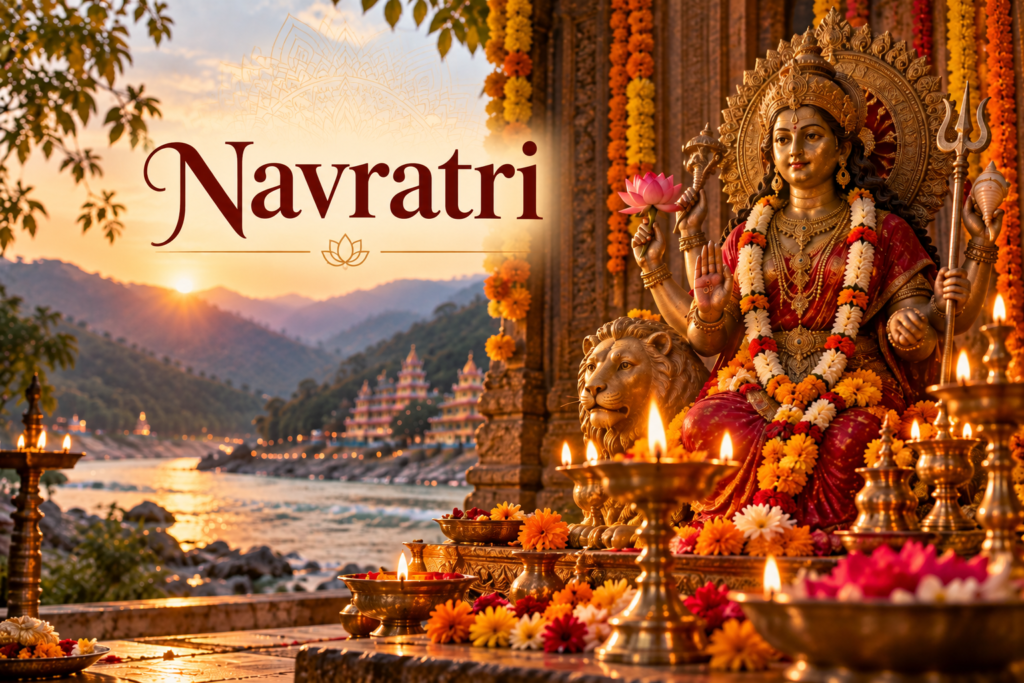
Navratri brings together devotion, music, dance and the worship of the Divine Mother. Across India, families welcome the Goddess with prayers, offerings, fasting and devotional singing. Meanwhile, communities gather for Garba, Dandiya and Durga Puja, celebrating the festival through regional customs and shared traditions. At the heart of these celebrations lies Shakti, the divine feminine power that Hindu traditions connect with creation, protection and transformation.
The word Navratri combines two Sanskrit words: nava, meaning nine, and ratri, meaning night. During these nine nights, devotees worship the Goddess in her different manifestations and make time for prayer, self-discipline and reflection. Each day offers an opportunity to renew their devotion and explore the qualities that the Goddess represents.
Navratri also carries deep cultural and philosophical meaning. Its stories celebrate courage and the restoration of balance, while its rituals bring people together through music, mantra and collective worship. These traditions explain why Navratri continues to hold such an important place in India’s spiritual and cultural life.
What is Navratri?
Navratri is a Hindu festival dedicated to Goddess Durga and Shakti, the divine feminine power. The two most widely celebrated observances are Chaitra Navratri in spring and Sharad Navratri during autumn. Hindu traditions also recognise two Gupta Navratris at other times of the lunar calendar. Among these observances, Sharad Navratri holds particular importance across many parts of India.
During Sharad Navratri, devotees worship nine forms of Durga, collectively known as the Navadurga. Each form carries distinctive imagery, stories and devotional associations. The celebrations reach their culmination around the tenth day, Vijayadashami, also known as Dussehra in many regions.
Regional customs give the festival its varied character. In Gujarat, Garba and Dandiya bring communities together through rhythmic movement and devotional music. West Bengal celebrates Durga Puja with elaborate pandals, artistic images of the Goddess and community worship. In parts of South India, families arrange Golu displays featuring dolls and figures that represent deities, traditional stories and everyday life. Meanwhile, Ramlila performances in northern India bring episodes from the Ramayana to the stage.
Despite these regional differences, the worship of Shakti remains central to Navratri. Devotees honour the Goddess as a source of strength, protection and transformation.
The story behind Navratri
One of the best-known stories associated with Sharad Navratri describes the battle between Goddess Durga and Mahishasura, a powerful demon who threatened the balance of the worlds. According to Hindu tradition, Mahishasura received a boon that made him extraordinarily difficult to defeat. As his power grew, the gods sought a way to restore order.
In response, the divine powers united to manifest Goddess Durga. She carried celestial weapons and rode a lion as she confronted Mahishasura in a battle that popular retellings describe as lasting nine days and nights. On the tenth day, Durga defeated the demon and restored balance, establishing the victory of divine power over destructive forces.
This story gives Navratri its enduring symbolism. Devotees see Durga’s victory as a reminder of courage, righteousness and the strength required to face harmful forces. Some also interpret the battle as a personal journey through fear, anger, pride and confusion.
Through her many forms, the Goddess expresses different aspects of divine power. Her stories encourage devotees to reflect on strength, compassion, wisdom and the responsibility to protect life.
The nine forms of Goddess Durga
The widely followed Navadurga tradition dedicates each day of Navratri to a particular form of the Goddess. Regional and religious traditions may vary in their customs, although the following sequence remains common across northern India.
Day 1: Maa Shailputri
Maa Shailputri, the daughter of the mountains, begins the Navadurga sequence. Traditional images show her riding a bull and carrying a trident and lotus. Her name connects her with the Himalayas and the natural world.
Her worship encourages devotees to cultivate steadiness and strength at the beginning of their spiritual journey. The symbolism of the mountain also invites reflection on patience, resilience and a firm foundation for spiritual practice.
Day 2: Maa Brahmacharini
Maa Brahmacharini represents dedication, discipline and tapas, the sustained effort that supports spiritual growth. Traditional images show her carrying a rosary and a water pot, symbols that evoke prayer and ascetic practice.
Devotees honour her by cultivating perseverance throughout their spiritual routines. Daily prayer, mantra repetition and quiet reflection can all help practitioners develop the discipline that her form represents.
Day 3: Maa Chandraghanta
Maa Chandraghanta takes her name from the crescent-shaped bell associated with her forehead. Traditional images portray her as a powerful warrior Goddess who represents courage, alertness and the determination to protect others.
Her form brings strength and composure together. Devotees may reflect on her qualities when facing difficult circumstances, using her example to cultivate a clear mind and a steady heart.
Day 4: Maa Kushmanda
Popular Hindu tradition connects Maa Kushmanda with the creation of the cosmic universe through her divine radiance and smile. Artists often depict her with multiple arms carrying sacred objects.
Her worship celebrates creative power and the vitality that sustains life. Devotees may contemplate divine energy throughout the universe, from the vastness of the cosmos to the living world around them.
Day 5: Maa Skandamata
Maa Skandamata is the mother of Skanda, also known as Kartikeya. Traditional images often show her holding her child, expressing maternal care, protection and compassion.
Her form highlights the nurturing aspect of Shakti. On this day, devotees may reflect on family wellbeing, love and the responsibility that comes with caring for others.
Day 6: Maa Katyayani
Maa Katyayani represents the fierce and courageous power of the Goddess. Traditional accounts describe her as a warrior who protects the world and confronts injustice.
Her worship encourages determination and purposeful action. Devotees may draw inspiration from her example when upholding their values and responding to challenges with conviction.
Day 7: Maa Kalaratri
Maa Kalaratri represents one of Durga’s most fearsome forms. Her dark appearance and powerful imagery express her ability to confront terrifying forces and remove obstacles to spiritual progress.
Traditional interpretations connect her name with time, darkness and transformation. Reflecting on Kalaratri can encourage devotees to face uncertainty with courage and recognise the strength required to move through difficult experiences.
Day 8: Maa Mahagauri
Maa Mahagauri represents purity, peace and renewal. Artists often portray her in white clothing, with a calm expression and a graceful presence.
Devotees turn to her form for inspiration in their pursuit of inner clarity and spiritual purification. Many families also observe Kanya Puja on the eighth day, honouring young girls as expressions of the Goddess according to their regional and family customs.
Day 9: Maa Siddhidatri
Maa Siddhidatri represents siddhis, the spiritual accomplishments and powers described in Hindu traditions. Her form expresses wisdom, fulfilment and the blessings associated with dedicated spiritual practice.
The ninth day brings the Navadurga observance towards completion. Devotees offer prayers, express gratitude and reflect on the qualities they have explored throughout the festival.
Together, the nine forms create a rich devotional framework. Each highlights a distinct quality while connecting devotees with the broader worship of Shakti.
The spiritual significance of nine nights
The nine nights of Navratri give devotees dedicated time for worship, reflection and spiritual discipline. Daily rituals, devotional songs, mantra chanting and offerings help families maintain a regular devotional routine throughout the festival.
In Shakta traditions, Shakti represents the divine power that animates the universe. The Goddess appears through many names and forms, each expressing a particular aspect of this sacred power. Durga represents protection and courage, Saraswati embodies knowledge and learning, while Lakshmi represents prosperity and auspiciousness.
Navratri also encourages people to observe their habits and intentions. A regular prayer practice develops attention and steadiness, while fasting, when suitable for the individual, can encourage discipline. Devotional singing draws attention to the words and meaning of a hymn, bringing the voice and the heart into the practice.
For many practitioners, the festival’s value lies in returning to worship each day. Every morning or evening offers a fresh opportunity to express gratitude, strengthen devotion and contemplate the qualities represented by the Goddess.
Navratri rituals and traditional practices
Families and communities follow different Navratri customs according to their regional traditions, religious lineages and personal practices. Some households perform elaborate daily pujas, while others keep a simple altar with a lamp, flowers and offerings. Both approaches can provide a meaningful setting for sincere worship.
Ghatasthapana and Kalash Sthapana
Ghatasthapana, also called Kalash Sthapana in many regions, marks the beginning of Sharad Navratri. During this ritual, devotees install a sacred vessel as part of their worship, often arranging soil and sprouting grains alongside it. The ritual symbols evoke auspiciousness, life and the presence of the divine throughout the festival.
Procedures and auspicious timings vary among traditions. Families often consult a priest or a trusted religious calendar for guidance on the appropriate mantras, timings and offerings.
Fasting and mindful eating
Many Navratri devotees observe a fast on particular days or throughout the festival. Some abstain from certain foods, while others prepare meals according to their family’s customs. For many practitioners, fasting supports devotion, self-discipline and a conscious shift towards simpler daily habits.
Anyone considering a fast should account for their health, medication and nutritional needs. People with medical conditions, pregnant individuals and those who need regular meals should seek appropriate professional guidance before making significant dietary changes.
Daily puja and offerings
Daily worship often includes lighting a diya, offering flowers, reciting prayers and performing aarti. Devotees also prepare bhog, or food offerings, according to the form of the Goddess they honour and their family tradition.
These rituals establish a familiar rhythm throughout the nine days. Preparing an offering or reciting a prayer can help devotees focus on the meaning of worship and bring greater intention to everyday life.
Kanya Puja
Many families observe Kanya Puja on Ashtami or Navami. During this ritual, families welcome young girls and honour them as expressions of the Divine Mother. Customs may include washing their feet, serving food and offering gifts.
Kanya Puja expresses reverence for feminine divinity and encourages qualities such as care, dignity and respect. Families adapt the ritual according to their regional and household traditions.
Why music and dance are central to Navratri
Music gives Navratri much of its distinctive energy. Devotional singing, temple bells, aarti, Garba and Dandiya bring rhythm into the celebrations and invite people to participate through voice and movement. These shared practices connect worship with community life.
Garba holds a particularly important place in Gujarat. Dancers traditionally move in a circle around a lamp or an image representing the Goddess. The circular movement can evoke the cycles of life and the continuity of devotion, while the accompanying songs celebrate the Mother Goddess.
Dandiya Raas adds another rhythmic dimension through decorated sticks that dancers strike in time with the music. Participants coordinate their movements, listen to the rhythm and remain aware of those around them. The dance welcomes people with different levels of experience and creates a lively setting for collective celebration.
Devotional songs also enrich household and temple worship. Bhajans praising Durga, Amba and other forms of the Goddess help devotees remember sacred stories and express their feelings through melody. Repeating a familiar refrain can give the mind a steady focus during prayer.
Navratri, mantra and the practice of sacred sound
Mantra chanting holds an important place in Hindu devotional practice. During Navratri, devotees recite prayers dedicated to Durga, chant the names of the Goddess and sing verses from devotional hymns. The words, pronunciation, rhythm and intention all shape the chanting experience.
One widely known Durga mantra is:
ॐ दुं दुर्गायै नमः ॥
Om Dum Durgayai Namah
Devotees commonly use this mantra to invoke Goddess Durga. Traditions that include the seed syllable dum connect its sound with the Goddess through specific devotional and symbolic meanings. Practitioners may repeat the mantra during puja or meditation, following the guidance of their tradition.
Chanting gives attention a clear point of focus. Practitioners listen to each repetition, follow the rhythm and become familiar with the mantra’s pronunciation. Group chanting adds a shared musical dimension as several voices follow a common rhythm.
The connection between Navratri and Nada Yoga
Nada Yoga explores sound through listening, vocal practice, mantra and contemplative awareness. This yogic tradition has its own philosophical foundations, while several of its practices also appear in devotional settings where sound supports worship.
During Navratri, devotees encounter sound through temple bells, aarti, bhajans, mantra recitation and Garba music. These experiences encourage attentive listening and a greater awareness of rhythm, melody and silence. Practitioners of Nada Yoga can also use these moments to observe how sound unfolds and how attention responds to it.
Indian classical music offers another meaningful connection. Learning a raga requires careful listening to pitch, melodic movement and the relationship between notes. Devotional singing often draws on these musical elements, allowing melody to support the expression of bhakti, or devotion.
At Nada Yoga School in Rishikesh, students explore sound through Nada Yoga, mantra and Indian musical practices. Those interested in studying these traditions can learn more about the Nada Yoga teacher training course.
How to observe Navratri in daily life
People can observe Navratri through practices that suit their traditions, schedules and circumstances. A simple daily routine can bring continuity to the nine days and create space for devotion.
- Begin with a short prayer. Set aside a few quiet minutes to express gratitude and remember the form of the Goddess you honour that day.
- Chant a mantra or sing a bhajan. Choose a prayer you understand and give attention to its pronunciation and meaning.
- Learn about the day’s Goddess. Read a traditional story or explore the symbolism associated with her form.
- Attend a local celebration. Visit a temple, join a Garba gathering or listen to devotional music to experience the festival’s community traditions.
- Make time for reflection. Consider the qualities represented by the Goddess and how they relate to your actions and intentions.
These practices gain meaning through attention and sincerity. Each person can shape their Navratri observance according to their beliefs, family customs and daily responsibilities.
Navratri across India
India’s regional celebrations reveal the diversity of traditions associated with the Goddess. The same festival period brings different stories, rituals, foods, music and forms of community participation to different parts of the country.
| Region | Common Navratri traditions |
|---|---|
| Gujarat | Garba, Dandiya Raas and devotional gatherings |
| West Bengal | Durga Puja, pandals, artistic Goddess images and community worship |
| Northern India | Navadurga worship, fasting, aarti and Ramlila |
| Tamil Nadu and parts of South India | Golu displays, devotional music and household worship |
| Maharashtra | Goddess worship, fasting, community celebrations and traditional offerings |
Local customs add their own details to these widely recognised traditions. In one place, a crowded dance gathering may form the centre of the celebration; elsewhere, families may focus on temple rituals or quiet household prayers. Each community expresses its devotion through practices that connect religious belief with local art and cultural identity.
What Navratri teaches about Shakti
The stories and rituals of Navratri present Shakti as a divine power associated with creation, protection and transformation. Durga’s victory over Mahishasura celebrates the restoration of order and the strength required to confront destructive forces. The nine forms extend this symbolism through qualities such as discipline, courage, compassion and wisdom.
Devotees can reflect on these qualities throughout the festival. Worship of Brahmacharini may encourage dedication to spiritual practice, while contemplation of Mahagauri draws attention to peace and clarity. Katyayani’s warrior form can inspire courage when people face difficult responsibilities.
Navratri also gives collective expression to devotion. Singing together, preparing offerings, participating in aarti and gathering for dance allow families and communities to share their religious and cultural traditions.
Through these practices, Navratri connects sacred stories with everyday acts of worship. The festival invites devotees to carry its values into their relationships, responsibilities and spiritual lives.
Frequently asked questions about Navratri
What does Navratri mean?
Navratri combines the Sanskrit words nava, meaning nine, and ratri, meaning night. The festival spans nine nights dedicated to Goddess Durga and other forms of the Divine Mother.
Why do Hindus celebrate Navratri for nine days?
The nine-day observance honours the Goddess through her different manifestations. During the widely followed Sharad Navratri, devotees dedicate each day to one of the Navadurga and celebrate Vijayadashami around the tenth day.
What are the nine forms of Goddess Durga?
The nine forms commonly worshipped in the Navadurga tradition are Shailputri, Brahmacharini, Chandraghanta, Kushmanda, Skandamata, Katyayani, Kalaratri, Mahagauri and Siddhidatri.
What is the significance of Garba during Navratri?
Garba is a traditional Gujarati dance that honours the Goddess through circular movement, devotional songs and rhythmic patterns. The dance brings people together in worship and celebration.
Which mantra can devotees chant during Navratri?
One widely known mantra is Om Dum Durgayai Namah. Devotees also recite Durga Stotras, Durga Chalisa, devotional hymns and other prayers according to their traditions.
How does Navratri connect with spiritual practice?
Navratri offers a dedicated period for prayer, mantra chanting, reflection and worship. Many devotees use the nine days to strengthen their devotional routine and contemplate the qualities represented by the Goddess.
Conclusion
Navratri brings together the worship of Shakti, the stories of Goddess Durga, devotional music and regional cultural traditions. The nine forms of the Goddess offer different ways to understand divine power, while daily puja, mantra chanting and community celebrations keep the festival vibrant across generations.
For those drawn to spiritual practice, Navratri also offers an opportunity to give greater attention to sound and devotion. Bhajans, aarti and mantra bring the voice into worship, while attentive listening deepens engagement with the sounds and rhythms of the practice. Through these traditions, devotees continue to honour the Divine Mother and share the stories, music and values that give Navratri its enduring significance.