The idea of an aura appears across spiritual, esoteric and energy-based traditions as a subtle field surrounding a person. Contemporary wellness practices often describe this field through colors, qualities and patterns that practitioners interpret in relation to emotional, mental and spiritual states.
Aura reading and aura meditation have also become increasingly familiar alongside yoga, meditation, Reiki and sound healing. Different traditions use different systems, so the meaning of a particular color can vary between practitioners.
This article explores the types of aura and aura colors commonly discussed in contemporary spiritual practices. It also looks at their traditional associations and the relationship between aura work, yoga, meditation and sound healing.
A note on interpretation: Aura colors belong to spiritual and esoteric traditions and do not represent scientifically established measurements. The meanings in this article reflect common traditional and contemporary interpretations.
What is an aura?
Spiritual and energetic traditions describe the aura as a subtle field surrounding the physical body. Various systems connect different layers of this field with physical vitality, emotions, thoughts and spiritual awareness.
Different cultures and traditions have developed their own approaches to subtle energy. As a result, contemporary aura practices often bring together ideas from several sources, creating a wide range of interpretations.
Some practitioners explore the aura through meditation, visualization and intuitive observation. Others use aura photography or other devices marketed as tools for visualising an energetic field.
Within a yoga and meditation setting, practitioners can approach aura work as a contemplative practice that encourages observation and self-awareness.
The seven commonly discussed aura colors
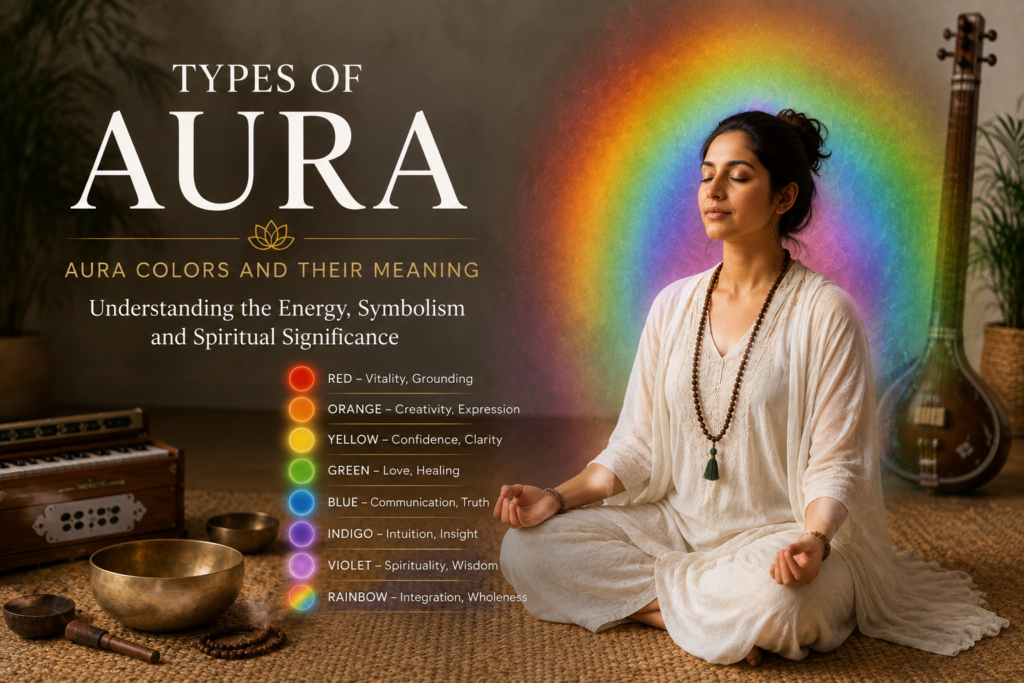
Many contemporary aura systems work with seven primary colors:
- Red
- Orange
- Yellow
- Green
- Blue
- Indigo
- Violet
In addition, some practitioners work with colors such as white, gold, pink and turquoise.
Each color carries several possible interpretations, and practitioners often consider the combination of colors rather than assigning meaning to one shade alone. The intensity, location and overall pattern can also influence how an aura reader interprets the experience.
With that context in mind, each color offers a useful starting point for exploring the symbolism associated with aura traditions.
1. Red aura
Red represents vitality, physical energy, grounding and action in many contemporary aura systems. Practitioners often connect this color with determination, courage, passion and motivation.
Red also has a strong relationship with the physical dimension of experience. People who interpret a red aura may associate it with an active approach to life and a strong connection with the body.
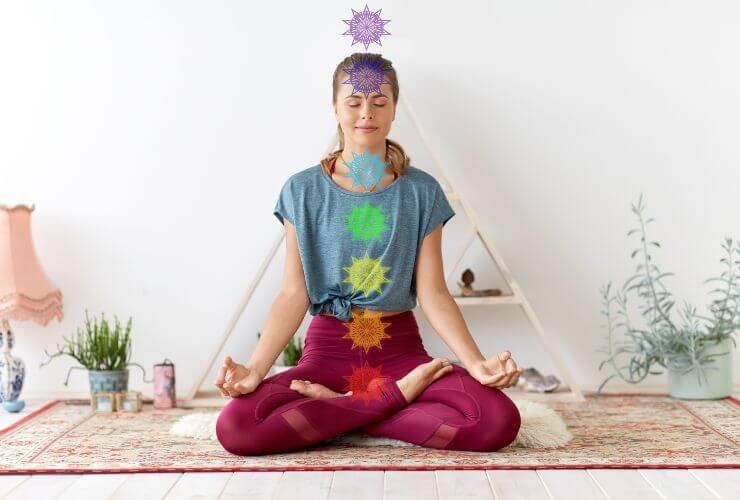
Many chakra-based systems connect red with Muladhara, or the root chakra. Traditional chakra teachings associate this centre with grounding, stability and physical existence.
Red aura and grounding practices
Grounding meditation, mindful movement and Hatha Yoga can provide useful practices for exploring themes associated with red.
For example, standing postures can bring attention toward the feet and their connection with the ground. Slow, conscious breathing can further develop awareness of physical sensations.
Through these practices, the practitioner can explore grounding as a direct experience instead of relying solely on symbolic interpretation.
2. Orange aura
Orange represents creativity, enthusiasm, emotional expression and connection in many aura traditions.
Practitioners often relate an orange aura to an active emotional life, creative energy and a willingness to experience and express feelings. The color also carries associations with movement, pleasure and artistic expression.
Chakra-based systems frequently connect orange with Svadhisthana, or the sacral chakra. Traditional teachings associate this centre with creativity, emotions, pleasure and movement.
Orange aura and creative expression
Creative practices can provide a natural way to explore these themes.
Music, chanting, movement, dance and artistic activities all involve emotional and expressive qualities. Similarly, sound can provide another pathway because rhythm and musical expression engage both attention and feeling.
For students exploring Nada Yoga, this relationship between sound and expression offers an especially interesting area of study.
3. Yellow aura
Yellow commonly represents intellect, confidence, optimism and personal expression.
Aura practitioners may interpret yellow as a sign of mental activity, curiosity, learning and personal motivation. The color also carries associations with clarity and the expression of individual energy.
Many chakra systems connect yellow with Manipura, or the solar plexus chakra. Traditional teachings associate this centre with will, transformation and personal power.
Yellow aura and mental clarity
Meditation practices that develop concentration can complement the qualities traditionally connected with yellow.
Pranayama, focused attention and reflective practices encourage practitioners to observe the movement of the mind. Over time, this observation can create greater familiarity with patterns of thought and attention.
Consequently, yellow can serve as a useful symbolic theme when exploring confidence, concentration and personal expression through meditation.
4. Green aura
Green commonly represents balance, compassion, connection and renewal.
Aura traditions frequently connect green with emotional openness, relationships and harmony. The color also carries a strong connection with nature and growth.
Chakra-based systems associate green with Anahata, or the heart chakra, which traditional teachings connect with love, compassion and emotional balance.
Green aura and heart-centred practices
Meditation focused on compassion and gratitude can provide a contemplative approach to themes associated with green.
Gentle Hatha Yoga, breath awareness and heart-centred meditation can also encourage practitioners to explore feelings of openness and connection.
For example, a practitioner may bring attention to the breath around the chest while cultivating a feeling of gratitude or kindness. This creates a direct meditative experience around qualities that green traditionally represents.
5. Blue aura
Blue represents communication, calmness, expression and clarity in many contemporary aura systems.
Practitioners often connect blue with communication and the ability to express thoughts and feelings. The color also carries associations with quietness and reflection.
Chakra traditions commonly connect blue with Vishuddha, or the throat chakra, which relates to speech, communication and self-expression.
Blue aura and the voice
The connection between blue and the throat centre creates an interesting relationship with voice-based practices.
Chanting, mantra, vocal toning and conscious breathing bring attention to the voice and its relationship with breath. These practices can also develop greater awareness of resonance and vibration.
This connection leads naturally toward Nada Yoga, where sound and attentive listening form important elements of practice.
6. Indigo aura
Indigo commonly represents intuition, contemplation, inner awareness and perception.
Contemporary aura systems often connect indigo with deeper reflection and intuitive awareness. Chakra traditions associate the color with Ajna, or the third-eye chakra, which relates to concentration, perception and inner observation.
Indigo aura and meditation
Meditation provides a natural setting for exploring these qualities.
Practitioners may work with concentration, visualization, breath awareness or silent observation. Each method encourages a more sustained relationship with attention.
For example, a practitioner can focus on a single point, observe the breath or use a visualisation practice. Over time, these methods can create greater familiarity with the movement of attention.
7. Violet aura
Violet commonly represents spirituality, contemplation, transformation and higher awareness.
Aura practitioners often connect violet with spiritual study, meditation and an interest in deeper states of awareness. Chakra-based traditions associate violet with Sahasrara, or the crown chakra.
Violet aura and spiritual practice
Meditation, mantra, contemplative study and traditional yogic practices can all provide ways to explore the themes associated with violet.
For many practitioners, the color serves as a symbolic representation of spiritual inquiry and a desire to explore experiences beyond everyday mental activity.
8. Rainbow aura
A rainbow aura is described as containing several colors at the same time, often appearing as a blend or spectrum of different shades around the body. In contemporary aura traditions, practitioners associate this pattern with versatility, creativity, emotional openness and an ability to move between different forms of experience.
Because a rainbow aura includes multiple colors, practitioners may interpret it by looking at the individual shades as well as the overall combination. For example, green may bring themes of compassion, blue may relate to communication, and violet may point toward spiritual inquiry.
Some aura traditions also connect rainbow colors with periods of personal growth, expanded awareness and integration. The interpretation depends on the specific system and the practitioner reading the aura.
Rainbow aura and spiritual practice
Practices involving meditation, visualization, mantra and sound can provide ways to explore the symbolism associated with a rainbow aura. A practitioner might visualize a spectrum of colors during meditation or observe how different colors arise in relation to particular thoughts, emotions or experiences.
Sound practices can also complement this kind of visualization. During a sound healing course, attentive listening creates a focused relationship with sound, while visualization can add a symbolic visual dimension to the practice.
A rainbow aura therefore offers an interesting theme for people who enjoy working with color, sound and meditation as part of their spiritual practice.
Other aura colors and their traditional meanings
Contemporary aura systems also include several colors beyond the seven commonly discussed shades. These additional colors can provide further symbolic interpretations.
White aura
White commonly represents clarity, purity, openness and spiritual awareness.
Some contemporary spiritual traditions connect white with periods of deep meditation, transformation or heightened spiritual awareness.
Gold aura
Gold often represents wisdom, generosity, confidence and spiritual development.
Practitioners may associate golden light with qualities such as inner strength, insight and a strong interest in contemplative practice.
Pink aura
Pink commonly represents affection, tenderness, compassion and emotional warmth.
Aura practitioners may connect this color with relationships, care and gentle emotional expression.
Turquoise aura
Turquoise often represents communication, creativity and healing.
Some contemporary systems associate turquoise with people who combine emotional sensitivity with expressive and creative qualities.
Can an aura have more than one color?
Many aura traditions describe several colors within the same energetic field.
A practitioner may observe one dominant color alongside secondary shades, variations in intensity or changes in different areas of the perceived field. Consequently, aura interpretation often considers the overall combination instead of relying on a single color.
For example, a practitioner may describe blue and green together and interpret the combination through themes of communication, compassion and emotional balance.
Another reading may include yellow and violet, creating a symbolic combination of intellectual activity, confidence and spiritual inquiry.
The meaning depends on the specific aura system and the framework used by the practitioner.
Do aura colors change?
Many contemporary aura practitioners describe colors as dynamic and changing.
They may associate changes with emotional experiences, meditation, personal growth, stress, relationships or other aspects of daily life.
Meditation provides a useful environment for observing these changes. A person’s internal experience can shift considerably from one day to another, and aura practices can provide a symbolic language for reflecting on those shifts.
This approach places greater emphasis on observation and self-awareness.
Aura and the chakra system
Aura practices and chakra systems frequently appear together in contemporary spiritual practice.
The chakra system describes subtle centres traditionally positioned along the body’s central axis. Aura traditions, meanwhile, describe a broader energetic field surrounding the body.
Many contemporary systems connect particular aura colors with specific chakras:
| Aura color | Common association | Traditional chakra connection |
|---|---|---|
| Red | Grounding, vitality and action | Muladhara |
| Orange | Creativity, emotion and expression | Svadhisthana |
| Yellow | Confidence, intellect and will | Manipura |
| Green | Compassion, balance and connection | Anahata |
| Blue | Communication, calm and expression | Vishuddha |
| Indigo | Intuition and concentration | Ajna |
| Violet | Spirituality and contemplation | Sahasrara |
These associations come from contemporary spiritual and esoteric frameworks, and different traditions may use different color systems.
Aura, meditation and yoga
Yoga offers several practices that can complement contemplative approaches to aura.
Asana develops awareness of the physical body. Pranayama brings attention to the breath. Meditation develops concentration and observation. Mantra introduces repetition, rhythm and sacred sound.
Together, these practices can encourage a deeper awareness of internal experience.
Someone exploring aura meditation might begin with simple breath awareness and gradually introduce visualization according to the tradition they are studying.
For example, a practitioner can imagine a particular color surrounding the body while maintaining steady attention on the breath. This creates a structured meditation practice around the symbolic qualities associated with that color.
Aura and sound healing
Sound healing provides another interesting connection with aura practices.
Contemporary sound healing sessions may use singing bowls, gongs, chimes, tuning forks, voice and other instruments to create an immersive listening experience. Some practitioners connect particular sounds or frequencies with energy centres and aura colors.
These associations vary between practitioners and traditions.
From a contemplative perspective, sound provides a clear object of attention. A sustained tone allows the listener to notice resonance, vibration, changes in intensity and the gradual fading of sound.
This kind of attentive listening has a natural connection with Nada Yoga.
Aura and Nada Yoga
Nada Yoga explores the relationship between sound, listening and awareness within a yogic framework.
The practice can involve external sound, mantra, music, voice and subtler forms of listening. Through regular practice, students develop greater sensitivity to sound and become more attentive to its qualities.
Aura practices can complement this exploration as a symbolic and contemplative subject.
For example, a practitioner might combine a sustained sound with visualization, allowing the sound to provide an anchor while the visualisation introduces a particular color. The practice then brings together listening, attention and symbolic imagery.
Students interested in this relationship can explore Nada Yoga teacher training as a deeper study of sound within the yogic tradition.
How to explore aura meditation
A simple aura meditation can provide an accessible introduction to the practice.
1. Find a comfortable position
Choose a comfortable seated position that allows the body to remain relaxed and the spine to stay naturally upright.
2. Settle the breath
Allow the breath to become steady. Spend several moments observing the natural movement of inhalation and exhalation.
3. Bring attention to the body
Move your attention through the body and notice physical sensations such as warmth, coolness, heaviness, lightness or movement.
4. Introduce visualization
If visualization forms part of your chosen practice, imagine a gentle field of light surrounding the body. Allow a particular color to become the focus.
5. Observe the experience
Spend several minutes observing the color, sensations and thoughts that arise. Keep your attention relaxed and curious.
6. Return to the breath
Gradually bring your attention back to the breath and the physical sensations of sitting. When you feel ready, open your eyes and allow the practice to conclude.
This meditation works as a visualization and self-reflection exercise. The experience can remain personal and exploratory.
Aura reading as a spiritual practice
Aura reading appears in several contemporary spiritual and energy-work communities.
Practitioners use different approaches, including meditation, intuitive observation, visualization and aura photography. Each method follows its own framework and interpretation.
For anyone exploring aura reading, understanding the distinction between spiritual symbolism and scientific measurement provides useful context.
Aura colors function as symbolic representations within certain spiritual traditions. Scientific instruments measure physical properties through established methods. Keeping these categories distinct allows practitioners to explore aura work with curiosity while understanding its place within spiritual practice.
Why people are drawn to aura practices
Aura practices appeal to many people because they provide a visual and symbolic language for exploring inner experience.
Color can represent emotions, qualities and states of mind. Meditation creates time for observation. Yoga brings awareness to the body and breath. Sound introduces another sensory pathway.
Together, these practices create several ways to explore attention and self-awareness.
For some practitioners, aura symbolism becomes part of meditation. Others find value in the process of slowing down, observing their internal experience and developing greater awareness.
The practice can therefore become part of a broader contemplative routine.
Exploring aura through yoga, sound and meditation
The study of aura exists within a wider landscape of spiritual and contemplative practices.
Yoga offers physical and breath-based methods. Meditation develops attention. Mantra introduces repetition and sacred sound. Nada Yoga explores listening. Sound healing brings instruments and resonance into experiential practice.
These areas can complement one another while retaining their individual traditions.
For students exploring yoga in Rishikesh, the city’s long association with yoga, meditation and spiritual study provides opportunities to encounter many of these practices.
At Nada Yoga School, students can explore Hatha Yoga, meditation, mantra, Nada Yoga, Indian classical music and sound healing within an educational environment centred on traditional yoga practices.
Final thoughts
The concept of the aura offers a symbolic framework for exploring color, energy, attention and inner experience. Red, orange, yellow, green, blue, indigo and violet each carry different associations within contemporary aura traditions, while colors such as white, gold, pink and turquoise appear in various systems as well.
These interpretations can provide themes for meditation and self-reflection, particularly when combined with yoga, mantra, sound and contemplative practices.
For anyone interested in aura colors and their meaning, curiosity provides a useful starting point. Learn the tradition behind the system you are exploring, observe your own experience and allow your understanding to develop through practice.
Within the broader landscape of yoga, Nada Yoga and sound healing, aura work can become one of several contemplative approaches for exploring awareness. Each practice offers its own method of observation, and together they can create a richer understanding of the relationship between body, breath, sound and attention.