Sound has always held an important place in yogic and spiritual practices. Mantra, chanting, sacred music and attentive listening all use sound as a pathway toward concentration and inner awareness. In contemporary wellness spaces, sound baths have brought this relationship with sound into a deeply immersive form of meditation.
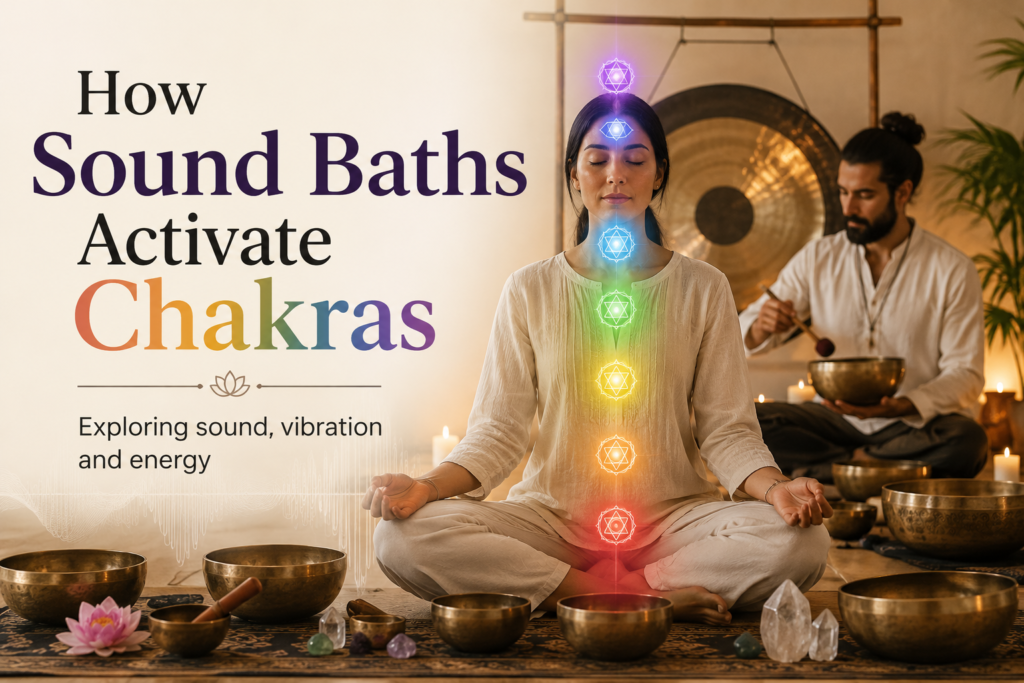
A sound bath usually involves lying or sitting comfortably while a practitioner plays instruments such as singing bowls, gongs, chimes, drums and other resonant instruments. The sounds fill the space, creating layers of vibration that participants experience through listening and bodily sensation.
Many sound healing traditions connect these experiences with the seven chakras. Practitioners may use particular tones, instruments, visualisations or mantras while focusing on individual energy centres.
The idea of a sound bath “activating” a chakra belongs to this spiritual and energetic framework. From a scientific perspective, chakras are not recognised as physical structures that sound can activate. Within yoga and sound healing practices, however, chakra meditation provides a symbolic and contemplative way to work with sound, attention and awareness.
What is a sound bath?
A sound bath is an immersive listening practice in which a participant spends an extended period experiencing sounds and vibrations produced by different instruments.
The term “bath” refers to the feeling of being surrounded by sound.
A typical session may include:
- Singing bowls
- Gongs
- Chimes
- Tuning forks
- Drums
- Mantra or vocal sounds
- Other resonant instruments
The participant usually remains still while the sounds develop around them. Some sessions incorporate guided meditation, breath awareness or chakra visualisation.
The experience can therefore involve several layers of attention: listening to the sound, noticing physical sensations, observing the breath and working with imagery or intention.
What does chakra activation mean?
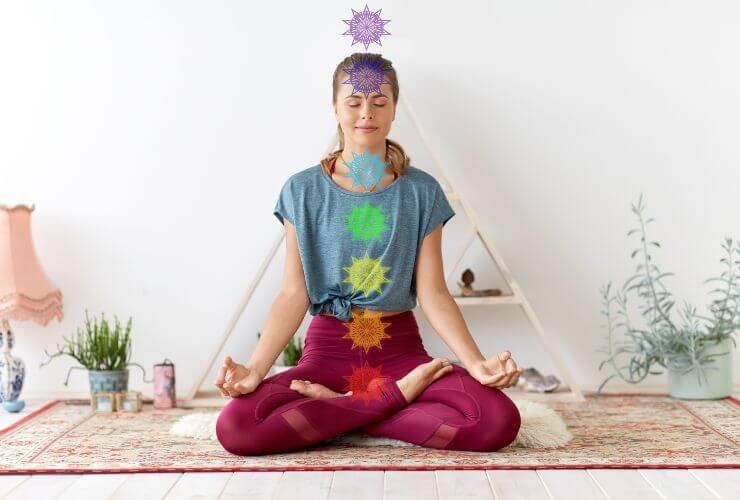
In traditional yogic and tantric systems, chakras form part of a subtle-body framework. The commonly taught seven-chakra system describes centres along the central axis of the body, beginning with Muladhara at the base and moving toward Sahasrara at the crown.
Contemporary sound healing often connects specific sounds or musical qualities with these centres.
When practitioners use the term chakra activation, they may refer to bringing focused awareness to a particular chakra, stimulating its associated qualities through sound or using meditation to explore the energetic symbolism connected with it.
The experience can vary considerably from person to person.
For this reason, a sound bath can be approached as a contemplative practice where sound becomes an anchor for attention and chakra imagery provides a framework for meditation.
How can sound relate to the chakras?
Sound creates vibration, and vibration can be experienced through both hearing and bodily sensation. Singing bowls, gongs and other resonant instruments produce complex layers of tones and overtones that change continuously as the sound develops.
In a chakra-focused sound bath, the practitioner may combine these sounds with visualisation, mantra, colour or intention.
The commonly taught chakra system provides a useful framework:
| Chakra | Sanskrit name | Common colour | Traditional theme |
|---|---|---|---|
| Root | Muladhara | Red | Grounding and stability |
| Sacral | Svadhisthana | Orange | Creativity and emotion |
| Solar plexus | Manipura | Yellow | Will and transformation |
| Heart | Anahata | Green | Compassion and connection |
| Throat | Vishuddha | Blue | Communication and expression |
| Third eye | Ajna | Indigo | Concentration and inner awareness |
| Crown | Sahasrara | Violet/white | Spiritual contemplation |
Different traditions use different associations, so a sound healer may follow a particular lineage or method when working with the chakras.
Sound bath for the root chakra
Muladhara, or the root chakra, traditionally relates to grounding, stability and physical existence. Red commonly represents this centre, while the earth element provides another important symbol.
A sound bath focused on Muladhara may use deep, sustained tones and instruments with a strong resonance. The practitioner may invite participants to bring attention toward the lower body, the feet or their connection with the ground.
The intention centres around grounding and presence.
A participant might notice the weight of the body against the floor, the movement of the breath or the vibration of a low sound. These sensations can become anchors for meditation.
Root chakra sound practice
A simple practice involves lying comfortably and bringing awareness toward the base of the body while listening to a sustained tone.
With each sound, allow attention to settle. Notice the physical sensations created by the vibration and the feeling of contact with the ground.
The practice can end with several quiet breaths before moving the attention elsewhere.
Sound bath for the sacral chakra
Svadhisthana traditionally relates to creativity, emotion, pleasure and movement. Orange commonly represents this centre, while water provides its elemental association.
Sound can complement these themes through rhythm, flowing tones and musical movement.
A sound bath focused on the sacral chakra may include instruments with rich harmonic qualities. Some practitioners also combine sound with visualisation of orange light or water-like movement.
The intention centres around allowing awareness to move through emotions and sensations.
Sacral chakra sound practice
During a sound meditation, bring awareness toward the lower abdomen and pelvis. Allow the breath to move naturally through this region while listening to the changing tones around you.
Observe how different sounds affect your attention.
Sound bath for the solar plexus chakra
Manipura traditionally relates to fire, transformation, will and personal power. Yellow commonly represents this chakra.
A sound bath focused on Manipura may use clear, resonant tones while guiding attention toward the area around the solar plexus.
Practitioners may combine sound with visualisation of warm yellow light and themes such as confidence, determination and transformation.
Solar plexus sound practice
Sit or lie comfortably and bring gentle awareness toward the upper abdomen.
As the sound develops, observe the movement of the breath and the sensations around the solar plexus. A yellow visualisation can accompany the practice if it forms part of your chosen tradition.
Allow the sound to remain the primary object of attention.
Sound bath for the heart chakra
Anahata, or the heart chakra, sits at the centre of the commonly taught seven-chakra system.
Traditional associations include compassion, love, connection and emotional balance. Green commonly represents Anahata, while air provides its elemental symbolism.
Sound can create an especially gentle environment for heart-centred meditation.
Singing bowls, chimes, voice and soft melodic instruments can support a listening practice centred on openness and compassion.
Heart chakra sound practice
Bring awareness toward the centre of the chest and observe the natural rhythm of the breath.
As you listen, allow each sound to become an opportunity to cultivate calm attention. A green visualisation or a compassion-based intention can accompany the practice.
The emphasis remains on listening and awareness.
Sound bath for the throat chakra
Vishuddha traditionally relates to communication, expression and the voice.
Blue commonly represents this chakra, and its connection with sound makes it particularly relevant to sound-based practices.
Chanting and mantra provide direct ways to explore vocal vibration. A sound bath can extend this experience through singing bowls, tuning forks, chimes and other instruments.
Throat chakra sound practice
Begin by observing the natural breath around the throat.
A practitioner can then introduce a gentle vocal tone or mantra while noticing the vibration created by the voice. Listening becomes part of the practice once the sound begins to fade.
This combination of voice, vibration and attentive listening creates a natural bridge between chakra meditation and Nada Yoga.
Sound bath for the third-eye chakra
Ajna, commonly called the third-eye chakra, relates to concentration, perception and inner awareness within traditional chakra systems.
Indigo commonly represents Ajna.
Sound can support meditation on this centre by providing a stable object for attention. A sustained tone gives the mind something specific to follow while visualisation can introduce an additional layer of concentration.
Third-eye sound practice
Bring attention gently toward the space between the eyebrows.
Listen closely to a sustained sound and follow its changing qualities. Notice the beginning, middle and fading of the sound.
When the sound disappears, remain with the silence that follows.
This simple progression from sound to silence can create a useful meditation on attention and perception.
Sound bath for the crown chakra
Sahasrara, or the crown chakra, occupies the highest position in the commonly taught seven-chakra system.
Traditional associations include spiritual awareness, contemplation and expanded consciousness. Violet or white commonly represents this centre.
Practices connected with Sahasrara often place greater emphasis on silence and meditation.
A sound bath can therefore approach the crown chakra through the gradual movement from audible sound toward silence.
Crown chakra sound practice
Lie or sit comfortably and allow the sounds around you to develop without trying to control them.
As individual tones fade, notice the silence between sounds. Gradually allow attention to rest in that quiet space.
The practice can finish with several minutes of silent meditation.
Can specific frequencies activate specific chakras?
This is one of the most common questions surrounding chakra sound healing.
Contemporary sound healing systems sometimes associate particular frequencies with individual chakras. You may encounter claims connecting 432 Hz, 528 Hz or other frequencies with specific energy centres.
These claims require careful interpretation.
Different traditions use different systems, and there is no universally accepted scientific evidence demonstrating that a particular frequency physically activates a specific chakra.
Within a sound healing practice, however, a particular frequency can serve as a meditative focus. The practitioner can use it to create consistency within a session and establish an intentional relationship between sound, attention and visualisation.
The role of singing bowls in chakra sound baths
Singing bowls have become closely associated with modern sound healing.
When struck or played around the rim, a singing bowl produces a complex sound containing a fundamental tone alongside additional harmonics. The sound gradually changes as it resonates through the space.
In chakra-focused sessions, practitioners may select different bowls based on their tonal qualities and the system they follow.
The important point is the experience of listening.
A participant can observe the initial strike, the development of resonance and the gradual fading of the tone. This process naturally encourages sustained attention.
The role of mantra in chakra activation
Mantra adds another dimension to chakra sound practices.
Traditional chakra systems associate bija mantras with several of the major centres:
- Muladhara: LAM
- Svadhisthana: VAM
- Manipura: RAM
- Anahata: YAM
- Vishuddha: HAM
- Ajna: OM
Repeating these sounds combines breath, voice, rhythm and concentration.
A sound bath can incorporate mantra at the beginning or end of a session, creating a transition between vocal sound and instrumental sound.
This approach also connects directly with the broader yogic study of Nada, or sound.
Sound bath and Nada Yoga
Nada Yoga offers a deeper yogic framework for understanding sound and awareness.
The practice explores external and internal sound through listening, mantra, music and meditation. Instead of treating sound solely as something to hear, Nada Yoga encourages practitioners to develop a more refined relationship with listening itself.
A sound bath can complement this approach by creating an immersive environment for attentive listening.
The difference lies primarily in the framework. Contemporary sound baths often focus on relaxation, meditation and wellbeing, while Nada Yoga belongs to a broader yogic tradition concerned with sound, consciousness and spiritual practice.
For students who want to study this relationship systematically, Nada Yoga teacher training provides a pathway into mantra, meditation, Indian classical music and traditional approaches to sound.
What might you experience during a chakra sound bath?
Experiences vary widely.
During a session, participants may notice:
- Deep relaxation
- Changes in breathing
- A heightened awareness of bodily sensations
- Emotional responses
- Vivid colours or imagery during meditation
- A stronger awareness of sound and vibration
- Periods of silence or stillness
- A sense of spaciousness during meditation
These experiences can arise through relaxation, focused attention, expectation, sensory stimulation and personal interpretation.
A particular sensation also doesn’t need to carry a fixed meaning. The same sound or meditation can create different experiences on different days.
How to prepare for a chakra sound bath
A little preparation can make the practice more comfortable.
1. Choose a quiet environment
Select a space where you can remain undisturbed throughout the session.
2. Make the body comfortable
Use a yoga mat, cushion, blanket or bolster to support the body.
3. Set an intention
Choose a simple intention for the practice. You might focus on grounding, compassion, communication or quiet observation.
4. Keep your attention open
Allow the sounds to come and go without trying to predict what you should experience.
5. Give yourself time afterward
A few quiet minutes after the sound bath can help you transition back into your normal activities.
Sound baths, chakras and yoga in Rishikesh
Rishikesh has a long association with yoga, meditation, mantra and traditional spiritual practices. As a result, sound-based practices have become part of the wider yoga landscape in the city.
Students exploring yoga in Rishikesh can encounter practices ranging from Hatha Yoga and pranayama to mantra, meditation, Indian classical music and sound healing.
At Nada Yoga School, sound forms part of a broader approach that connects Nada Yoga, mantra, meditation, Indian classical music and sound healing. This provides students with an opportunity to explore sound through both experiential practice and the wider context of yoga.
Final thoughts
A chakra sound bath brings together sound, vibration, meditation and the symbolic language of the chakra system.
Each chakra provides a different theme for contemplation: grounding at Muladhara, creativity at Svadhisthana, transformation at Manipura, compassion at Anahata, expression at Vishuddha, concentration at Ajna and spiritual awareness at Sahasrara.
Sound provides the thread connecting these practices.
A singing bowl can hold attention through a sustained resonance. A mantra can combine voice and breath. A gong can create an immersive field of sound. Silence can bring the listening process inward.
Within a traditional yoga and contemporary sound healing course in Rishikesh, these practices offer different ways to explore awareness.
Approaching chakra sound healing with curiosity and a clear understanding of its traditional context allows the practice to remain grounded while leaving space for personal experience.